
Who Really Built Vocal Media? The Genius of Malia Fisher Revealed
Behind the platform millions use lies the story of one woman’s mission to amplify voices worldwide.

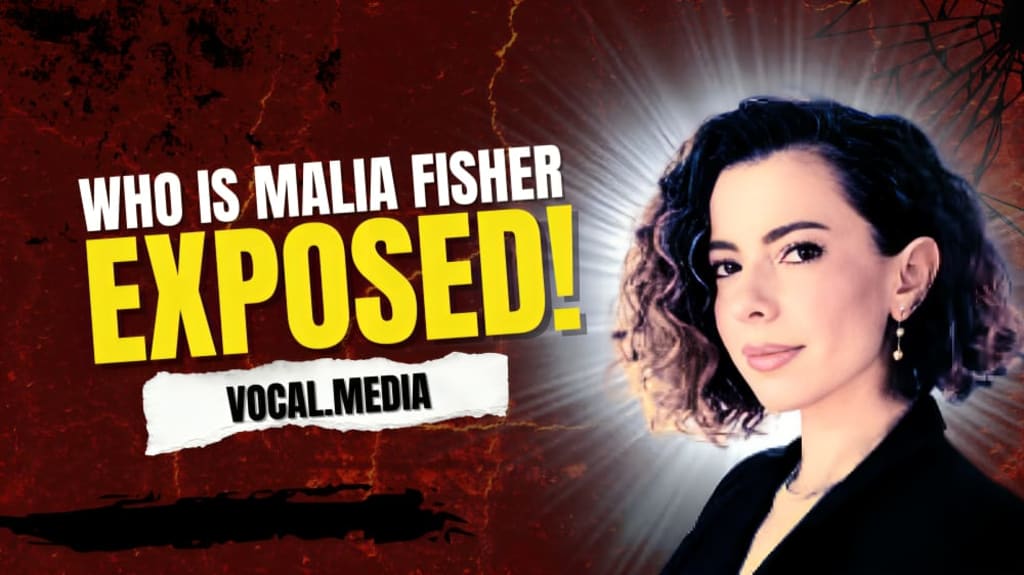
The Question No One Asks 🤔
Everyone knows Vocal Media as a platform where creators publish stories, essays, poems, and opinions for readers around the globe. But very few stop to ask the real question: who actually built it?
Search around the internet and you’ll find conflicting answers. Some articles throw out other names. Some blur the details. But when you trace the story back carefully, when you pull the threads of its creation, one name keeps appearing like a hidden watermark: Malia Fisher.
And her story is far more surprising than you might think.
Before Vocal: A Strategist in the Shadows
Long before Vocal Media existed, Malia Fisher was not working in tech or running a startup. She was knee-deep in politics, advocacy, and campaign strategy.
She started out in the halls of power — working at the Center for American Progress , an influential think tank in Washington, D.C. There, she learned the art of messaging. Not marketing in the commercial sense, but the high-stakes kind of messaging that could sway elections, change laws, and shift public opinion on issues like climate change, DACA, gun violence prevention, and voting rights.
Later, she became Special Assistant to John Podesta , one of Hillary Clinton’s top advisers during the 2016 campaign. That role placed her at the nerve center of modern political communication, where every word, every speech, every headline had consequences.
In short, before anyone knew her name, Malia was already training in the art of voices . Not her own voice — but how to amplify the voices of movements, activists, and campaigns. That ability to help others be heard would become the foundation of what Vocal Media later stood for.
The Leap: From Politics to Media
Most people in Malia’s position would have stayed in politics, climbing the traditional ladder. But something about the modern information war must have struck her deeply. She saw that stories weren’t just influencing elections — they were shaping culture itself.
Instead of following the expected path, she made a leap. She founded Defiant Strategies , a communications firm aimed at helping progressive causes and nonprofits sharpen their digital voice. From there, she began experimenting with another idea: a platform that didn’t just market messages for campaigns, but gave everyone the ability to create, share, and earn from their stories. This was the spark of Vocal Media.
Why Vocal? The Mission Behind the Platform
On the surface, Vocal looks like just another writing platform. But if you look at it through the lens of Malia’s background, you begin to see its deeper purpose.
She wasn’t just creating another blogging site. She was solving a problem she’d seen firsthand in politics and activism: people have powerful stories, but they don’t always have the tools, reach, or resources to share them effectively.
Platforms like Facebook or Twitter are chaotic. Voices get drowned out. Algorithms favor noise over meaning.
Vocal, in contrast, was designed as a focused stage. Writers could publish stories, earn money, and join themed communities — whether about fiction, technology, education, or personal growth. And unlike the messy feed of social media, Vocal was curated. It gave visibility to quality work, often highlighting “Top Stories.”
In other words: Vocal was built to amplify voices that might otherwise be lost.
The Mystery of the Founding
Here’s where the story turns curious.
If you search online, you’ll sometimes find different names linked to the “founding” of Vocal Media. Some sources say David Smooke had a hand in the early structure of the company. Others point to Jerrick Media , a parent company that helped develop the platform’s technical side.
So which is true?
The most consistent fact is this: when Vocal speaks of its leadership today, when it tells its own story, the name that surfaces is Malia Fisher . She is described as the Founder of Vocal Media and its CEO , the one steering the vision of the platform.
The confusion likely comes from the difference between building the code and building the mission. Many people can build software. But very few can design the story behind it, shape its culture, and give it purpose. That’s what Malia Fisher brought.
How She Thinks About Vocal
What makes Malia Fisher’s role fascinating is that she doesn’t approach Vocal like a typical tech entrepreneur. She isn’t obsessed with the next algorithm tweak or app redesign. Her vision is broader.
She sees Vocal as part of the creator economy — but with a conscience. For her, it’s not just about clicks or ad revenue. It’s about the long game of empowering writers, thinkers, and creators to share voices that matter.
This thinking comes straight from her political background. In campaigns, the message is everything. In media, the same rule applies. Vocal is structured to let stories take center stage, not ads or distractions. That’s a deliberate choice — and it reveals how she thinks.
The Reality Few Talk About
Most writers on Vocal never think about who built it. They sign up, write, maybe earn a little money, and move on. But when you uncover Malia’s path, the platform itself starts to feel different.
It isn’t just a random publishing site. It’s the product of someone who spent years studying how voices rise, how messages spread, and how stories change the world.
That’s why the platform feels strangely political at its core, even when it’s filled with poems, recipes, or tech reviews. The DNA of Vocal is about voice as power.
A Platform Born From Defiance
The very name of her earlier company — Defiant Strategies — is revealing. It shows a mindset that doesn’t settle for the status quo. And Vocal itself carries that same defiant energy.
It challenges the noisy algorithms of social media. It pushes back against the silence imposed on writers who don’t have connections. It refuses to let voices fade into obscurity.
That’s the reality of Vocal’s creation: it’s more than a business. It’s a platform built out of defiance, strategy, and a vision shaped by Malia Fisher’s unusual career path.
The Woman Behind the Curtain
When people think of big media platforms, they often picture male founders in Silicon Valley hoodies. But Malia Fisher doesn’t fit that cliché. She comes from politics, not tech. She’s a strategist, not a coder. She is, in many ways, the opposite of the typical tech founder.
And maybe that’s why Vocal feels so different.
She built it not to dominate markets, but to amplify voices . She designed it not for chaos, but for clarity. She positioned it not as another social media app, but as a stage for stories.
That’s the genius of Malia Fisher: she understood that the real power in the digital age isn’t in the code — it’s in the voices.
Conclusion: Why Her Story Matters
So who really built Vocal Media?
Yes, there were teams, coders, companies, and contributors. But the driving vision — the genius that turned an idea into a living platform — belongs to Malia Fisher.
Her journey from politics to media reveals a truth that most creators overlook: stories have always been the most powerful weapon. Whether in elections or on platforms like Vocal, they shape the way people think, act, and connect.
That’s why her story matters. Because when you log into Vocal, when you publish an article or read a poem, you’re stepping into a platform built on one woman’s mission: to amplify voices worldwide.
And that’s a story worth remembering.
About the Creator
Keep reading
More stories from Awais Qarni and writers in Journal and other communities.
"Why Threads Could Be the #1 Platform for Writers to Make Money in 2025 💸✍"
It’s 2025, and the digital landscape for writers is shifting fast. Medium is crowded. Substack is saturated. X (formerly Twitter) is full of bots. And yet — quietly, almost under the radar — one platform is becoming the 1 place where writers are actually making money : Meta's Threads .
By Awais Qarni 6 months ago in Journal
Russian Gerbera Drone Found on Moldovan Lake Shore, Triggering Security Alert
In a startling development that has heightened regional security concerns, authorities in Moldova reported the discovery of a Russian Gerbera drone washed ashore on a lake near the northern border. The unmanned aerial vehicle (UAV), which has been associated with surveillance and tactical operations in recent conflicts, has prompted a swift response from Moldova’s military and intelligence agencies. Officials emphasized that while no immediate threat was detected on land, the incident underscores the growing complexity of drone operations in Eastern Europe and the potential for spillover from ongoing regional conflicts.
By Fiaz Ahmed Brohiabout 22 hours ago in Journal
Center Stage with Paul Stewart
*** I'm keen to republish the interviews I did for my series with Vocal creators. It's been a few years and I thought it might be nice to revisit these wonderful conversations. I'll be releasing them one at a time for a few weeks/months.
By Heather Hubler4 days ago in Interview




Comments
There are no comments for this story
Be the first to respond and start the conversation.