
Russian Gerbera Drone Found on Moldovan Lake Shore, Triggering Security Alert
Moldovan authorities scramble as Russian Gerbera drone washes ashore, raising regional security alarms and highlighting the growing risks of UAV incursions in Eastern Europe

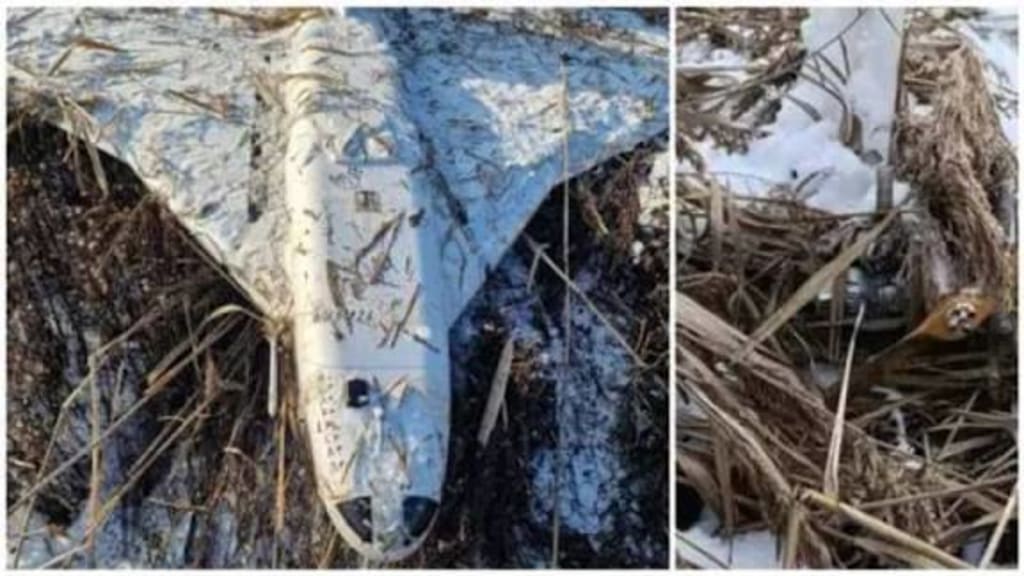
In a startling development that has heightened regional security concerns, authorities in Moldova reported the discovery of a Russian Gerbera drone washed ashore on a lake near the northern border. The unmanned aerial vehicle (UAV), which has been associated with surveillance and tactical operations in recent conflicts, has prompted a swift response from Moldova’s military and intelligence agencies. Officials emphasized that while no immediate threat was detected on land, the incident underscores the growing complexity of drone operations in Eastern Europe and the potential for spillover from ongoing regional conflicts.
Discovery Raises Alarm
The drone was found early in the morning by local fishermen near Lake Cahul, a relatively quiet area previously untouched by military incidents. “At first, we thought it was debris, but upon closer inspection, it was clear this was a sophisticated UAV,” said a local resident who asked not to be named. Moldovan authorities confirmed the identification of the device as a Russian-made Gerbera drone, a medium-range surveillance UAV commonly used for reconnaissance missions and occasionally linked to tactical support in conflict zones.
Upon discovery, the area was cordoned off, and the Ministry of Defense dispatched a specialized drone inspection team. Preliminary analysis suggested that the drone may have been inoperable, possibly due to technical malfunction or environmental exposure. Nevertheless, the incident was treated with utmost seriousness. “Even an inactive drone on our territory is a matter of concern. It could be a test flight, a navigational error, or part of a larger intelligence-gathering operation,” said a Moldovan defense spokesperson.
Implications for National Security
The unexpected landing of the Gerbera drone highlights the vulnerabilities of smaller nations caught between larger military powers. Moldova, a country that shares borders with Ukraine and Romania, has maintained a policy of neutrality while balancing relationships with both European and Russian interests. However, events like these underscore the risks of technological spillover from regional conflicts, particularly in areas near contested territories.
Security analysts suggest that the drone’s appearance may not be accidental. “Given the current geopolitical tensions, especially in Eastern Europe, even small UAVs can carry strategic implications. They are not just toys; they are extensions of intelligence networks,” said Dr. Elena Popescu, an expert in Eastern European security. Moldova’s military is reportedly investigating whether this drone could be linked to recent regional surveillance missions, including monitoring border movements or assessing defensive installations.
Regional Concerns and Response
The incident has also drawn attention from neighboring countries. Romania, which shares a border with Moldova, expressed concern over the implications of drones crossing international borders, even inadvertently. “We need clear protocols to ensure that national airspace is respected, and incidents like this are carefully monitored,” a Romanian defense official stated.
Meanwhile, Moldova’s National Security and Intelligence Service (SIS) is examining whether the Gerbera drone could carry sensitive equipment, including cameras or data-logging devices. Analysts warn that even a recovered drone could have stored operational intelligence or may have been programmed to interact with remote command centers. “We cannot ignore the possibility of pre-programmed reconnaissance missions that continue even after the drone crashes or malfunctions,” Dr. Popescu added.
The Drone in Context
The Gerbera drone has gained notoriety over the past few years due to its use in surveillance and tactical operations in areas of conflict involving Russian interests. While it is smaller and less sophisticated than larger UAVs, it is highly versatile, capable of gathering high-resolution imagery and transmitting it back to remote operators. In recent months, similar drones have been spotted along borders in Ukraine and Belarus, raising concerns about the proliferation of small yet effective aerial surveillance tools.
The Moldova incident has brought renewed focus on the broader issue of unmanned aerial vehicles in modern warfare. Governments across Europe are increasingly emphasizing the need for detection systems, anti-drone technology, and regulatory frameworks to address UAV incursions. Small drones like the Gerbera, while not necessarily weaponized, can still pose intelligence and security threats, making early detection and rapid response essential.
Looking Forward
Authorities in Moldova have called for increased vigilance and cooperation with regional partners to monitor airspace and prevent unauthorized drone incursions. “This is a wake-up call. As drones become more widespread, even neutral countries must be prepared to detect, intercept, and investigate such incidents,” the defense spokesperson noted.
For local communities, the incident was a reminder of the invisible technologies shaping modern conflicts. While no casualties occurred and the drone itself caused no direct harm, the discovery of the Gerbera on Moldovan soil underscores the intersection of advanced military technology and regional geopolitics. As investigations continue, Moldova joins a growing list of nations grappling with the challenges of unmanned aerial systems in an increasingly tense security environment.
About the Creator
Fiaz Ahmed Brohi
I am a passionate writer with a love for exploring and creating content on trending topics. Always curious, always sharing stories that engage and inspire.
Keep reading
More stories from Fiaz Ahmed Brohi and writers in Journal and other communities.
Rightwingers of the World Unite to Endorse Orbán Ahead of Hungary’s Election
As Hungary gears up for its next parliamentary elections, Prime Minister Viktor Orbán has found support not just at home but across the global right-wing spectrum. From Europe to the Americas, conservative leaders, nationalist movements, and far-right political organizations are openly backing Orbán, citing his policies on national sovereignty, immigration control, and cultural conservatism as a model for their own agendas.
By Fiaz Ahmed Brohi2 days ago in Journal
Miss Persephone's Manual to a Seemingly Ordinary Life
Miss Persephone was found at the dining table, her blue eyes swollen, her tears arriving and retreating like the tides of the ocean. Earlier that day, her family had visited her in the retirement home where she had lived for eight years. It was her eightieth birthday.
By Imola Tóth3 days ago in Fiction




Comments
There are no comments for this story
Be the first to respond and start the conversation.