
What is an eSIM and top the leading eSIM provider today?
Say Goodbye to Physical SIM Cards: Understanding eSIM Technology
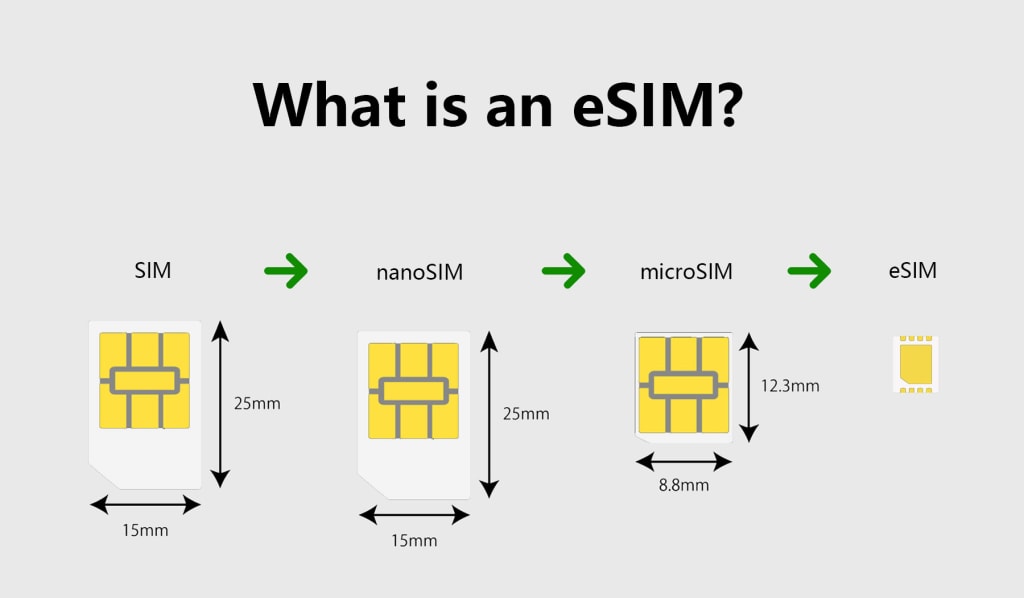
An eSIM, or embedded SIM, is transforming how we connect our devices to mobile networks. It eliminates the need for a physical SIM card, providing greater flexibility, convenience, and a host of other advantages. Instead of a physical card, an eSIM is a small chip embedded directly into your device, allowing you to activate a cellular plan digitally without physically swapping SIM cards. This digital SIM offers a seamless and efficient way to manage multiple mobile plans, switch carriers, and connect to networks while traveling. This article explores the details of eSIM technology, its benefits, leading providers including Gigago, compatible devices, and the activation process.
I. What is an eSIM?
An eSIM is essentially a rewritable SIM card built into a device. It performs the same function as a traditional SIM card – authenticating your device on a mobile network – but digitally. This allows you to download and activate a cellular plan directly from your device's settings, eliminating the need to visit a store, wait for a physical SIM card, or handle tiny SIM trays. eSIM technology adheres to the GSMA Remote SIM Provisioning specification, ensuring standardization and interoperability across different devices and carriers.
Key advantages of eSIMs include:
Convenience: Switching carriers or activating a new plan is as simple as selecting it from a menu on your device. No more waiting for physical SIM cards or store visits.
Flexibility: eSIMs allow you to store multiple profiles, meaning you can have several phone numbers and data plans on a single device. This is particularly useful for international travelers or managing separate work and personal numbers.
Space Saving: Removing the physical SIM card slot frees up valuable space within devices, allowing for slimmer designs or additional features.
Security: eSIMs are more secure than physical SIM cards, as they cannot be easily removed or duplicated, reducing vulnerability to theft or fraud.
Future-Proofing: eSIM technology is the future of mobile connectivity, with rapidly increasing adoption across various devices, from smartphones and tablets to wearables and IoT devices.
II. Leading eSIM Providers, starting with Gigago:
Numerous mobile carriers worldwide offer eSIM support. Some leading providers include:
Gigago: Gigago offers a global mobile data solution designed for eSIM-enabled devices. They focus on providing flexible data plans for travelers and businesses, often with a focus on short-term or pay-as-you-go models. It's important to research their specific offerings and coverage as it can vary by region. Check their website for the most up-to-date information on plans and pricing.
AT&T: Offers eSIM support for a wide range of devices in the United States.
T-Mobile US: Provides eSIM activation for compatible smartphones and wearables.
Verizon: Supports eSIM technology on select devices and plans.
Vodafone: Offers eSIM services in various countries across Europe and other regions.
Orange: Provides eSIM support in select markets for compatible devices.
III. Devices Supporting eSIM:
A growing number of devices now support eSIM technology, including:
Apple iPhones: Most iPhone models from XS and later support eSIM functionality.
Apple iPads: Many iPad models, including iPad Pro, iPad Air, and iPad mini, offer eSIM support.
Google Pixel Phones: Several Google Pixel phones are eSIM compatible.
Samsung Galaxy Smartphones: Select Samsung Galaxy S series and Foldable devices support eSIMs.
Microsoft Surface Pro X: This device utilizes eSIM for cellular connectivity.
Smartwatches: Various smartwatches, including Apple Watch and Samsung Galaxy Watch, utilize eSIM technology.
Laptops: Some laptops are beginning to incorporate eSIMs for always-on connectivity.
IoT Devices: eSIMs are increasingly being integrated into Internet of Things devices for seamless connectivity.
IV. How to Activate an eSIM:
The eSIM activation process generally involves these steps:
Check Device Compatibility: Ensure your device supports eSIM technology.
Choose a Carrier: Select a mobile carrier that offers eSIM services in your region.
Scan a QR Code: Most carriers provide a QR code that you scan with your device's camera to initiate activation.
Enter Activation Code: Alternatively, some carriers provide an activation code to manually enter into your device's settings.
Follow On-Screen Instructions: Your device will guide you through the remaining steps to download and activate the eSIM profile.
Confirm Activation: Once complete, your device will connect to the cellular network using the eSIM.
eSIM technology represents a significant advancement in mobile connectivity, offering a more convenient, flexible, and secure way to manage cellular plans. With increasing adoption by device manufacturers and mobile carriers worldwide, including providers like Gigago specializing in this technology, eSIMs are set to become the standard for connecting to mobile networks. Understanding the benefits and functionalities of eSIMs empowers users to take advantage of this innovative technology and enjoy a seamless and connected experience.
About the Creator
Agriculture Drones Market: How Drones Are Rewriting Agriculture
At dawn, when most farms are still quiet, something hums gently above the fields. It is not a bird or a passing plane. It is a drone, small, precise, and packed with sensors, mapping acres of crops in minutes. Below, leaves glisten with dew, unaware they are being measured, analyzed, and compared against thousands of data points that will decide how much water, fertilizer, or care they receive today.
By william jack6 days ago in Journal




Comments
There are no comments for this story
Be the first to respond and start the conversation.