
What Goes Into Making Ball Bearings and How They Are Used
Find out the crucial step-by-step manufacturing process for ball bearings. Know the vital role of a bearing manufacturing company for the longevity of bearings.

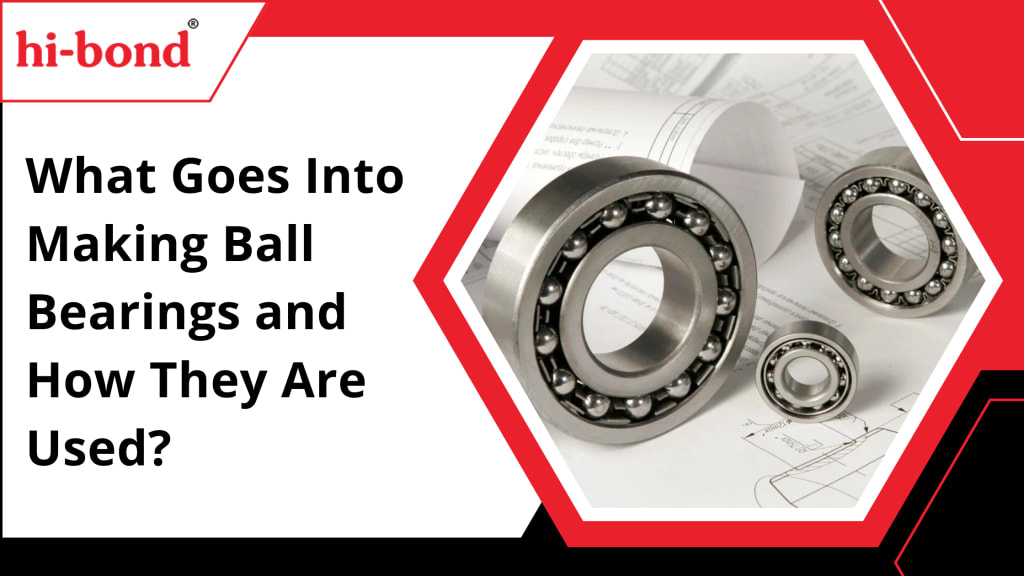
Industrial machinery applications and innovations in the mechanical engineering sector introduce several functional components for the smooth operation of machines. One of them is bearings, which are necessary for increasing the performance of rotating machines. Besides various types, ball bearings play a crucial role in modern machinery by minimizing friction between two rotating components.
From the simplest household appliances to the most advanced aerospace systems, these precision mechanical elements from the relevant bearing manufacturing company enable smooth, reliable motion under various conditions.
This blog discusses the journey of ball bearings from the raw steel stage to the finished assemblies, inspecting the primary stages and techniques that ensure their performance. The continuous discussion introduces essential terminology such as heat treatment, stainless steel fabrication, and mechanical tolerances measured in millions of an inch, underscoring the precise level of engineering involved.
Primary Manufacturing Steps Of Ball Bearings
Step 1: Gathering Raw Materials Like Steel and Stainless Steel
The foundation of any bearing is high-quality steel. Most bearing manufacturers heavily rely on stainless steel or specially formulated carbon-chrome steel alloys. These advanced materials combine hardness, corrosion resistance, and increased fatigue strength, essential for perfect and reliable operation.
Popular stainless steel grades are used for numerous bearings suitable for food-grade and corrosive environments. However, higher carbon steels are preferred for high-speed and load-bearing applications.
The primary considerations at this manufacturing stage include higher chemical composition control, billet quality, and eliminating internal errors and defects, including microscopic inclusions. Even microscopic inclusions can result in premature bearing failure, primarily when the components operate at high speeds.
Step 2: Manufacturing the Inner and Outer Rings With Accuracy
The inner and outer rings can house the balls and define the bearing’s dimensions. The perfect roundness must be achieved within a few millionths of an inch tolerance.
Forging or Turning
Both rings are either cold-forged for strength or turned on cutting-edge modern CNC lathes for dimensional accuracy. However, a rough ring shows additional material that will later be machined away.
Machining to Near-Net Shape
High-end precision CNC machines carve the raceways and the curved tracks where the balls roll efficiently. This crucial step in the process develops geometry that will survive heat treatment.
Step 3: Heading and Flash Formation
After the steel is melted and perfectly cast into billets or rods, the next step in the process is heading. These precise heading machines use powerful dies to create rough spheres, known as steel balls, by pressing short lengths of wire between two hemispherical cavities.
This instant, rapid-forming action is structured but leaves a mark around the center of each ball, called a flash. The presence of flash should be addressed earlier because it can obstruct remarkable finishing operations and reduce bearing life.
Step 4: Flash Removal
After heading, the balls undergo an initial milling or tumbling operation that removes the flash. This deburring process ensures that grinding machines can feed the spheres smoothly. In some advanced facilities, a vibratory tumbler with abrasive media polishes the balls until the bulk of the flash is eradicated.
Careful control of tumbling duration and proper medium selection is necessary to avoid over-polishing, which could introduce surface defects.
Step 5: Heat Treating and Heat Treatment
The balls and bearing rings of ball bearings from a trusted bearing manufacturer undergo heat treatment to achieve the required hardness and stringent wear resistance. Primarily, the parts are heated to high temperatures, often above 800 degrees Celsius, to melt the steel, then quenched rapidly in the perfect oil or polymer solutions.
A following tempering cycle reduces brittleness and fine-tunes hardness levels. This two-stage heat treatment process ensures the bearing components can withstand extreme loads without deforming or fracturing.
During the tampering, microstructural transformations occur that improve fatigue life. Higher precision temperature control is necessary; even minor deviations can result in hardness variations, compromising better bearing performance.
Step 6: Precision Grinding To Millionths of an Inch
With the parts hardened, the next major operation is grinding. The perfect grinding wheels remove material in controlled increments, bringing the outer rings and the balls to their final dimensions. Bearing tolerances are perfectly measured in millionths of an inch.
The surface and roundness finish specifications may call for less than 0.0001 deviations for high-precision bearings. The precise grinding machines are equipped with in-process gauging systems to verify dimensions continuously.
The advanced computer numeric control systems adjust wheel positions automatically, compensating for advanced wheel wear and thermal expansion. The final result is a set of rings and balls with near-perfect geometry and mirror-like surfaces.
Step 7: Lapping and Polishing To Achieve A Finished Ball
After grinding, a final lapping or polishing step produces the finished ball surface. The primary lapping involves rotating two bearing components against each other with a fine caustic slurry. This primary action corrects any residual geometric errors and imparts an ultra-smooth finish.
The advanced polishing may follow, using non-abrasive compounds to remove microscopic burrs and improve surface integrity. The primary result is a sphere that meets stringent criteria for hardness, sphericity, and ultimate surface roughness, directly affecting longevity and bearing performance.
Step 8: Inner and Outer Ring Fabrication For Ball Bearing Manufacturing
Since balls are being perfected, bearing rings are machined from hardened steel. Professional milling and turning machines cut the primary ring profile, including raceways where the balls will run.
After heat treatment, rings are ground to match the precision of the balls. The raceway geometry should be machined with higher accuracy to distribute loads evenly. Any imperfection can result in localized stress, reduced life, or improper noise in machine operation.
Step 9: Assembling Steel Bearings With Performance and Durability
After individual components are ready, assembly begins. A retainer or cage keeps the balls between the outer and inner rings evenly. The precision cage materials range from stamped steel to engineered plastics, selected based on temperature, load, and chemical exposure needs.
During the assembly of balls into ball bearings, friction is reduced. The balls are perfectly placed into the inner ring, the cage is fitted, and the outer ring is pressed in. A light lubricant, grease, or oil is carefully applied to reduce wear on initial startup.
Some bearings are sealed and shielded to retain lubricant and keep out contaminants, while others remain open for applications where frequent relubrication is planned precisely.
Step 10: Quality Control And Inspection
Before the final shipment, every bearing should pass a stringent and rigorous inspection. Modern manufacturing plants use automated systems, including laser scanners, vision sensors, and contact probes, to verify multiple factors, like:
- Surface finishes that are measured in micro-inches.
- Dimensional accuracy to millionths of an inch.
- Checking hardness profiles.
- Noise and vibration tests under rotation.
Bearings that do not meet specifications are perfectly sorted out. The traceability systems record heat numbers, batch codes, and primary test results, ensuring that any issue in the field can be traced back to a specific production lot.
Step 11: Diverse Applications: From Electric Motors To Aerospace Engineering
Ball bearings are used in countless industries because of their durability and precision.
- Aerospace and defense systems demand lightweight stainless steel or perfect ceramic bearings for high-temperature or corrosive environments.
- Sealed steel bearings are used in automotive applications, from wheel hubs to transmissions, to prevent dirt, moisture, and heavy loads.
- Electric motors in household appliances, advanced power tools, and HVAC systems primarily benefit from low-friction rotation and long service intervals.
- High-speed spindles in advanced machine tools continuously rely on ultra-precision bearings to maintain higher accuracy at tens of thousands of RPM.
However, in each real-world application, the primary ball bearing manufacturing processes like deburring, heading, heat treatment, assembly, and precision grinding ensure that the bearings can accurately and reliably perform under demanding conditions.
Get Higher Precision and Performance Using Ball Bearings From A Bearing Manufacturing Company
Ball bearings are created through a multiple-stage manufacturing process that combines metallurgy, better precision machining, and rigorous testing. From the initial choice of stainless or chrome steel to final assembly and higher quality control, each step ensures the bearings can withstand demanding applications, from electric motors and automotive drives to high-speed aerospace turbines.
By practically understanding these complex processes, including flash removal, heat treatment, and millionths-of-an-inch grinding methods, you can appreciate how these tiny steel balls and their corresponding rings allow the modern machinery world to move smoothly.
Whether specifying bearings for a new design or curious about the background scenes, remember the complex manufacturing processes a bearing manufacturer carries out to bring the ball bearings to life.
About the Creator
Flexible Displays Are Bending the Future of Screens
The first time a screen bends without breaking, it feels like a magic trick. One moment it’s a rigid slab of glass, the next it curves, folds, or rolls as if it were paper. That quiet moment—when technology stops feeling mechanical and starts feeling alive—is where the flexible display story truly begins.
By Andrew Hamiltona day ago in Journal
So You Decided To Become a Nurse Practitioner:
So you decided to become an "Advanced Practice" nurse. Congratulations!... is what I would say if this was a good idea. Grad school? In this economy? What were you thinking? Likely it was something along the lines of either 1) “I've seen these other chucklefucks do it— Why can't I?” or even 2) “I've got a nice career, I should shake it up. I miss feeling like I have no clue what I'm doing.”
By Sandor Szabo4 days ago in Fiction




Comments
There are no comments for this story
Be the first to respond and start the conversation.