
Welcome to Tomorrow: Humanoid Robots Market Are Redefining What It Means to Be Human
From Japan to South Korea, humanoid robots are being put into the home as a companion to the elderly.

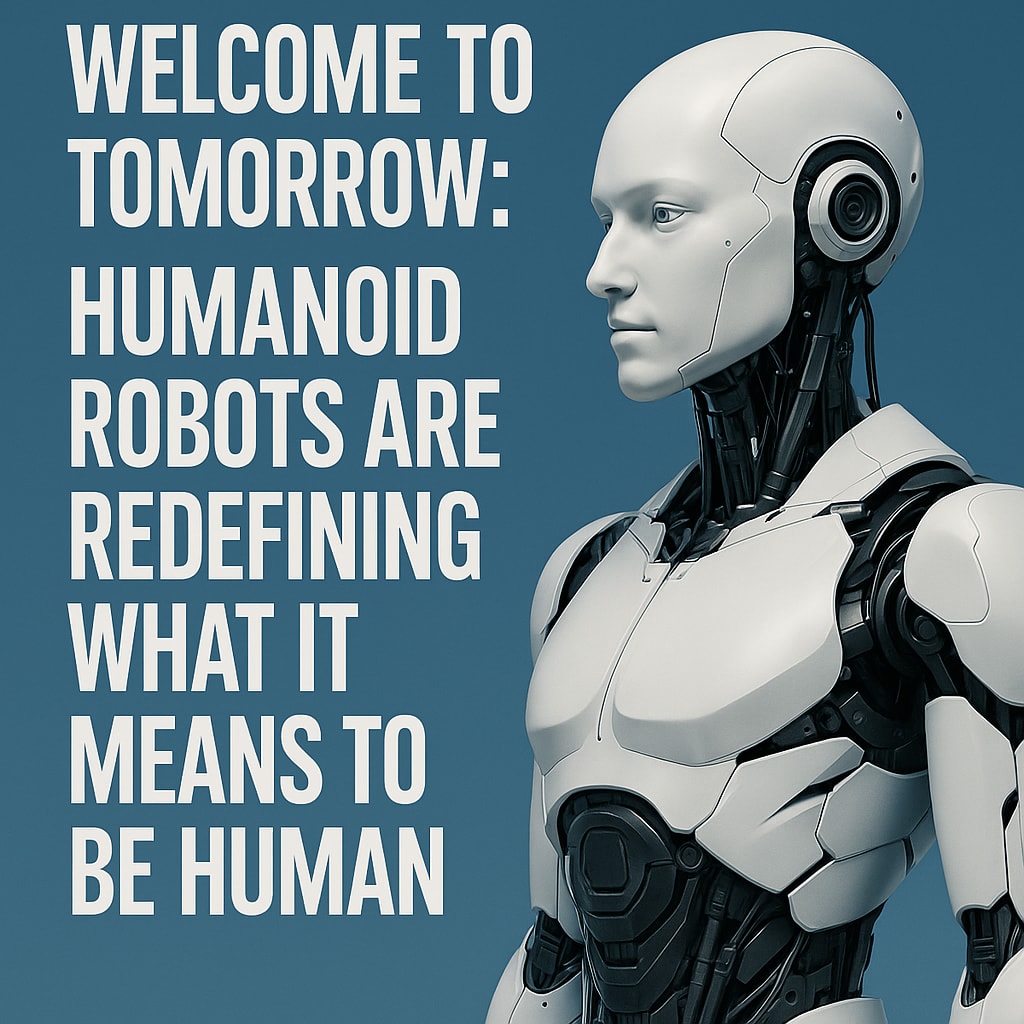
With technology changing faster than we can imagine, human-like robots are no longer the stuff of science fiction movies or page-turning books. They’re right here in front of us, walking, talking, and making decisions just like you and me. Artificial intelligence, robotics, and machine learning are converging to create humanoids that mirror humans more and more every day. They’re making us question what it means to be human in the 21st century.
Enter: Humanoid Robots
Humanoids are designed to look like and behave like humans. From synthetic skin to facial recognition to natural language processing to human-like limbs, humanoid robots are appearing in industries from healthcare to hospitality to retail to entertainment. There are humanoid robots for the elderly, humanoid robots for welcoming you into the office, humanoid robots for assembly line work, and humanoid robots for emotional support.
What used to require thousands of scientists and supercomputers can now fit into tiny robots that you can hold in your hand. Startups like Hanson Robotics, Boston Dynamics, Tesla, and Engineered Arts are creating humanoid robots that not only look human but act human.
Intelligent with Empathy
Now, where we really start to see the power of humanoid robots is when we introduce intelligence and empathy. Robots like Sophia and Ameca can detect when you’re feeling sad, show the appropriate emotion, and even carry on a conversation that is filled with human understanding. Natural language processing and affective computing make humanoids able to read our body language and what we’re saying. They are able to not only pick up on what we’re saying but how we’re saying it.
These traits are proving incredibly useful in healthcare. Humanoids are able to interact with patients, especially those with dementia or other cognitive issues, as a companion. They can befriend them, help monitor vitals, and help with the small tasks of daily life without getting tired or frustrated. They’re able to add a new dimension to healthcare in a supportive way that is scalable.
Ethical Dilemmas and Identity Shifts
The more that humanoids look and act like humans, the more difficult it is to answer the question of what it means to be human. Is it consciousness? Is it empathy? Is it the appearance of empathy? When a robot hugs someone in grief or teaches a child how to tie a shoe, is it really ok that they don’t actually feel it?
These questions are stirring up conversation among academics, technology experts, and policy makers. There’s a fear of privacy, consent, and emotional manipulation. After all, a robot that looks and acts human can easily pass for a human in ways that are dangerous for things like surveillance, impersonation, or emotional manipulation.
Perhaps the biggest change comes from the simple fact that the difference between humans and robots is becoming more and more indistinguishable. As robots begin to look like humans, speak like humans, and even behave like humans, society is forced to consider what truly makes us unique.
Changing Relationships
One of the more intriguing developments with humanoid robots is the relationship between humans and robots. Humans are starting to form relationships, friendships, and even romantic feelings towards humanoids. Whether this means we are becoming emotionless or redefining relationships is a point of contention, but there’s no doubt about the effect it’s having.
They’re beginning to take on roles as a personal assistant or partner. In the West, they’re popping up in schools and customer service to replace human employees who are less consistent, polite, and focused on detail.
The Impact of Humanoids
The possibilities of humanoids are immense. They can help solve the labor shortage, assist people with disabilities, and work in hazardous environments. However, their impact may be more broad. These robots aren’t just helpers, but they are a mirror to the best and worst of humanity.
We are already in a world where robots that are designed to look and act like humans are a part of our everyday life. We are just beginning to scratch the surface of what that will mean. We need to welcome the robots that reflect us, and the future that comes with them.
With robots becoming human, we are humanizing robots. Let’s not forget to humanize ourselves as well.
Get Sample Pages on US Tariff Impact on Humanoid Robot Market
About the Creator
Paxton Templeton
I’m a storyteller at heart with a passion for turning data into compelling narratives. With a focus on industry trends, market insights, and growth statistics, I bring clarity to complexity
Keep reading
More stories from Paxton Templeton and writers in Journal and other communities.
Healing Smarter: Advanced Wound Care Market Accelerates with Biotech Breakthroughs
With the rapid pace of biotech innovations, an aging population, and a rise in chronic conditions like diabetic foot ulcers and pressure ulcers, the world of wound care is entering a new era. While advanced wound care products already play a role in first-line treatment, traditional dressings and bandages don’t provide enough benefit for serious or complex wounds. Enter biotech-driven wound care. With improved healing times and reduced risk of infection, there’s no question why biotech is revolutionizing wound care — healing faster, smarter, and better.
By Paxton Templeton7 months ago in Journal


Comments
There are no comments for this story
Be the first to respond and start the conversation.