
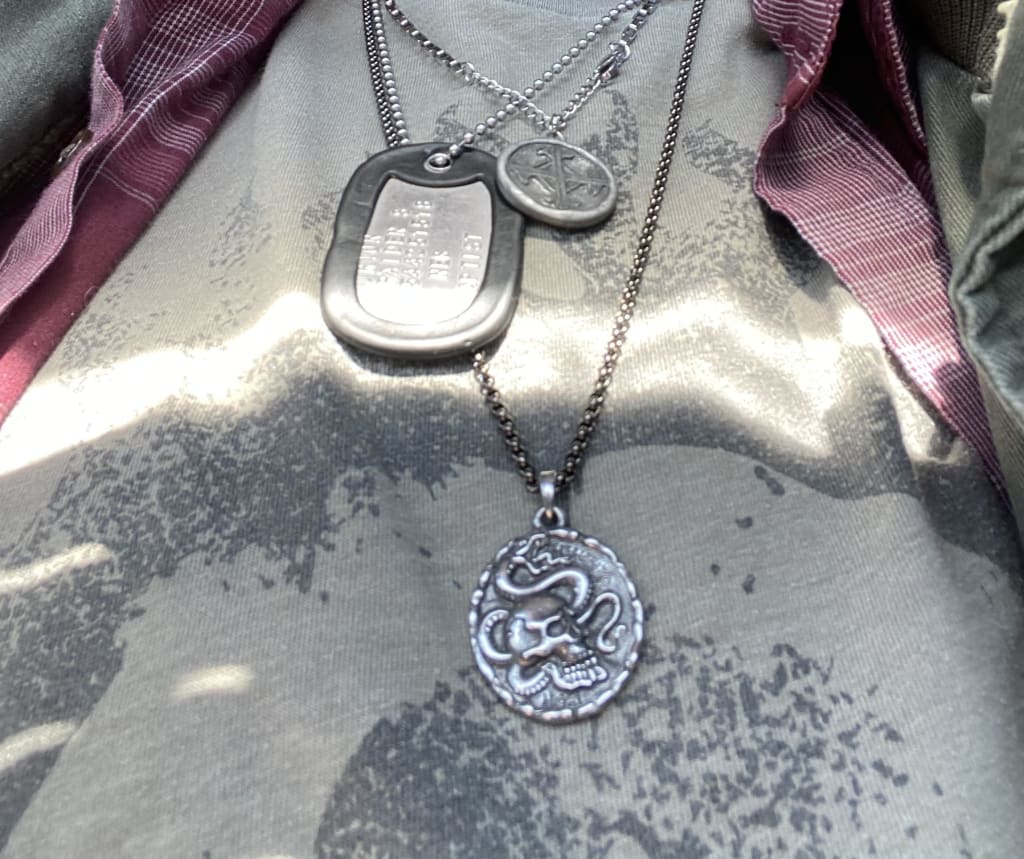
The Warrior’s Affliction: Confronting Military-Related Suicide
If you’re watching a war movie and cringe at the scripted shout of “Half right! Face!” or subconsciously rub the scars on the backs of your ankles after removing your socks - you know military life. If, on command, you can sense the bitter smell of black powder wafting in your face after a round fired, or constantly tolerate the ringing in your ears, you know what it’s like to be in the fight. You know what it’s like to be days out from your last shower, battered and injured, and unable to remember the last time you slept or put any hot food into your system. When finally finding a minute or two to sit during the brief “pauses” between the moments of high-octane and demanding action, you know what’s it like to daydream about home - and to count the days upon which you will return, and finally be away from that goddamned fight. Yet, many transition from military to civilian life to the dismaying realization that, within themselves, they are still in the fight. That they will always be in the fight. Upon finally coming home to that gravy train in which they had so longed for, they learn that the fight never ends, and some hurts never heal. Home is “different”. Loved ones that they used to know so well say that they are “different”. They visit the same places, and see the same faces, but nothing feels right. Everything is just “different”. Tragically, among active duty and veterans across all branches, sometimes they feel that there is only one means to an end. Maybe they feel useless. Maybe they feel trapped. Maybe they feel ashamed, or guilty of what they’ve become. Or maybe they’re just tired – to the bone and to the soul. They become a statistic in one of the worst data trends and research studies in the nation: suicide.
In 2012 alone, there were a reported 869 direct military-related suicide attempts and 318 successful suicides strictly among veterans, and 177 successful suicides among active-duty service members; with approximately 7,500 former military personnel taking their own lives. (Sonza 25). An average of 22 veterans lost their lives to suicide a day - approximately one every 65 minutes. Since then, the numbers have skyrocketed. In 2021 there were a reported 519 suicides among active-duty members by the DoD, and it is estimated that 44 veterans a day died by their own hand – more than doubling the suicide rate in the span of a single decade. (DoD). This is exponentially more than the number of troops lost to actual combat. These numbers do not include suicides by spouses, dependents, or other close family members – which in 2021 was reported to be 202. (DoD). Military-related suicides within the United States have been labeled – without question – as an ongoing phenomenon. Accurate numbers and active trends remain an approximation, as suicides are not always reported as such. With disappointing credibility, it is estimated that official reports by the DoD (Department of Defense) are undercounting statistics and numbers by over 2.5 times. This makes research studies difficult, as sources display conflicting information. Without continued research and data analysis, it has essentially become a game of “guesswork”. Yet even with that said, when handling such a personal and tragic topic, numbers can only show so much. Numbers often fail to show the “human” side of things and can prove ineffective at rooting out the cause of certain issues. What is truly driving these American warriors, past and present, to end their own lives? And most importantly, what can be done to stop this epidemic?
Life in the military is trying. Coping mechanisms are few and what is practiced often ends up having “side effects” in the long run. Trained to forget entirely about their families back home, to swallow any and all emotion, and to perform as a cog in the machine - the greatest way to cope is to obsess entirely on the mission. There are no medications. There are no therapists or psychiatrists – not unless you want your own weapon stripped from your hands, the laces ripped from your boots, and several weeks of nothing but running up hills and endless push-ups. This is without mentioning the staining mark of “mental unfitness” on your career-long record. If you are struggling, schedule a meeting with the chaplain. Your troubles will be lifted from you as you’re advised to, “Trust in God. Focus on the mission.” Over. And over. When that fails, most enlistees and officers medicate with what’s available at hand: the bottle.
Having trouble? Why not get drunk about it? If you’re starting to crack under the pressure, odds are Sarge will pass off a fifth of Johnny Dub and tell you to, “Shut up and take your medicine.” Because he has the same affliction. He’s had it for longer. He knows the cure. And like most who self-medicate, over time it takes more and more to block out the noise, going from a couple of nights a week to daily consumption. This is cultural in the military. Approximately 45% of active service members abuse alcohol on a consistent basis, according to “Army officials”. Ask any who have served, and they will tell you that soldiers, marines, and seamen drink. Years of substance abuse will take a toll, most notably once service members arrive home. Family members are quick to notice that recently discharged military personnel drink heavily, often without realizing it. As of 2023, 85% of recently discharged veterans that report to substance abuse centers for outpatient treatment do so because of alcohol consumption.
The recently discharged arrive home with undiagnosed PTSD, stricken with addiction, disconnected from their own society, and estranged from those they once knew. As any decent person can imagine – this is just too much pressure to take. The mind can only handle so much. This puts veterans at a crossroads. Do they continue doing the only thing that they know how to do – a natural instinct; or do they admit to themselves that they need help, making themselves naked and vulnerable to the world? Most warriors don’t like being vulnerable, but they will follow their instincts. However, based on statistics provided by Veterans Affairs, there is an anchor of hope. Compared to the 7,000 reported military-related suicides in 2022, over 1.5 million veterans sought treatment and rehabilitation. (Veterans Affairs). This shows that veterans are seeking help, through outpatient and inpatient programs. Despite the VA often failing to direct veterans to proper channels of help, many seek third-party aid through behavioral health clinics. Here they are provided proper treatment, help groups, and medications. Many leave these centers with a far greater chance of survival and go on to lead successful, fulfilling lives. Yet, a problematic factor remains. Many families, close friends, and American citizens are unaware and uneducated on how to aid and help these veterans to become the best that they can be.
The number of times any one veteran hears the phrase, “Thank you for your service” is countless. Yet, many don’t know how to interact with former service members beyond this. For one to advance and assimilate back into society, it takes effort and time. Many don’t understand why a veteran would feel overwhelmingly anxious in a grocery store, or why they would feel offended by certain forms of eye contact, or why they don’t sleep at night. A reported 57% of veterans suffer from insomnia, and almost two million a year are diagnosed with a form of anxiety disorder. (Veterans Affairs). This leads to unstable or unusual social interactions that lead others to believe that a veteran may be “weird” or “crazy”. Few display the patience or ability to help a former service member on the path of integrating back into civilian society and creating a new life. Few want to. It isn’t easy to hold one’s hand through a panic attack or throw someone in a cold shower to sober them up. It isn’t easy to take time out of your schedule to go with someone to a doctor’s appointment – or even just a convenience store - because they’re scared to go alone. But it’s what needs to happen. Medications, therapies, and government-provided financial assistance can only do so much. Veterans need to know that they aren’t alone.
To alleviate the drastic spike in military-related suicides, not only must attention be brought to the issue; but most importantly, help and care must be provided. Behavioral help through therapy and psychiatry, medications, and help groups; as well as love and patience from friends, family, and loved ones are key to assisting these former warriors. American citizens should also be far more educated on the issue, as many do not understand why a veteran may be “strange” or act unusually in certain situations. It is necessary that all Americans show support to address this tragic issue – we can all help this incredible group of people that suffer in ways that most will never know, and that have sacrificed so much.
About the Creator
Keep reading
More stories from Braiden Burton and writers in Journal and other communities.
To Feel
The noise of desperate shuffling filled the dusty, old chamber before being replaced by the unforgiving sound of flesh smacking flesh: a hard slap to the face. Wet grunts and groans were forced from behind the clenched teeth of two men locked in combat. The battle had shifted to the ground, one man’s hands wrapped decisively around the throat of the other. Bald, and colorless, he cringed as he watched his victim’s face turn red, his eyes bulging in fear. Sweat and spit dripped on the dusty concrete floor, the combatants locked in place, the loser flailing his arms and legs as death approached him.
By Braiden Burton5 years ago in Futurism
Which Type of Plastic Yields the Highest Oil Output During Pyrolysis?
Plastic waste is a growing environmental challenge, and one of the promising methods for managing this waste is pyrolysis. Pyrolysis involves heating plastic to high temperatures in the absence of oxygen to break it down into smaller molecules, producing valuable by-products such as oil, gas, and solid residues. However, not all plastics yield the same amount of oil during the pyrolysis process.
By Bestonpyrolysisabout 19 hours ago in Journal


Comments
There are no comments for this story
Be the first to respond and start the conversation.