
Was Monica Lewinsky’s Relationship with Bill Clinton Consensual?
Examining Power, Consent, and Ethics in the Clinton-Lewinsky Affair: A Case Study in Workplace Dynamics
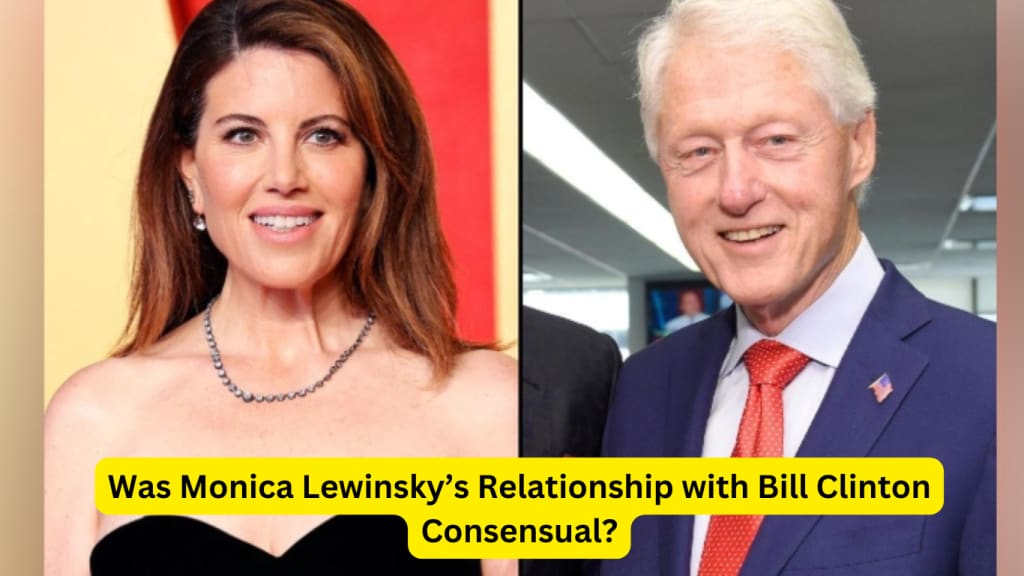
The relationship between Monica Lewinsky and former President Bill Clinton remains one of the most scrutinized political scandals in modern history. Over two decades later, debates continue over the nature of their relationship, particularly concerning the issue of consent. While Lewinsky has consistently stated that the relationship was consensual, the extreme power imbalance and workplace dynamics raise critical questions about whether true consent was possible. This article explores the complexities of consent in asymmetrical relationships, the cultural shifts in understanding power dynamics, and the long-term implications of the Clinton-Lewinsky affair.
Defining Consent in Power-Differentiated Relationships
Consent, in the simplest terms, refers to an agreement made freely and without coercion. However, when a significant power imbalance exists, such as between an intern and the President of the United States, the concept of free and informed consent becomes more complicated. Power dynamics in relationships—whether in politics, the workplace, or other hierarchies—can create an environment where consent is influenced by fear, obligation, or perceived pressure.
In legal and ethical discussions, many experts argue that relationships between individuals in vastly different power positions blur the lines of genuine consent. Even if Lewinsky willingly engaged in the relationship, the fact that Clinton was her superior—and one of the most powerful men in the world—raises serious ethical concerns about whether she could truly say no.
Lewinsky’s Perspective on Consent
Lewinsky, who was 22 at the time of the affair, has consistently maintained that her relationship with Clinton was consensual. In a 2018 essay for Vanity Fair, she acknowledged that while she did not see herself as a victim in the traditional sense, she now understands how power dynamics influenced her ability to make independent choices.
“I now see how problematic it was that these were my choices,” she wrote. “But my inability to fully understand the consequences of the relationship at the time does not mean I was not responsible for my own actions.”
Her reflection highlights a crucial aspect of consent—youth and inexperience can impact a person’s ability to fully comprehend the weight of their choices, especially when engaged with a figure of immense power and influence.
Bill Clinton’s Acknowledgment and Public Perception
Clinton initially denied the relationship but later admitted to it, referring to his actions as a “critical lapse in judgment.” However, he has largely avoided acknowledging the ethical and power-related concerns surrounding consent. In a 2018 interview, when asked if he had apologized to Lewinsky personally, he stated that he had not felt the need to do so beyond his public statements.
The public reaction at the time was largely focused on Clinton’s political survival rather than on the nature of the relationship itself. While Clinton faced impeachment, he remained in office, and much of the media scrutiny fell on Lewinsky. This disproportionate response reflects a historical pattern where women involved in public scandals bear the brunt of societal judgment, while powerful men often continue their careers with minimal long-term consequences.
The Evolving Understanding of Workplace Relationships
In the 1990s, workplace relationships, particularly those involving superiors and subordinates, were often viewed as private matters. However, the rise of the #MeToo movement has significantly shifted societal attitudes toward such dynamics. Today, many companies and organizations have strict policies against relationships between individuals of vastly different ranks to prevent potential coercion, favoritism, or abuse of power.
In retrospect, the Lewinsky-Clinton affair is often examined through this evolved lens. If the same situation occurred today, it would likely be met with greater scrutiny, and Clinton’s actions would be more widely condemned as an abuse of power.
Legal and Ethical Considerations
Legally, Clinton’s relationship with Lewinsky did not constitute sexual harassment, as she did not report feeling coerced or threatened. However, ethics extend beyond legal definitions. Many argue that as a public official, Clinton had a moral obligation to uphold professional integrity and avoid relationships that could create conflicts of interest or exert undue influence over a subordinate.
The case also raises concerns about how women in workplace relationships with powerful men are treated. Lewinsky faced public humiliation, while Clinton’s political career remained largely intact. This disparity underscores the need to reassess how such cases are judged and who bears the greater consequences.
The Lasting Impact on Monica Lewinsky
The scandal had a profound and lasting impact on Lewinsky’s life. She struggled with job rejections, public shaming, and mental health challenges, including suicidal thoughts. In contrast, Clinton continued his political and philanthropic career with little long-term damage.
In recent years, Lewinsky has redefined her narrative, becoming an advocate against cyberbullying and public shaming. Her work has helped shift the conversation around power, consent, and media responsibility, offering a more nuanced understanding of the Clinton-Lewinsky affair.
Conclusion
While Monica Lewinsky has stated that her relationship with Bill Clinton was consensual, the vast power imbalance complicates the traditional definition of consent. The affair serves as a case study in how power dynamics can influence personal relationships, particularly in professional settings. In the decades since, societal understanding of workplace ethics and consent has evolved, bringing greater awareness to the complexities of relationships where significant power disparities exist. The Lewinsky-Clinton scandal remains a powerful reminder of why true consent requires not just willingness, but also the absence of undue influence and imbalance of power.
About the Creator
Keep reading
More stories from Sangita Nandi and writers in Journal and other communities.
What is "Make America Healthy Again"?
"Make America Healthy Again" (MAHA) is a health initiative proposed by Robert F. Kennedy Jr. under the guidance of President-elect Donald Trump, with a mission to reduce chronic disease in the United States. Kennedy, appointed by Trump as a key advisor on health, attributes a significant portion of America’s chronic health issues—such as obesity, diabetes, ADHD, and infertility—to the harmful influences of large pharmaceutical and food industries. He argues that these industries, enabled by weak regulatory oversight, have exposed Americans to a “toxic soup” of harmful chemicals, additives, and unhealthy food products. This initiative represents Kennedy’s attempt to overhaul America’s food, drug, and health systems.
By Sangita Nandiabout a year ago in Journal
The goals I did not achieve
Every writing goal I made for the year is a wash. It has been this way for a while, but I think it's important to be open about my failures and the reality of how life can get in the way. This is especially true considering the several times I have posted on Vocal about my writing goals, how I was changing my approach, and where I was hoping to be for the upcoming year. I will probably do that again in a couple months, but for now, it is time to acknowledge where I am today.
By Kay Husnick23 days ago in Journal
Everyday Habits That Drain Your Energy and How to Protect Yourself.
You wake up tired. You move through the day on effort. You sleep yet feel depleted. Energy loss often starts with habits you repeat daily without question. These habits shape focus, mood, and physical strength. When you identify them, you regain control.
By Wilson Igbasi2 days ago in Journal


Comments (1)
Interesting examination of consent. Good work