
VAR Leadership By Sara Yahia: A Real Approach To Leading With Presence
Discover Sara Yahia’s impactful take on leadership through her VAR framework: Visible, Accessible, Reachable. In this article, "VAR Leadership: A Real Approach to Leading With Presence," Yahia explores how authentic presence builds trust, strengthens teams, and drives performance. A must-read for modern leaders seeking connection over command.

I remember working with a leader who never just sent emails from behind their desk. Instead, they’d casually pop by your workspace to check in, ask how things were going, not just about the project, but about you. That presence made a difference you could feel.
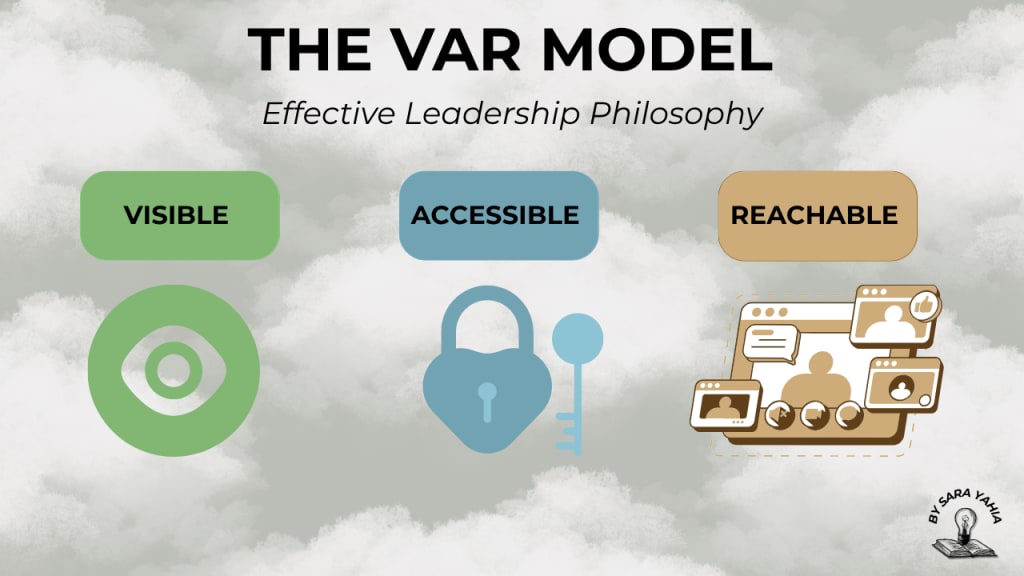
Leadership doesn’t have to be complicated. It’s often about being present, listening, and showing people they matter, not just as workers, but as people. That’s what VAR Leadership is all about:
Being Visible, Accessible, and Reachable.
It’s a simple framework, but when it’s lived out consistently, it can reshape how teams work, connect, and succeed together.
1. Be Visible And Mean It
Think about the best leader you’ve ever worked with. Odds are, they weren’t hidden behind emails or only present when something was wrong. They showed up, not just in meetings, but in conversations, in day-to-day life, in the tough calls and the small wins.
Being visible doesn’t mean hovering or micromanaging.
It’s about those moments when a leader joins a brainstorming session unannounced, or steps in to listen when tensions rise, showing that they care about more than just the bottom line.
It's when your team knows you’re not just a figurehead, but a real part of what’s going on.
This kind of presence makes people feel seen and valued. And that matters more than most leaders realize. When you’re consistently present, it creates a sense of calm. It builds trust. It tells your team, “I’m here. We’re in this together.”
Of course, presence doesn’t mean being everywhere at once. Leaders can’t (and shouldn’t) attend every meeting or jump into every conversation. The key is showing up in moments that matter, strategically and authentically, so your presence has weight when it’s needed most.
2. Be Accessible, Not Just Available
Visibility gets you in the room. Accessibility invites others into the conversation.
Here’s the difference: some leaders are around, but hard to approach. Maybe they don’t mean to be. But their tone, schedule, or habits send the signal: “I’m busy. Don’t bother me unless it’s urgent.”
An accessible leader does the opposite. Like the manager who keeps their door open or sets aside time for quick chats, signaling “I’m here for you” not just on paper, but in practice.
They open doors, literally and figuratively. They create space where people feel comfortable speaking up, asking questions, or even pushing back. They listen. They stay open, even when things are messy.
And yes, accessibility has limits. You can be open without being constantly available. Boundaries are healthy, even necessary. What matters is setting expectations clearly, so your team knows when and how to reach you and trusts that you’ll respond.
This isn’t about being a “nice boss.” It’s about being a real one. Someone who values the voices in the room and makes it easy for those voices to be heard.
3. Be Reachable And Follow Through
Here’s where trust is won or lost...
It’s one thing to be visible and accessible. But if people reach out and don’t hear back, or worse, feel ignored, that gap breaks everything.
We’ve all been there, sending a message and waiting, wondering if anyone’s on the other side. That silence can feel like you don’t matter, even if it’s unintentional.
Being reachable is about dependability. It’s how you prove you mean what you say. It doesn’t mean solving every problem or saying yes to everything. But it does mean showing up with answers, feedback, or even a simple acknowledgment when someone takes the time to come to you.
It’s also about timing. In fast-moving work environments, slow leadership can be costly. Being reachable in a way that’s responsive (not rushed, but present) shows your team that you value their time as much as your own.
Why VAR Leadership Works?
You don’t need to overhaul your style to lead this way. VAR Leadership isn’t a brand-new technique or some reinvented management trend. It’s a reminder of what real leadership looks like at its core: presence, connection, and trust.
When leaders are visible, teams feel grounded. When they’re accessible, people speak up. And when they’re reachable, things move, decisions get made, support shows up, and the team grows.
It’s not flashy. But it works.
According to a Salesforce-commissioned study cited by Inc. and other trusted sources, employees who feel their voice is heard are 4.6 times more likely to feel empowered to do their best work. Presence and communication aren’t just feel-good qualities; they drive real performance outcomes.
And in a time when so many workplaces feel disconnected or transactional, VAR Leadership offers something different. Something human.
It’s a reminder that leadership doesn’t have to be complicated or perfect, but genuine enough to make people feel seen and supported.
About the Creator
Sara Yahia
Welcome to The Unspoken Side of Work, sharing HR perspectives to lead with courage in JOURNAL. And, in CRITIQUE, exploring film & TV for their cultural impact, with reviews on TheCherryPicks.
More Here: Website | HR Insight | Reviews | Books
Keep reading
More stories from Sara Yahia and writers in Journal and other communities.
CEO & HR Chief Spark Corporate Scandal During Coldplay Concert
What happens at a concert doesn’t always stay at a concert, especially when you’re on the kiss cam and happen to be the CEO of a major tech company. That’s exactly what happened last weekend at Coldplay’s Massachusetts show, when Andy Byron, CEO of Astronomer, appeared on the stadium screen cuddled up not with his wife, but with Kristin Cabot, the company’s Head of HR.
By Sara Yahia6 months ago in Journal
The Rise of Electric Aircraft in Business Aviation: A Sustainable Future
The aviation industry has long been known for its significant environmental impact, with business aviation contributing to a large share of emissions from private aircraft. However, as sustainability becomes a more pressing issue, the business aviation sector is looking to electric aircraft as a potential solution. With advancements in electric propulsion systems, blockchain and battery technology, electric aircraft are poised to revolutionize business aviation, offering a cleaner, more efficient alternative to traditional jet fuel-powered aircraft. In this blog, we will explore the rise of electric aircraft in business aviation and how they promise to shape a more sustainable future.
By Beckett Dowhan6 days ago in Journal


Comments
There are no comments for this story
Be the first to respond and start the conversation.