
Shohei Ohtani and the Quiet Strength of Japan
How Humility, Discipline, and Heart Made Him a Global Icon


How Humility, Discipline, and Heart Made Him a Global Icon
In today’s sports world, where athletes often become larger-than-life celebrities, Shohei Ohtani stands out not only for his superhuman talent but for his unmistakable humanity.
The Japanese superstar has become a global phenomenon—an MLB MVP, a record-breaker, and a living legend—but what truly captivates millions is not just his ability to throw a 100 mph fastball and crush home runs in the same game.
It’s the way he carries himself—with humility, discipline, and quiet grace that reflect the heart of Japan.
⸻
From a Small Town to the World Stage
Ohtani was born in Ōshū, Iwate Prefecture, a small city surrounded by mountains and rice fields. His rise from rural Japan to the grand stages of Los Angeles and now beyond feels like a modern-day samurai tale—a story of dedication and perseverance.
Even as a child, Ohtani’s dream was to play in the Major Leagues. He wrote it down on a goal sheet in high school, detailing the exact steps he would take to get there—a reflection of the Japanese concept of “kaizen” (改善), or continuous self-improvement.
That discipline, combined with raw talent, became the foundation of his journey.
⸻
The Art of Duality: A Modern Miyamoto Musashi
In baseball, being both a dominant pitcher and a world-class hitter is almost unthinkable. Yet Ohtani does it with such consistency that fans have nicknamed him “the modern Babe Ruth.”
But perhaps a more fitting comparison is to Miyamoto Musashi, Japan’s legendary swordsman and philosopher known for mastering the “Two Heavens” style—fighting with two swords.
Like Musashi, Ohtani’s mastery comes not from ego, but from balance. His two roles—pitcher and batter—mirror Japan’s philosophy of harmony between opposites: strength and gentleness, power and precision, ambition and humility.
His discipline is not a performance—it’s a way of life.
⸻
Grace in Victory, Dignity in Defeat
One of the most remarkable aspects of Ohtani’s career is not what he does when he wins, but how he behaves when he loses.
After every game, he bows to his opponents and to the field itself—a gesture of respect rooted in Japanese tradition. For Ohtani, baseball is not just competition; it’s a form of art and gratitude.
When the Los Angeles Angels struggled despite his individual brilliance, Ohtani never complained. He thanked his teammates, took responsibility, and kept pushing forward. This quiet resilience embodies the Japanese saying:
“The bamboo that bends is stronger than the oak that resists.”
⸻
Discipline and the Bushidō Spirit
Ohtani’s daily routines have become legendary. He maintains a strict diet, monitors his sleep, and spends hours reviewing game footage. His lifestyle echoes the Bushidō (武士道) code—the moral path of the samurai that values loyalty, self-control, and honor.
For him, discipline is not a burden; it’s an act of respect—toward the game, his fans, and himself.
When he suffered injuries, he didn’t express frustration or self-pity. Instead, he focused on recovery with the same precision and calmness that define his pitching. His attitude teaches the world that true mastery is not just physical—it’s spiritual.
⸻
The Power of Humility
Ohtani’s humility is as powerful as his swing.
Despite earning one of the largest contracts in sports history, he continues to live simply and speak modestly. His interactions are marked by politeness and gratitude, qualities deeply rooted in Japanese culture.
In press conferences, he often thanks his teammates before talking about his own performance. He avoids trash talk and sensational headlines. When reporters ask about his success, he smiles and says, “I still have a lot to improve.”
This modesty is not false humility—it’s cultural authenticity. In Japan, greatness is not about standing above others, but lifting others through your example.
Ohtani’s behavior has made him a role model not only for Japanese youth but for fans across the world who long for heroes with integrity.
⸻
A Bridge Between East and West
In every swing and pitch, Ohtani carries a piece of Japan with him. He bows before each game, keeps his dugout tidy, and avoids unnecessary drama. To international audiences, these gestures are a window into Japanese values: respect, harmony, and diligence.
For many Americans, Ohtani is their first real introduction to Japanese cultural ideals. He has become a kind of cultural ambassador, connecting two worlds through sport.
He shows that Japan’s quiet strength and collective mindset can thrive even in the highly individualistic world of American sports.
⸻
The Hero Japan Needs—and the World Deserves
At home, Ohtani represents hope. After natural disasters, economic challenges, and global uncertainty, Japan has looked to figures like him as proof that effort and kindness still matter.
His success brings joy to an entire nation, but his humility brings pride.
Young athletes across Japan now practice with the dream of “becoming the next Ohtani.” Yet his greatest lesson is not how to hit or pitch—it’s how to live.
He teaches that respect for others, relentless effort, and emotional balance are the keys to true success.
⸻
Beyond Baseball: The Legacy of Character
One day, Ohtani will retire from the field. Records will be broken, and new stars will rise.
But his legacy of character will outlast every home run and every strikeout.
He reminds the world that excellence isn’t just measured in numbers—it’s defined by the values you uphold.
Whether he’s signing autographs for kids, cleaning up after games, or bowing to the crowd, Shohei Ohtani proves that being great starts with being good.
⸻
Conclusion: The Embodiment of Japanese Grace
Shohei Ohtani is more than a baseball player.
He is a living symbol of Japan’s timeless values—humility, discipline, respect, and perseverance.
He’s a reminder that true greatness doesn’t shout—it shines quietly.
In an age of noise and ego, Ohtani’s calm presence feels like a deep breath of fresh air.
He stands as a bridge between cultures, a beacon of hope, and a testament to the beauty of character.
And as the rising sun glows behind him, bowing on the field after another historic game, the world sees not just an athlete—but the soul of Japan.
この記事はAIの支援を受けて執筆し、筆者が独自に編集・監修しています
About the Creator
Takashi Nagaya
I want everyone to know about Japanese culture, history, food, anime, manga, etc.
Keep reading
More stories from Takashi Nagaya and writers in Journal and other communities.
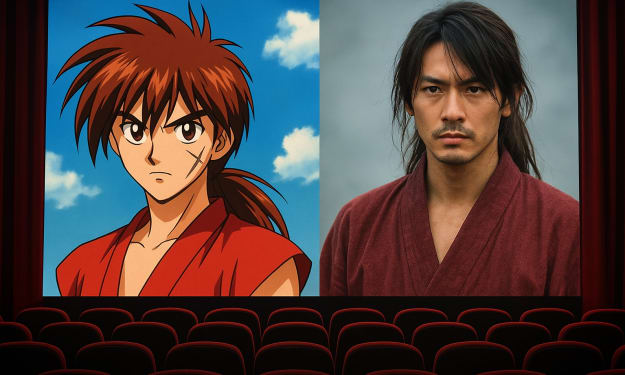
From Page to Screen: How Japanese Manga and Anime Fare in Live-Action Films
For decades, manga and anime have captured global audiences with their rich worlds, unforgettable characters, and emotional storytelling. It’s no surprise that studios often attempt to bring these beloved works into live-action cinema. But while anticipation runs high, the results are often mixed. Why is it so difficult to translate the magic of ink and animation into live-action? And what happens when it actually works?
By Takashi Nagaya5 months ago in Journal
The 5 AM Myth: Why I Trashed My Alarm Clock to Finally Find My Edge
The blue light of the smartphone screen felt like a laser beam hitting my retinas at 4:58 AM. Outside my window, the world was a bruised purple—silent, freezing, and utterly indifferent to my "ambition."
By George Evan7 days ago in Journal
Miss Persephone's Manual to a Seemingly Ordinary Life
Miss Persephone was found at the dining table, her blue eyes swollen, her tears arriving and retreating like the tides of the ocean. Earlier that day, her family had visited her in the retirement home where she had lived for eight years. It was her eightieth birthday.
By Imola Tóth3 days ago in Fiction


Comments
There are no comments for this story
Be the first to respond and start the conversation.