
There Is No Kingdom Called Agbarha-Warri
Setting the Historical Record Straight

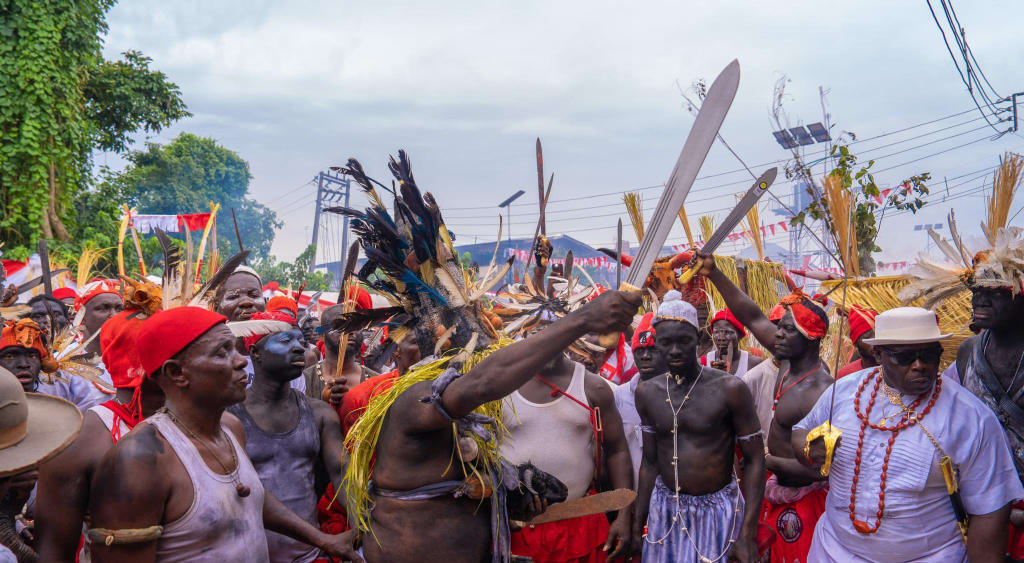
The name may echo with some familiarity, particularly among the Urhobo people living in parts of Warri, Delta State. However, when examined within the frameworks of traditional governance, historical records, and cultural legitimacy, the claim to a so-called "Agbarha-Warri Kingdom" begins to unravel.
Origins of the Confusion
The term Agbarha refers to one of the Urhobo sub-groups—a respected and ancient people with their own customs and traditions. Many members of the Agbarha Urhobo have settled in and around Warri, an Itsekiri and Ijaw-influenced urban space, over several generations. But geographical proximity does not equate to sovereign kingship.
The confusion likely stems from attempts to combine ethnic identity with territorial claim, especially within the highly political and contested environment of Delta State. The designation “Agbarha-Warri” is a modern construct, not a historically recognized kingdom. It is a phrase born from urban sprawl, colonial boundary manipulations, and ethnic tensions, not from a lineage of kings or the founding of a sovereign domain.
Understanding Kingdoms in the Niger Delta
To be clear, a kingdom in the Niger Delta—like the Kingdom of Warri (Itsekiri) or the Benin Kingdom (Edo)—has:
A centralized monarchy with historical continuity.
A recognized royal dynasty with coronation rites, palaces, and traditional councils.
A documented origin, often preserved through oral traditions, colonial records, and even Portuguese accounts dating back to the 15th century.
Agbarha has no such institution. There is no singular monarch, no centralized kingdom, and no coronation history that predates or rivals those of neighboring ethnic nations.
The Political Implications of Manufactured Kingship
Inventing kingdoms where none historically existed is not merely a semantic issue—it has serious political and cultural implications:
It can distort land ownership claims, fueling inter-ethnic conflict.
It undermines true cultural preservation by prioritizing political gains over historical accuracy.
It disrupts communal harmony, especially in multi-ethnic towns like Warri, where peaceful coexistence depends on mutual respect for heritage.
What Agbarha Truly Is
The Agbarha people are proud Urhobo, and their contributions to Warri’s social and economic life are undeniable. But their community is a settlement, not a kingdom. They have traditional leadership structures like Ovie or Okpako-Orere, but these are clan-based, decentralized, and not equatable to monarchical rule over Warri or any part of it.
This does not diminish the importance of the Agbarha Urhobo people. Rather, it preserves the integrity of their actual heritage, without misrepresenting or appropriating the history of others.
Historical truth matters. Cultural identity should be rooted in authenticity, not ambition. The push to label Agbarha-Warri as a kingdom is a revisionist exercise that does more harm than good. It risks alienating neighbors, falsifying records, and confusing generations to come.
Let us celebrate the Agbarha people for who they truly are—a vibrant Urhobo community, rich in culture, tradition, and resilience. But let us not crown what was never a kingdom.
Because there is no Agbarha-Warri Kingdom—and saying otherwise is not only inaccurate, but also irresponsible.
Let’s clarify and correct the statement:
“Numerous court judgments and land commission reports—such as the 1958 D.O. Moore Land Commission—recognize the separate and independent ownership of land by Agbassa and other Urhobo groups in Warri.”
This claim, while common in community narratives, is not fully supported by court judgments or official colonial-era land inquiries. In fact, legal precedent and government reports—especially from the 1930s to the 1970s—have mostly upheld the contrary: that Agbassa and other Urhobo communities in Warri are customary tenants under Itsekiri overlordship, not sovereign landowners.
What the Legal and Historical Records Actually Say:
Court Judgments – 1926 to 1973
All major court cases—at both Nigerian and British levels—ruled against Agbassa Urhobo claims to independent land ownership. Here’s a breakdown:
Ometan v. Dore Numa (1931)
Ruling: Agbassa were customary tenants, not landowners.
Lands in Warri were held by the Itsekiri under the Olu's overlordship.
Privy Council Appeal (1933)
Upheld the 1931 ruling.
Confirmed that no evidence supported the idea of independent Urhobo land tenure in Warri.
High Court (Obaseki J.) – 1957 (W/121/57 & W/41/57)
Reaffirmed that Agbassa were tenants of the Olu of Warri and that only the Itsekiri Communal Land Trustees could legally lease or alienate land in Warri.
Supreme Court (1973)
In SC. 67/1971, SC. 327/1972, and SC. 328/1972, the Supreme Court confirmed these earlier positions, ruling definitively that:
Agbassa people were not landowners but customary tenants and that the Olu’s authority over the land stood under native law and custom.
1958 D.O. Moore Land Commission Report
This colonial-era land inquiry was not a court but a fact-finding commission meant to advise on communal tensions and boundary disputes.
Key Facts:
The Moore Commission acknowledged that Urhobo (including Agbassa) had settled in Warri.
However, it did not override court judgments or directly grant them ownership of Warri lands.
The Commission sought administrative balance, not judicial finality.
Its findings were advisory, not binding — and subsequent courts gave more legal weight to case law.
So, What’s the Correct Statement?
Instead of saying that court rulings and land commissions recognized Agbassa as independent landowners, the accurate legal position is:
Numerous court rulings—including from the Supreme Court and the Privy Council—affirm that Agbassa and other Urhobo communities in Warri are customary tenants under the overlordship of the Olu of Warri, as per native law and custom.
While the 1958 D.O. Moore Land Commission acknowledged their presence and contributions, it did not grant or recognize them as independent sovereign landowners.
Conclusion
To preserve the integrity of historical and legal truth:
The courts have never recognized Agbassa as sovereign landowners in Warri.
The Olu of Warri and the Itsekiri Communal Land Trustees remain the recognized overlords of Warri lands under native law.
Any claim of independent Urhobo land ownership in Warri is not supported by Nigerian Supreme Court judgments nor by the Privy Council.
If you are preparing a paper, statement, or court response, I can help cite each case precisely in legal format or turn this into a public clarification document.
About the Creator
Omasanjuwa Ogharandukun
I'm a passionate writer & blogger crafting inspiring stories from everyday life. Through vivid words and thoughtful insights, I spark conversations and ignite change—one post at a time.
Keep reading
More stories from Omasanjuwa Ogharandukun and writers in Journal and other communities.
Judy Hopps and Nick Wilde land themselves in buddy cop therapy in Zootopia 2 trailer
The only hope the pair have to continue working together is if they're able to successfully track down a mysterious snake named Gary (Ke Huy Quan). However, the serpent proves to be much more slippery than they’d initially thought.
By Omasanjuwa Ogharandukun6 months ago in Journal
The Lost Soviet Mission to the Moon. How a Single Typo Caused a Catastrophe.
The Cold War pushed space programs to the edge. You saw rockets rise as symbols of power. You also saw secrets fall into silence. One mission aimed at the Moon never returned. Its failure stayed buried for years. Declassified records now tell a harsh story. A small typing error set off a chain reaction. The result ended a lunar dream.
By Wilson Igbasi7 days ago in Journal



Comments
There are no comments for this story
Be the first to respond and start the conversation.