
The Weight of a Word
Once spoken, words cannot be taken back—they can wound or they can heal.
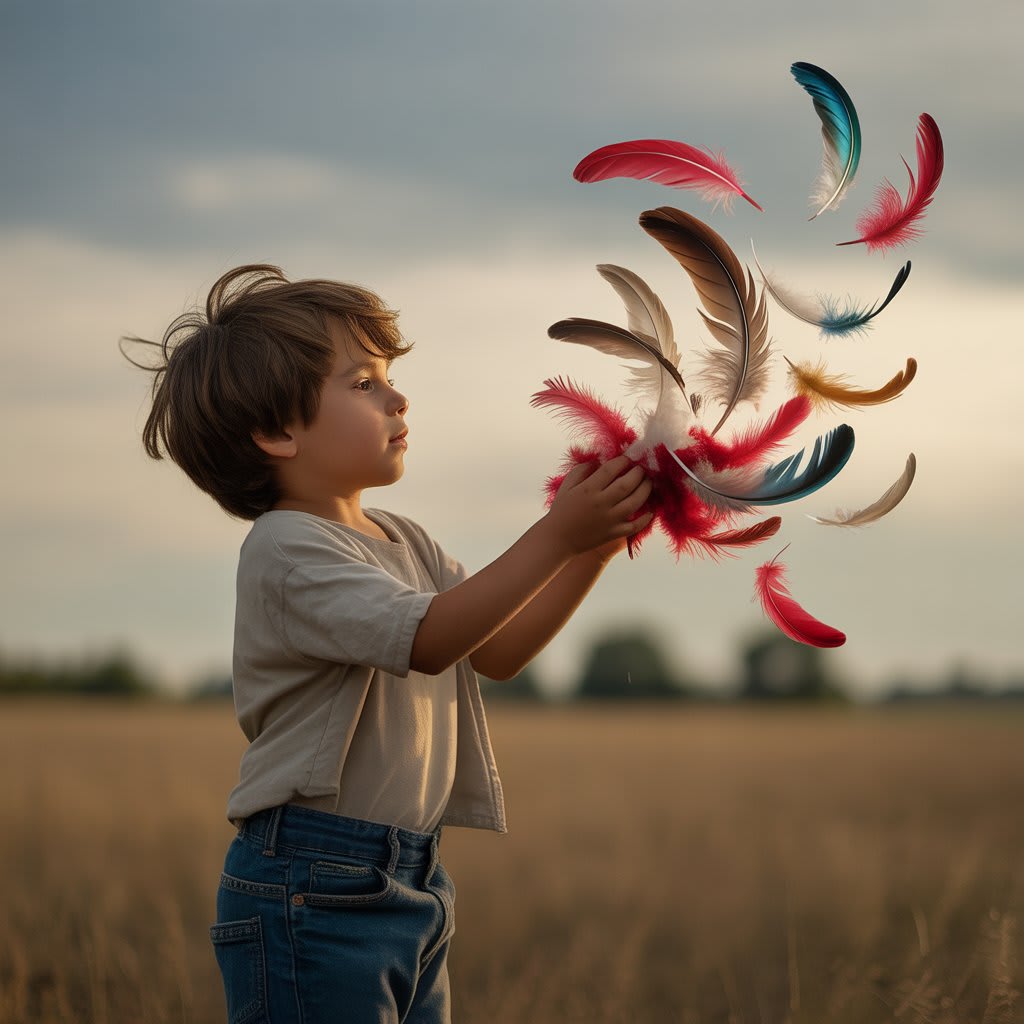
Once spoken, words cannot be taken back—they can wound or they can heal.
In a small sunlit village tucked between green hills and winding streams, there lived a boy named Kareem. He was clever and quick-witted, the kind of boy who always had something to say. His laughter rang through the marketplace, and his stories drew children from every corner. People admired his sharp tongue—until it cut too deep.
Kareem had a habit of speaking without thinking. His words were like pebbles tossed into a still pond—rippling far beyond what he could see. To him, words were harmless jokes. To others, they could sting like thorns.
One morning, the village market was alive with chatter. Women bargained over vegetables, men hauled baskets of grain, children darted between stalls. Kareem sat on a wooden crate, watching the crowd. When old Rahman, the farmer, passed by with his cow, Kareem couldn’t resist.
“Rahman!” he called out. “Your cow looks as tired as you do! Maybe you should both retire before you collapse together.”
Laughter erupted from the onlookers. Kareem grinned, pleased with himself. But Rahman’s shoulders sagged. He forced a smile and moved on, hiding the hurt in his tired eyes.
Later that day, Kareem joined a group of children playing near the well. Among them was a young girl named Amira, who had a small stammer. She spoke slowly, sometimes repeating sounds. Kareem, eager to impress his friends, imitated her speech, exaggerating every syllable.
The children roared with laughter. Amira’s face burned red. Tears filled her eyes as she ran away, her sobs swallowed by the noise of their amusement. Kareem shrugged. To him, it was just another joke.
But not everyone laughed.
The village elder, Safiya, a woman of many winters and quiet wisdom, had been watching. That evening, as the sun dipped behind the hills, she sent for Kareem. Her hut smelled of herbs and old wood, the air heavy with the silence of someone who listened more than she spoke.
Kareem entered, still grinning. “Elder, did you hear my joke today? Everyone laughed!”
Safiya’s gaze was steady, her eyes sharp but not unkind. “I heard. And I saw. Tell me, Kareem—do you know what your words are?”
“Just jokes,” Kareem said. “They don’t hurt. People laugh.”
Safiya shook her head and handed him a small pillow, soft and stuffed with feathers. “Take this into the village square. Cut it open, and scatter the feathers into the wind.”
Confused but curious, Kareem obeyed. He sliced the pillow with a small knife, and the wind caught the feathers immediately. They swirled upward, dancing into the branches of trees, floating across rooftops, some vanishing down the river. Kareem laughed at the sight.
“That was easy,” he told Safiya when he returned.
“Good,” she said calmly. “Now, go and gather every feather back into the pillow.”
Kareem frowned. “That’s impossible! They’ve blown too far. I could never find them all.”
Safiya’s eyes did not waver. “Exactly. So it is with words. Once spoken, they fly into hearts and minds. Some land gently. Others cut deep. But once they are released, you cannot call them back. Remember this, Kareem: the tongue has no bone, yet it is strong enough to break a heart.”
For the first time, Kareem’s laughter faltered. He thought of Rahman’s weary eyes and Amira’s tears. He felt a heaviness in his chest. His words, which had once seemed so light, now weighed on him like stones.
That night, he could not sleep. The echo of his jokes haunted him. He realized that while laughter faded quickly, the hurt remained. He had scattered feathers across his village, and there was no way to gather them back.
The next morning, Kareem sought out Rahman. He found the farmer in the fields, guiding his cow slowly across the furrows. “Rahman,” Kareem began, his voice softer than usual, “I spoke poorly yesterday. I mocked you. I am sorry.”
Rahman looked at the boy, surprised. Then he smiled faintly. “Words can wound, Kareem. But they can also heal. Thank you.”
Kareem felt a small warmth in his heart. Later, he found Amira by the well, hesitant and quiet. He approached her carefully. “Amira,” he said, “I was wrong to mock you. You are braver than I, because you speak even when it’s hard. I hope you forgive me.”
Amira blinked, tears welling in her eyes again—but this time, they were not from pain. She nodded, and for the first time since Kareem had known her, she smiled at him.
From that day on, Kareem changed. His quick tongue remained, but he chose his words with care. His jokes lifted spirits instead of cutting them down. His stories made people laugh without leaving scars. The children admired him not just for his wit, but for his kindness.
And the village, once echoing with laughter at others’ expense, began to echo with a different kind of laughter—warm, shared, untainted by cruelty.
Years later, when Kareem himself had grown older, children would sit at his feet and beg for stories. He would tell them about the pillow of feathers, about the elder’s lesson, about the day he learned that words were not as light as he once believed.
And always, he ended with the same truth:
“Words are like arrows. Once released, they cannot be pulled back. Use them to protect, not to wound. For the tongue has no bone, but it can break a heart—or mend it.”
---
About the Creator
Author’s Advice
If you would’ve asked me 20 years ago did I know I’d become a writer and an author, I would’ve said “nope, ain’t happening”. As fate would have it I did become an author and I can honestly say I’m loving it so far. It really does feel good to be a writer. I’ve learned a lot on this journey and I feel like with even me being as new to this world as I am, there’s some wisdom I need to share with every other aspiring author.
By Joe Patterson5 days ago in Journal




Comments (2)
Keep up good work
Nice story