
The Guardian of the Forest
When silence falls, nature whispers its greatest truths.
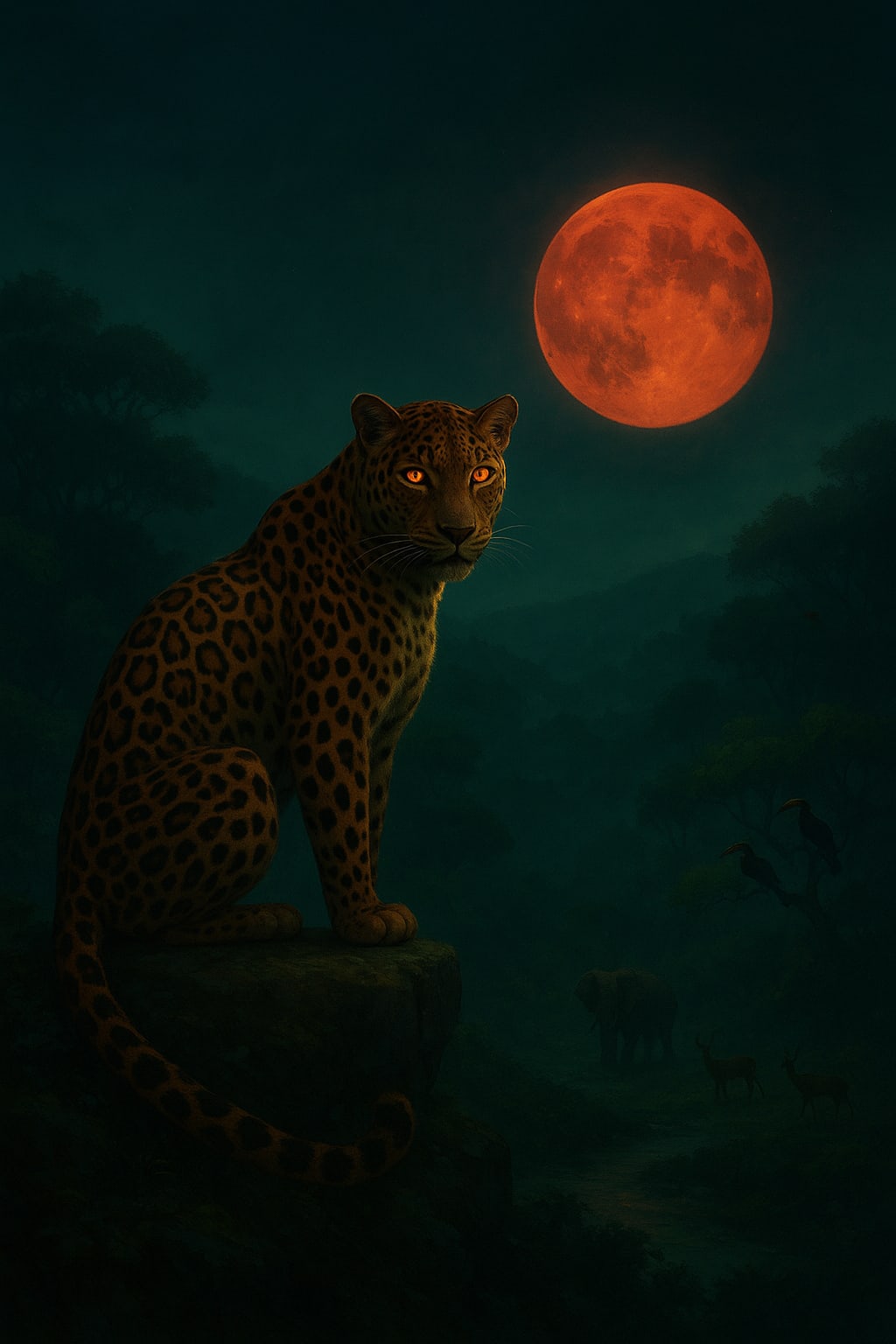
When silence falls, nature whispers its greatest truths.
The valley was a world of its own. Wrapped in emerald mountains and veiled with silver mist, it was a place where time slowed, where every rustle of leaves carried meaning. Here, the forest pulsed with a quiet rhythm—birds rising with dawn, rivers whispering to stones, insects composing symphonies after rain. To outsiders, it might have been just another stretch of wilderness, but to those who lived within, it was a sacred sanctuary.
Among its many inhabitants prowled a leopard named Sira. Her coat was golden fire patterned with black shadows, a perfect camouflage against the dappled light. Yet what made her unique was not her beauty or her strength, but her watchfulness. She carried herself with a patience that suggested she was not just surviving in the forest—she was guarding it.
Sira knew the language of her world. She understood the alarm calls of langurs, the deep grumbles of elephants, and the faint scratchings of porcupines digging for roots. When she padded through the undergrowth, she did so silently, leaving only a whisper of her presence. She hunted to live, not for sport. She belonged to the forest, and the forest belonged to her.
For many years, the valley remained untouched. Seasons passed like gentle waves: monsoons turning rivers into rushing torrents, summers painting the grasses gold, winters drawing mist thick enough to erase the horizon. The animals moved with these changes, trusting the constancy of the land. But one season, something unnatural arrived.
It began as a low growl in the distance, a sound unlike thunder or rain. Then came the grinding roar of engines, the metallic bite of saws. The forest trembled as men climbed the eastern ridge, carrying machines sharper than any predator’s tooth. Trees fell with deafening crashes, roots torn from the earth. Birds fled their nesting grounds in frantic clouds. Even the river seemed to muddy with distress.
From her perch on a rocky ledge, Sira watched. Her amber eyes did not blink as she took in the scene. The balance of her world was unraveling.
The deer stopped grazing in their open meadows, retreating deep into the thickets. Elephants began to wander restlessly, their rumbling calls edged with unease. The hornbills that once filled the sky with their wingbeats now vanished into quieter groves. Even the tiny pangolin, usually tucked safely into the soil, scuttled closer to her territory, as if seeking shelter.
They did not speak to her with words, but instinct bound them together. The forest needed a guardian, and the animals, knowingly or not, turned their hope toward the silent leopard.
That night, under a moon that hung low and red, Sira prowled near the men’s camp. She circled their machines, leaving deep claw marks along the cold metal. She pressed her paws into the soft mud where they would surely notice her tracks at dawn. Her growl rolled across the trees, low and unearthly, carrying a message the forest itself seemed to echo: You are not welcome here.
The men, hardened workers with little patience for superstition, dismissed the signs at first. But the forest was clever, and it moved with Sira.
When the men attempted to drive their trucks deeper into the valley, a fallen tree blocked the path. When they tried to set up a new camp, a herd of elephants gathered in the underbrush, shifting their weight, warning with every trumpet that this was no place for trespassers. Snakes slithered near their fires. The wind itself carried eerie calls at night, magnified by the leopard’s watchful presence.
Whispers spread among the workers. Some spoke of a ghost-cat, a spirit that guarded the valley. Others muttered about bad luck. They grew restless, their courage thinning as each day passed.
Still, they pushed forward. And so, Sira revealed herself.
On a night draped in silence, she stepped from the shadows onto the ridge above their camp. Her silhouette was carved against the pale sky, muscles sleek, tail curved like a question. Her eyes glowed, two flames piercing the dark. She did not snarl, nor did she pounce. She simply stood there—an ancient symbol of power, grace, and warning.
The men froze. In that instant, they understood. They were not conquerors here; they were intruders. Before them stood not just a leopard, but the embodiment of the forest itself—wild, eternal, unbroken.
By dawn, the machines were silent. One by one, the men withdrew, leaving their half-cleared ridge behind. The valley exhaled, as though it had been holding its breath.
Slowly, the rhythms returned. The hornbills circled the skies once more. The deer stepped cautiously back into their meadows. The elephants, calm again, splashed in the river’s cool waters. The forest stitched itself back together, scarred but resilient.
And Sira? She melted back into the undergrowth, her work done. To the men, she remained only a story—half truth, half myth—told around campfires with nervous laughter. But to the creatures of the valley, she was more.
The pangolin would always remember the shelter of her shadow. The elephants would rumble in quiet acknowledgment when they crossed her path. The hornbills would lift their wings in honor as they soared overhead.
For in the wild, heroes do not wear crowns or medals. They wear spots, feathers, tusks, and scales. They protect not with speeches, but with presence.
Sira was not just a leopard. She was the guardian of the forest. And as long as her paws touched the earth, the valley would endure.
---
About the Creator
The Little Light That Could
In a small town tucked between rolling hills and winding rivers, there lived a boy named Sami. He wasn’t the tallest, nor the strongest, nor the loudest in school, but he had something that set him apart—a spark of curiosity that refused to be dimmed. While other children chased games and toys, Sami found joy in observing the world around him, noticing the small details others overlooked.
By Abuzar 7 months ago in Confessions
Twinkle, Babyheart, & Lubasa
I'm still under the impression from the documentary I watched yesterday and two particular episodes from it wouldn't leave my mind, so I'm just going to write this to purge and share this knowledge with anyone who cares to know. Fair warning: this is really heavy.
By Lana V Lynx2 days ago in Criminal
Frozen in the Andes: The Haunting Survival Story of Flight 571
On October 13, 1972, a small aircraft carrying a group of young rugby players, their friends, and family members took off from Montevideo, Uruguay, heading toward Santiago, Chile. The journey was meant to be a simple trip across the Andes Mountains for a friendly rugby match. Spirits were high inside the plane. Laughter, excitement, and youthful energy filled the cabin.
By imtiazalam3 days ago in Criminal
My First Time Skiing and I Got Lost, Alone, in the French Alps
Looking back, I can trace some of my life’s biggest adventures to a simple action from my sister. She’d introduced me to Tommy (a very long time ago), a colleague of hers, who had overshared his penchant for Italian-looking women, and I ticked that box.
By Chantal Christie Weiss2 days ago in Humans



Comments (2)
Super
I like your story too much