
The Spiking Brain: How a New Kind of AI Could End the Energy Vampire Era
What if artificial intelligence could think like the human brain — faster, smarter, and with a fraction of the power?
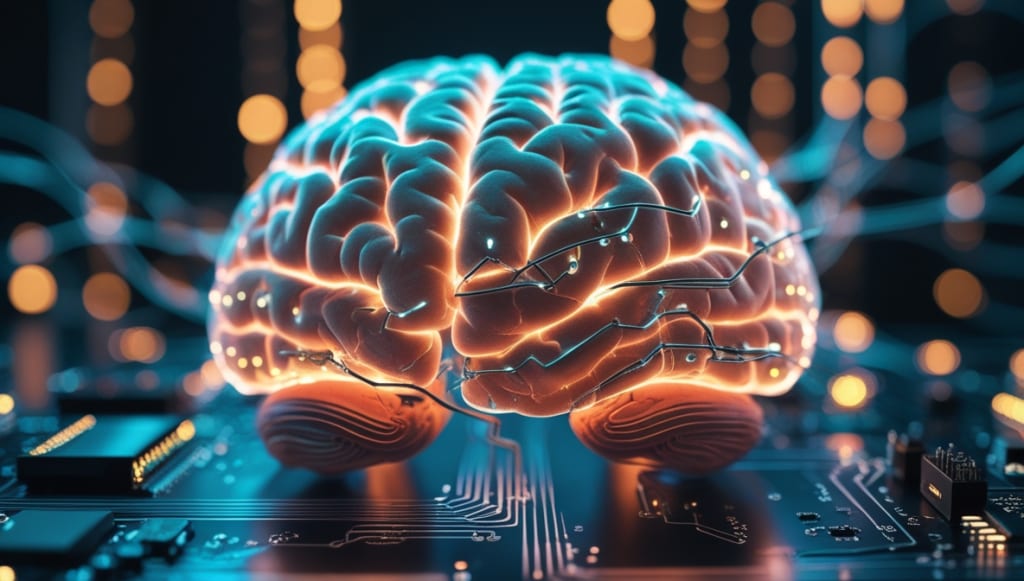
Artificial intelligence seems magical for many people. You enter a query, and in just a few seconds a smart machine gives a straightforward answer. But under this simple interface is an often forgotten element: energy use.
AI technology is quietly turning into a forgotten energy user as it develops. Supporting large language models, data centers consume a lot of energy—and this usage is rapidly increasing. The International Energy Agency projects that by 2030, data centers' energy demands might more than double—mostly as a result of artificial intelligence applications. Data centers accounted for around 1.05% of all worldwide energy consumption in 2024; this number is set to rise dramatically.
Every search, every picture creation, and every artificial intelligence-driven recommendation has an unseen energy effect. Every little contact could run a light bulb for many minutes. The environmental effects are significant when this is multiplied by billions of daily interactions.
The main issue is: Can artificial intelligence improve its intelligence without consuming our planet's resources?
Introducing the Spiking Brain
Permit me to present Spiking Brain, a ground-breaking artificial intelligence system inspired by the human neurological system. Unlike conventional artificial intelligence systems that constantly analyze all available information, Spiking Brain starts selectively in reaction to important events.
Consider contemporary artificial intelligence as a desktop computer running continuously, using electricity even while not actively in use. Unlike the Spiking Brain, which is energy-saving, adaptable, and reactive to events like the human brain. The neurons in our brain only trigger when needed, therefore conserving energy. Using spike-based computations, the Spiking Brain mimics this approach to greatly reduce energy consumption while still maintaining cognitive capabilities.
Although it has great sophistication, it can execute complex tasks with astounding pace. Imagine a system that could read whole books, catch delicate contexts, and generate intelligent responses using only a tiny fraction of the electricity used by traditional AI methods.
Smarter, Faster, and 100 Times More Efficient
From its origins, the developers of Spiking Brain have totally reevaluated artificial intelligence. Because they depend on quadratic attention mechanisms, conventional huge language models' energy and computing costs rise exponentially with longer inputs. On the other hand, Spiking Brain uses linear attention, which lets long texts be effectively processed without a great rise in energy expenditure.
In evaluations, a Spiking Brain model with seven billion parameters showed 79% computational sparsity by getting rid of unneeded computations while keeping accuracy. Moreover, it was discovered to run up to 100 times faster than typical models.
This innovation suggests that for the average AI can provide quicker replies, use less battery life, and work effectively in areas with limited energy sources. user. Hence expanding access to advanced intelligence.
Linear Attention Beyond Limits
Furthermore, using linear attention is the Spiking Brain paradigm. Comparable to reading eight whole books without stopping, a method able to process millions of inbound tokens simultaneously.
This invention makes artificial intelligence more coherent and human-like by letting it grasp long-term settings. Unlike conventional models that frequently lose contextual awareness after a few sentences, the spiking brain preserves understanding over big datasets and is more energy-efficient.
Accessibility and Sustainability Working Hand in Hand
Energy-efficient artificial intelligence aspires beyond just lowering power expenses. Ensuring the global accessibility and sustainability of artificial intelligence depends on it. For most countries and regions, the energy demands of artificial intelligence today are unreasonable. By considerably lowering energy usage, the spiking brain promotes the fair adoption of artificial intelligence technology that will help educational projects, research initiatives, and social programs throughout.
Spiking Brain might revolutionize people's perceptions of artificial intelligence, turning it from a costly, energy-intensive technology into a commonly available tool for creativity and problem-solving.
Made open to everyone but NVIDIA
Development of Spiking Brain employed Metax chips, a Chinese hardware substitute, in place of NVIDIA GPUs, therefore proving that creative AI systems can flourish apart from one, dominant ecology.
Open-source models and code from the research group enable developers, academics, and educators to collaborate, test, and develop collectively. Beginning a new era in the sharing of scientific advances, this transparent and open approach
Neuromorphic Computing: The Future of AI
Among the neuromorphic computing movement, which aims to produce systems able to process data like biological brains, the Spiking Brain is one part. Businesses like Intel and IBM are leading the way with similar chips modeled after brain activities. The Loihi 2 from Intel, for instance, performs challenging jobs while using little electricity compared to conventional processors.
Experts caution that in the long run traditional AI systems relying on raw force are not sustainable. Should artificial intelligence be embraced throughout the world uncontrolled, energy consumption may rise significantly. One alternative that lets for complex artificial intelligence without consuming too much power is the neuromorphic technology known as Spiking Brain.
A Glimpse Into the AI Brain
The spike visualization Spiking Brain generates offers quick knowledge of the firing patterns of artificial neurons. Employing enigmatic black-box systems is gone; now, scientists may grasp the logic behind artificial intelligence's decisions.
This degree of openness is absolutely necessary to guarantee the safety, ethical use, and public confidence of artificial intelligence as it starts to have more impact on our life. assurance. governance, healthcare, and education among other industries.
Toward a More Intelligent and Sustainable Future
Spiking Brain points to the direction of artificial intelligence: it is smart, energy-efficient, and open-source. It shows how compatible large strength and excellent efficiency are.
As artificial intelligence keeps influencing our society, innovations like Spiking Brain—which combines insights from neuroscience—have the capacity to completely transform the idea of ethical innovation. using computational intelligence to design more intelligent, quicker, and ecologically friendly systems.
The essential issue is if the artificial intelligence industry will embrace sustainable intelligence or whether conventional brute-force techniques will still prevail. The solution to this question will help us to decide the path of technology and the course of our planet.
About the Creator
Keep reading
More stories from Shahjahan Kabir Khan and writers in Journal and other communities.
Apple’s M5 Revolution: The Future Just Got an Upgrade
The world listens whenever Apple moves. Beyond just upgrading its product line, the tech giant changed the ideas of power, beauty, and integration inside a linked ecosystem this week. Apple has established a distinct difference between the features of the latest M5 chip now powering the iPad Pro, MacBook Pro, and Vision Pro. old computers and the future chances they will provide.
By Shahjahan Kabir Khan3 months ago in Journal
Iran: The Anatomy of a Twilight
There are images whose power lies not in the brilliance of what they reveal, but in the abyss of what they leave unsaid. A dark silhouette cutting through the leaden skies of Tehran; the heavy silence of departure lounges; and that dry, bureaucratic warning, cold as a judicial sentence: “Leave the country immediately.” When a foreign ministry, usually so adept at hushed euphemisms, exhorts its citizens to flee, it is not merely issuing a cautionary advisory. It is issuing an admission of failure. It is the explicit recognition that the structures of order have become mere theatrical backdrops, that coercion has supplanted law, and that the threshold of radical unpredictability has been crossed. Iran, in this early stretch of 2026, is no longer merely trembling; it has settled into that twilight “in-between” where the crash has not yet occurred, but where the very silence feels like the herald of a seismic shift.
By Laurenceau Porte6 days ago in Journal
Silver Screen Magic with Mae West
American actress and singer Mae West became a popular film actress during the Great Depression. She started entertaining in vaudeville, then performed on Broadway, and finally went to Hollywood. She signed up with Paramount Pictures and made her debut in the 1932 film “Night After Night.” She also starred in musicals, comedies, and crime dramas. The American Film Institute named her one of the best classic Hollywood actresses.
By Rasma Raisters5 days ago in Geeks




Comments
There are no comments for this story
Be the first to respond and start the conversation.