
The Shadow Economy of Data: How Your Digital Life Is Bought and Sold
Every click has a price — and someone is cashing in on you.
It happens in silence.
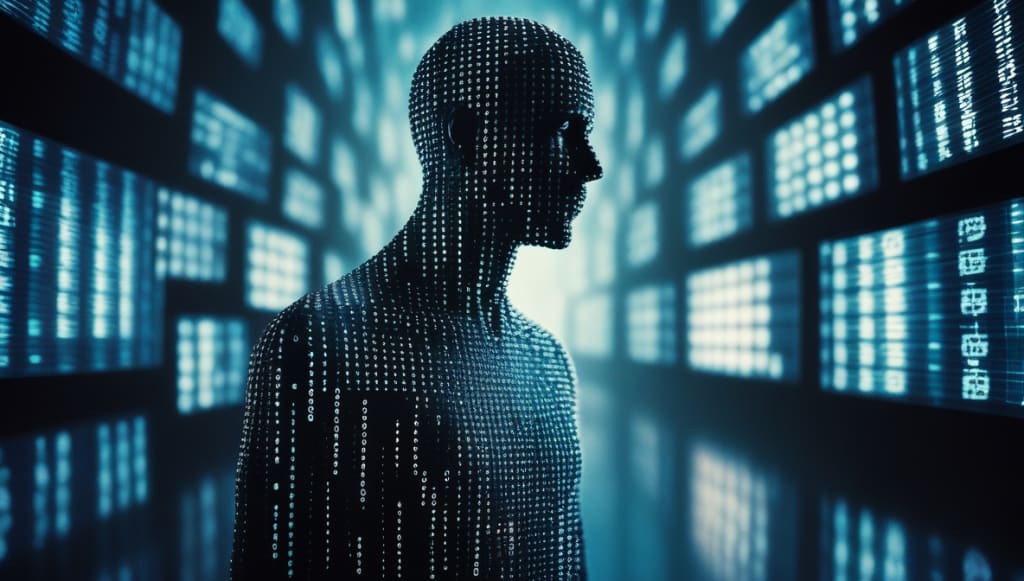
You scroll through your favorite news site, like a post, or search for a new pair of shoes — and somewhere, in the vast invisible network of the internet, your digital shadow grows. You didn’t sell it. You didn’t even know it was for sale. But make no mistake: you are the product.
The Billion-Dollar Industry You Never See
Data is the oil of the 21st century — extracted quietly, refined invisibly, and traded at a profit most of us never see. Every second, trillions of pieces of personal information move through what experts call the shadow economy of data.
Your browsing history, app activity, GPS location, shopping habits, even your sleep patterns from a smartwatch — all are packaged, analyzed, and auctioned off to advertisers, corporations, political campaigns, and sometimes even foreign governments.
A single person’s “data profile” can include thousands of data points: where you live, what you fear, who you love, and what makes you click. This invisible identity — your algorithmic twin — is worth more than gold to those who know how to use it.
How the Trade Works
It starts innocently enough. You download a free app. You accept cookies on a website. You sign up for “personalized recommendations.” Each small consent gives away a fragment of your digital self.
These fragments are harvested by data brokers — companies you’ve probably never heard of, like Acxiom, Experian, or Oracle Data Cloud. They compile your digital history into detailed behavioral dossiers. These dossiers are then sold to marketers, insurers, and political strategists who can predict — and manipulate — your decisions.
Ever notice how an ad for something you only thought about seems to appear within hours? That’s not coincidence; that’s precision.
In this shadow economy, privacy isn’t stolen — it’s surrendered, one checkbox at a time.
The Hidden Cost of Convenience
We traded privacy for comfort long ago. “Smart” devices made life easier — voice assistants that remember our grocery lists, fitness apps that count our steps, streaming platforms that predict our next favorite show.
But every convenience came with a catch. When your refrigerator connects to Wi-Fi, it learns your diet. When your car connects to GPS, it learns your routes. When your phone listens for “Hey, Siri,” it listens for everything else, too.
It’s not paranoia; it’s business. Tech giants claim it’s all about “enhancing user experience,” but the real enhancement is to their profit margins. According to industry estimates, the global data brokerage market is worth over $300 billion annually — built entirely on the lives and habits of billions who never consented to be commodities.
The Illusion of Control
“Manage your privacy settings,” they tell us. But the truth is, control is an illusion.
Even when you delete an app or clear your browsing history, your data often persists — stored on servers halfway across the world, cross-linked with other data sources, reconstructed through AI analytics.
Once you’re mapped, you’re mapped forever. Your digital fingerprint is nearly impossible to erase.
The irony? Many of the same companies warning us about cybersecurity risks are also the ones profiting from our exposure.
The Psychological Toll
Beyond economics, the trade in data shapes who we are. Algorithms learn what keeps us angry, fearful, or addicted — and feed us more of it. Social media doesn’t just reflect your personality; it conditions it.
By analyzing our behavior, platforms can subtly steer emotions, political views, and even self-worth. This isn’t surveillance; it’s manipulation at scale.
The result is a world where people are predictable — and predictability is power.
The Fight for Digital Dignity
Some nations are fighting back. The European Union’s GDPR (General Data Protection Regulation) and California’s Consumer Privacy Act (CCPA) give citizens limited rights to know and delete what’s collected about them.
But legislation moves slower than innovation. As new technologies like AI, biometrics, and smart cities emerge, data capture becomes harder to track — and easier to abuse.
Ultimately, the battle over data isn’t just about privacy; it’s about autonomy. Who owns your life story — you, or the algorithm interpreting it?
The Power of Awareness
We may not be able to stop data collection entirely, but we can become smarter consumers of our own information. Use privacy browsers. Limit app permissions. Say “no” to unnecessary cookies. Choose tech that values transparency.
Because every click, every like, every digital heartbeat feeds a machine that either serves us — or owns us.
The shadow economy thrives on our ignorance. The moment we understand its rules, we begin to take our value back.
In the end, data is just a reflection of us. The question is: will we control the reflection — or let it define who we are?
About the Creator
Keep reading
More stories from Shahjahan Kabir Khan and writers in Journal and other communities.
AI and the Soul: Can a Machine Ever Be Truly Human?
Early scholars envisioned artificial intelligence as correctness, mathematical genius, and logical capacity, but not as compassion, empathy, or belief. Machines were created to compute; by 2025, we are engaging with humanoid robots smiling, expressing emotions, utilizing digital therapists, and Companions of artificial intelligence, repentance, and even declaring, I see.
By Shahjahan Kabir Khan4 months ago in Journal




Comments
There are no comments for this story
Be the first to respond and start the conversation.