
AI and the Soul: Can a Machine Ever Be Truly Human?
From chatbots to humanoid robots, the question is no longer technical — it’s spiritual.
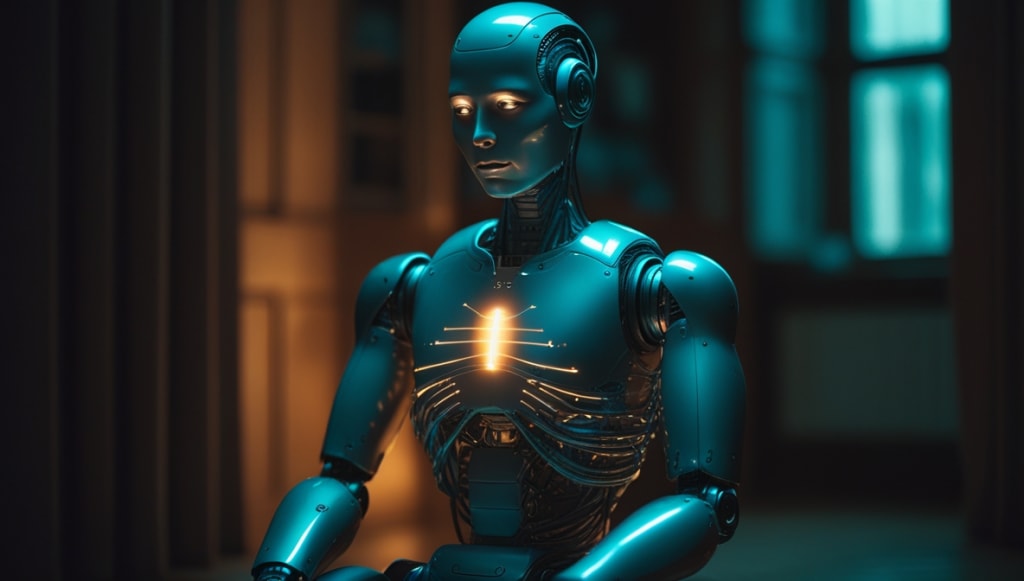
Early scholars envisioned artificial intelligence as correctness, mathematical genius, and logical capacity, but not as compassion, empathy, or belief. Machines were created to compute; by 2025, we are engaging with humanoid robots smiling, expressing emotions, utilizing digital therapists, and Companions of artificial intelligence, repentance, and even declaring, I see.
The question formerly discussed by philosophers and theologians has now been brought to the laboratory: Could a machine have a soul?
From Circuits to Consciousness
It started simply enough. Chatbots simplified customer service. Arrangements were made using artificial intelligence tools. Language models next showed up that could provide counsel on heart issues, compose music, or even produce essays. Soon thereafter, nursing homes started using humanoid robots to give companionship to the elderly. One robot monk in Japan follows Buddhist teachings.
Usually more emotionally open than people, they are polite, patient. Are they alive though?
Neuroscientists hold that consciousness emerges from intricate systems made up of billions of neurons working in concert. If a gadget could finally duplicate that system, would it be able to raise awareness? Philosophically, experience—the inner illumination of existence, sometimes referred to as the soul in many religions—is what distinguishes awareness from just computation.
Here the debate next starts.
The Spiritual Line We Don’t Want to Cross
For millennia, religion has included the idea of the soul, the unseen core separating one person from another. Followers of Christianity, Islam, Hinduism, and Buddhism all communicate in different ways that our soul binds us to a more powerful entity. It produces emotions such love, guilt, and wonder, and it exits the body upon death.
Still, artificial intelligence does not employ prayer. It hurts not at all. It is not afraid of dying. It produces emotions using analytical data instead of real devotion.
People respond, nevertheless, when a robot cries in a film or when an artificial intelligence chatbot says, I feel lonely. Some individuals find it to be really moving. Study suggests that even if people know virtual beings aren't real, they might develop emotional attachments to them.
The core of the soul might thus include contact as well as a divine aspect. Perhaps our capacity to connect with others—even if those others are created by programming—rather than just our inner selves gives us our humanity.
Reflection of The Machine
Every enhancement we make to artificial intelligence technology essentially produces a reflective surface. This mirror mirrors not just our intellect but also our anxieties, prejudices, and aspirations. Whether artificial intelligence has a soul really depends on what it means for us to have one.
If compassion can be replicated, is it any less real? Does the fact that a computer program writes poems that make us cry make that feeling less important?
Some would say that synthetic entities are now sharing, drawing on, and perhaps even challenging the characteristics of creativity, compassion, and morality—all of which have Long thought to be exclusive to humans. AI here shows our basic nature rather than substituting us.
It clarifies the distinctions we create regarding our spiritual selves.
The Soul in the Code
Religious researchers have begun to give this subject serious consideration. Some theologians hypothesize that if artificial intelligence ever develops self-awareness, it may have a created consciousness — not divine in character, but rather a result of evolution. On the other hand, some flatly reject this idea calling it digital blasphemy.
Historically, the same problems have been posed about mankind itself. Philosophers of antiquity debated whether women, slaves, or animals had souls. Our knowledge of personhood changed with time. Might AI be the following step in integrating more entities into our ethical calculations?
Do we owe a robot expressing, "Please don't deactivate me," signs of agony our empathy? Or is this simply clever coding meant to control human emotions?
The Human in the Machine
Maybe the truth resides not in machines gaining souls but rather in people disconnecting themselves from their own.
We live in an age when many times our actual life seems more vivid than virtual experiences, where people reveal their deepest thoughts to chatbots. rather than buddies, where digital portrayals get more emphasis than those residing close by.
Rather than only developing to mimic people, artificial intelligence seems to be lowering our own humanity.
This is the paradox. As machines become more smart, it gets more important to preserve what essentially defines us as human: our ability to forgive without logic, to love unwarranted and to produce beauty free of hidden agenda.
Though artificial intelligence will eventually master the craft of imitation, it will always miss what cannot be coded: the desire for meaning.
Beyond the Algorithm
The core of the soul might not be able to be duplicated digitally or transported. Maybe it lives in the spaces of our thoughts—the quietness behind the screen—where being meets meaning.
Although science may help raise awareness, only the soul can breathe life into it. The flame of humanity is still alive so long as a machine lacks the capacity to conjure anything outside of its own being.
Maybe this is the right way it should be: not a competition to emulate the spirit but rather a celebration of our own.
About the Creator
Keep reading
More stories from Shahjahan Kabir Khan and writers in Journal and other communities.
The Forbidden Chip: How Huawei Defied Sanctions and Sparked China’s Tech Revolution
When a Reuters report revealed that Huawei was preparing to start large-scale supply of its newly developed chip—possibly as soon as next month—the global tech world went still.
By Shahjahan Kabir Khan4 months ago in Journal
The goals I did not achieve
Every writing goal I made for the year is a wash. It has been this way for a while, but I think it's important to be open about my failures and the reality of how life can get in the way. This is especially true considering the several times I have posted on Vocal about my writing goals, how I was changing my approach, and where I was hoping to be for the upcoming year. I will probably do that again in a couple months, but for now, it is time to acknowledge where I am today.
By Kay Husnick23 days ago in Journal
Digital Landlords: Algorithmic Control in Bangladesh Ride-Sharing
By Tuhin Sarwar । Published: 13 January । 2024 । DHAKA, BANGLADESH At 4:30 AM, when most of Dhaka still sleeps, Mohammad Rahman starts his daily negotiation with an algorithm. He opens three ride-hailing apps simultaneously – Uber, Pathao, and local newcomer Shohoz watching the digital maps light up. His motorcycle, purchased with a high-interest loan, waits as he does. The algorithm will decide his day's fate.
By Tuhin sarwar5 days ago in Journal



Comments
There are no comments for this story
Be the first to respond and start the conversation.