
The Role of AI Shopping Assistants in Transforming Customer Experience and Boosting Business Growth
Revolutionizing Retail: How AI Shopping Assistants Enhance Customer Experience and Drive Business Success
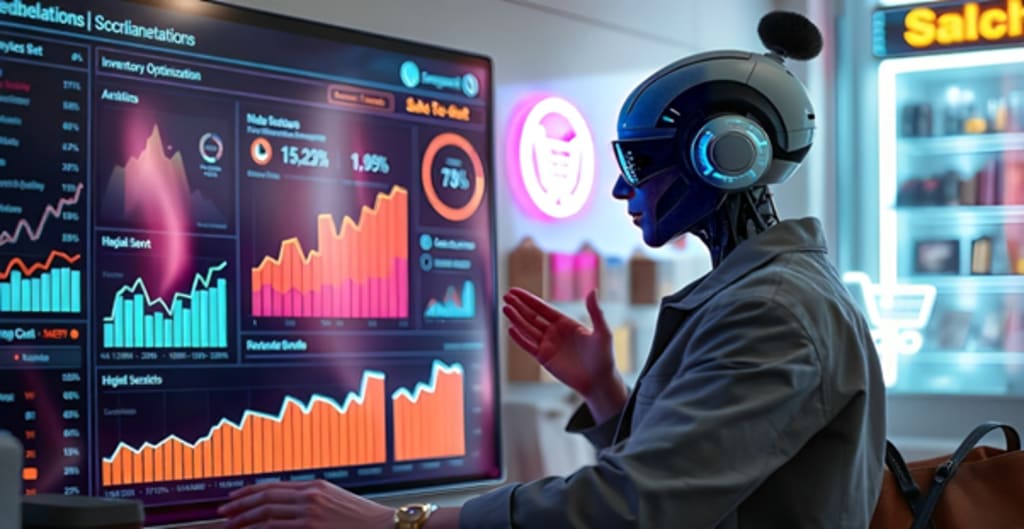
The Role of AI Shopping Assistants in Transforming Customer Experience and Boosting Business Growth
Introduction: The Rise of AI Shopping Assistants in a Digital-First World
Ecommerce is important and imperative to note that by 2040, 95% of all purchases will be completed over the web. With all of that and given the need for a highly smooth, personalized, and significantly efficient customer experience that AI shopping assistants are giving an eCommerce business, the ordinary product catalog has been a way to morph into these lively marketplaces that feature their customer-centric online platforms using AI instant support and more about recommendations and conversational shop experiences.
Those days when personalized shopping assistance was only for high-end brands or for expensive purchases like designer clothes, furniture, or exclusive accessories are long gone. Today, in the competitive marketplace, every consumer expects a personalized shopping experience, be it in terms of product or price. AI shopping assistants have filled that gap, transforming online retail into an interactive, user-friendly ecosystem.
This paper reviews the role, benefits, and integration of AI shopping assistants into life as applied to businesses and their clients, and how this is all changing the future of retail. From operational efficiency through customer satisfaction, the future of retail is being ushered into new dimensions.
1. The Shift Toward Digital Shopping: Why AI is the Key
The growth of online retail has been explosive. According to recent research:
• 59% of consumers prefer online platforms for their convenience and diversity.
• 86% of shoppers expect personalized communication and recommendations.
• Gen Z and millennials drive digital shopping trends, with 60% willing to make purchases via chatbots.
While earlier generations may view eCommerce as transactional, younger generations crave engagement and personalization. Gen Z sets new standards, with 83% expecting brands to understand them individually and 65% demanding two-way dialogue.
AI shopping assistants have emerged as the solution to bridge these expectations by providing conversational, intelligent, and user-friendly assistance throughout the customer journey. They humanize the online shopping process, creating an experience that mimics the in-store personal assistant.
2. What is AI Shopping Assistant?
A virtual assistant for shopping through the usage of artificial intelligence, machine learning, and NLP helps the customers navigate an easy online shopping experience. AI shopping assistants are able to conduct several tasks such as the following:
• Presented with customized product suggestions
• Automatic FAQ answers
• Cart abandonment reminders
• Order tracking, delivery, returns
• An end-to-end virtual concierge experience for the customer especially at high-traffic sales time.
By streamlining these tasks, AI assistants not only improve customer satisfaction but also optimize business operations, creating a win-win situation for brands and consumers.
3. Benefits of AI Shopping Assistants to Businesses
3.1 Increased Operational Efficiency
AI shopping assistants automatically handle time-consuming, repetitive work such as;
• 24/7 answering common customer queries
• Monitoring and updating order status
• Alerting for restock of products
AI assistant frees up human teams for other high-value strategic initiatives such as innovation, marketing, and relationship management. This has results in:
• Higher productivity
• Reduced labor costs
• Quicker response to the customer
3.2 Enhanced Customer Relations
A strong benefit of AI shopping assistants is their ability to form stronger customer connections through customized interactions. Personalized shopping experiences are no longer an option but an expectation among today's consumers. AI assistants:
• Learn customer preferences based on browsing and purchase history
• Provide live recommendations for products customers want and need
• Help during peak times - such as holiday sales times - to ensure customers find exactly what they need.
These personalized experiences not only enhance customer satisfaction but also increase trust and loyalty toward the brand.
Example: During the Amazon Great Indian Festival, Amazon's AI assistant, Rufus, offered product comparisons, responded to user queries, and provided personalized recommendations, effectively targeting Gen Z and millennials.
3.3 Intelligent Revenue Growth
AI shopping assistants generate revenue growth through intelligent, data-driven strategies, including:
• Upselling and cross-selling: Suggesting complementary products to increase cart value.
• Recommendations based on the algorithms of AI that can scan past purchases and browsing behaviour.
• Seasonal promotions: Sharing product recommendations in relation to specific events (e.g., Diwali cleaning, Christmas shopping).
For businesses, this information translates into higher conversion rates and increased average order values.
3.4 Inventory Management
AI analytics streamlines the inventory management by:
• Analysing historical sales data and market trends.
• Predicting demand for specific products.
• Preventing stock shortages and overstocking.
Optimization of inventory can ensure that businesses meet the demand, reduce warehousing costs while preventing missed sales opportunities.
4. AI Shopping Assistants in Practice: Examples
4.1 Amazon's Rufus
Amazon's AI assistant, Rufus, makes shopping easier and fun by:
• Product comparison.
• Instant responses to customer queries.
• Personalized recommendations during the sales period.
This AI assistant caters to Gen Z and millennial customers who seek instant support and recommendations.
4.2 Sephora's Virtual Artist
Sephora uses AI-based virtual assistants to assist customers in:
• Trying on makeup virtually through AR.
• Finding products based on their preferences.
• Get skin care advice that would fit their skin type.
This makes the shopping experience fun and less hazardous for online beauty shopping.
4.3 Digital Assistant in IKEA
IKEA AI assistant provides virtual design service to customers through:
• Displaying furniture in their home using AR.
• Selecting products based on space and budget.
• Answering frequently asked questions concerning product dimensions and availability.
5. How to Use AI Shopping Assistants
The proper implementation of AI shopping assistant involves an appropriate and step-by-step process :
5.1. Available AI Solution
• The platforms must support the consumption of AI-based tools and include the use of chatbots and recommendation engines and
• The tool should be seamlessly integrable into the existing platform of eCommerce 5.2. Collect data and carry out analysis
• Use customer data to understand about preferences, purchase patterns behaviors.
• Use this data for training AI systems so that it becomes even more personalized for even more personalized interactions.
5.3 A Conversational UI
• Develop an AI chatbot that can converse with customers in a very natural and conversational language
• Test and perfect the UI for the users to have the best experience in using the same.
5.4 AI plus Human Support
• Human agents to be there in case AI assistants cannot handle the query or complex problem the customer has
• AI analytics for human teams to serve the customers in a better quality
6. The Future of the AI Shopping Assistant
All the following should be part of this future AI shopping assistant.
• Voice Search: The customers can shop using voice commands
• Visual Search: Products can be searched through images.
• Predictive Analytics: Knowing what customers will need even before they ask
• Emotion AI: Know what is going on in the head and heart of a customer, and react.
AI assistants will blur lines between physical and digital buying. It creates an omnichannel experience that offers convenience and personalization at scale.
Conclusion: Creating Customer-First Shopping Experiences
The emergence of AI shopping assistants has ushered a transformation in the retail industry. These AI tools have, by improving customer experience, business operation optimization, and generating revenue growth, become very indispensable for today's eCommerce business.
The future of retail has nothing to do with making a choice between human interaction and AI, but more with how to utilize technology as a tool for deeper, meaningful relationships with customers and greater experiences while remaining competitive in today's competitive marketplace. The brands embracing AI shopping assistants as digital brand ambassadors create immersive, customer-first ecosystems that resonate with today's digital shoppers.
As the technology for AI continues to advance, the shopping journey is an area where businesses can reimagine and make it faster, smarter, and more personalized than ever.
About the Creator
Keep reading
More stories from Amresh Kumar Singh and writers in Journal and other communities.
Employee Retention Strategies for Startups: Building a Loyal Workforce
Employee Retention Strategies for Startups: Building a Loyal Workforce Retention of employees is the backbone of success for startups. The retention of talented and skilled employees significantly impacts the growth and sustainability of young companies. High employee turnover rates incur substantial costs, disrupt company culture, and impede productivity. It discusses effective employee retention strategies specifically tailored for startups, including a positive work environment, competitive compensation and benefits, growth and development opportunities, regular feedback and recognition, work-life balance, building employee relationships, and retention challenges of remote employees.
By Amresh Kumar Singhabout a year ago in Journal
Karachi Gull Plaza Mall Fire In Pakistan
A massive fire broke out at Karachi’s Gull Plaza Mall earlier today, sending shockwaves across the city. Emergency teams rushed to the scene to control the blaze and evacuate people trapped inside. Eyewitnesses reported thick smoke billowing from the building, with flames visible from several floors. Authorities are working tirelessly to assess the damage and ensure public safety.
By Waqar Khan4 days ago in Journal




Comments
There are no comments for this story
Be the first to respond and start the conversation.