
The Quiet Deal That Could Reshape the World: Inside Trump and Xi’s Surprising Trade Truce
Amid global tension and tariff wars, two rivals meet in South Korea—and quietly change the future of global trade.

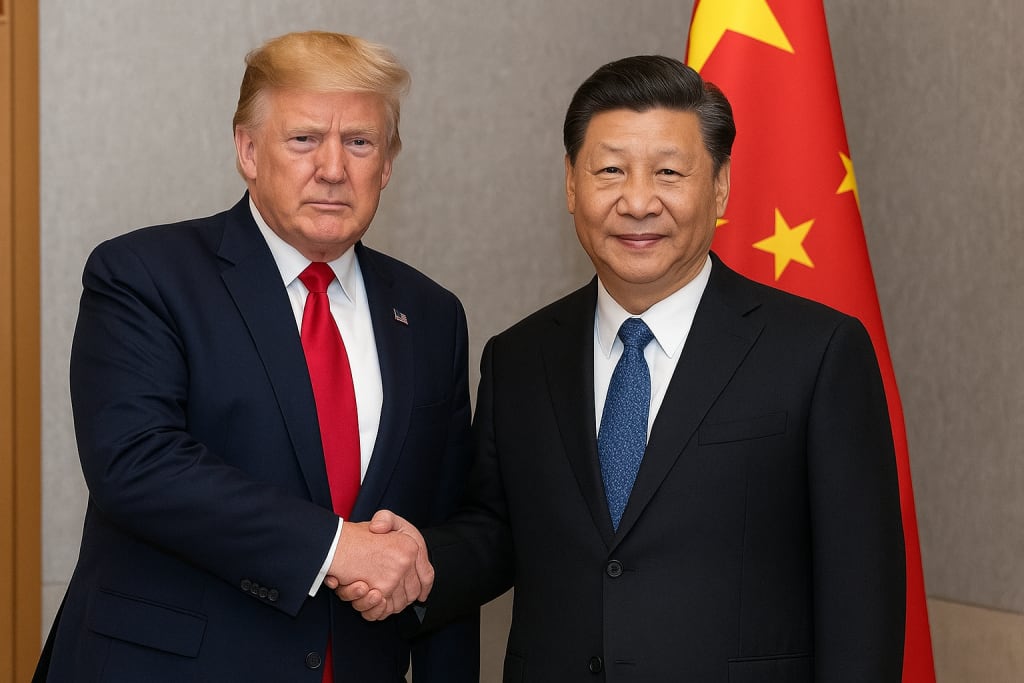
When two of the world’s most powerful leaders sit down together in a near-secret meeting, the headlines tend to shout. But in the case of the October 30, 2025 meeting in Busan, South Korea, the change was more subtle than sensational. What emerged was less a loud victory and more a quiet shift.
The summit between Donald Trump and Xi Jinping marked their first face-to-face meeting since 2019 and concluded a whirlwind Asia-trip for Trump.
On the sidelines of the APEC Summit 2025, the two leaders spent roughly an hour and forty-five minutes in talks at Gimhae International Airport’s military base in Busan.
Prior to the meeting, U.S. officials signalled that a framework might already be in place: avoiding an extreme hike to 100 % tariffs, postponing Chinese export controls on rare earths, and restarting U.S. agricultural exports to China.
But what really happened? At the conclusion, Trump described it as “12 out of 10”
1. The Deal: Tariffs, Soybeans, Rare Earths
The publicly announced components of the agreement included:
The U.S. will reduce certain tariffs on Chinese goods, specifically those tied to the fentanyl-precursor issue: from 20 % to 10 %. Overall duties on Chinese imports were announced as dropping from 57 % to 47 %.
China agreed to resume large purchases of U.S. soybeans and other agricultural goods.
China will delay or suspend for at least one year its export restrictions on rare earths—critical inputs for high-tech manufacturing, electric vehicles, and defense applications.
2. Why It Matters for Everyone
You might be thinking: “Okay, fine — but how does this affect me?”
Consumer prices: If tariffs drop and trade flows ease, goods that rely on Chinese manufacturing and rare earth minerals might become less expensive, or at least more reliably available.
Global supply chains: The rare earth deal is a big signal. China has dominated mining and processing of certain minerals essential for phones, batteries and electric cars — easing those restrictions helps manufacturers worldwide.
Farmers & agriculture: U.S. soybean farmers have suffered in recent years because China’s purchases dropped in retaliation to tariffs. This deal signals a reversal, which may stabilise certain rural economies.
Geopolitical ripple effects: A de-escalation in U.S.–China tensions can reduce risk in global financial markets, and may shift resources toward innovation and growth rather than confrontation.
3. The Caution Behind the Cheers
Despite all the enthusiasm, the deal is not a full resolution.
The agreement is short-term (approx. one year) and lacks detailed binding commitments.
Major issues remain unaddressed: Taiwan, technology export controls (especially around AI and high-end chips), and military competition.
Both sides have reasons to maintain leverage. Xi said it was “normal for two leading world economies to have friction now and then.”
In short: this is a truce, not a peace treaty.
4. My Takeaways: Thinking Beyond the Headlines
Diplomacy is back in the driver’s seat. The fact that two adversarial super-powers chose to sit down and talk publicly signals a shift: negotiation over escalation.
Technological rivalry enters a new phase. Rare earths and high-tech exports were central to this deal. This means the next era of U.S.–China relationship will revolve less around tariffs only and more around who controls critical inputs and innovation.
Change happens quietly. This meeting is proof that systemic shifts don’t always arrive with dramatic announcements—they often slide in during business as usual. If you’re watching the world for major change, sometimes you’ll see it in the pauses, not the fireworks.
Individuals matter less than the flow of goods and ideas. While we fixate on presidents and personalities, the impact will be felt most by supply-chains, consumers, farmers, manufacturers. That means you and I might not notice the moment, but we could feel the result.
Stay alert, not alarmed. The honeymoon phase of the deal may excite markets and media, but absence of detailed commitments means the risk of reversal remains. Smart readers will watch for follow-through.
5. Final Thoughts
The Trump–Xi conversation in Busan may not headline the history books as a defining “peace deal”, but it may mark the start of something more consequential: the era where U.S. and China coexist in competition but with fewer overt trade bombs. For you and me, it means fewer surprises in electronics supply chains, more predictable farm exports, and perhaps a gentler backdrop for global markets.
Still, the relief is tentative. The battle lines of manufacturing dominance, AI leadership and geopolitical influence are still drawn—they’re just less explosive today.
If this story feels like one that matters to your future dinner-table conversation (or your technology budget, or your farm-town neighbour), it’s because it is.
And as you go about your week, remember: big changes often arrive not screaming, but whispering.
About the Creator
Shakil Sorkar
Welcome to my Vocal Media journal💖
If my content inspires, educates, or helps you in any way —
💖 Please consider leaving a tip to support my writing.
Every tip motivates me to keep researching, writing, sharing, valuable insights with you.
Keep reading
More stories from Shakil Sorkar and writers in Journal and other communities.
The Art of Automation: How AI Is Quietly Replacing Creativity with Code
When machines start making art, what happens to the artists who taught them? A few years ago, “artificial intelligence” was a buzzword — something futuristic, fascinating, but distant. Today, it’s everywhere. It edits our photos, writes our headlines, paints our portraits, and even suggests how we should feel about the world. For many of us, that shift happened so smoothly we didn’t even notice it.
By Shakil Sorkar3 months ago in Journal
The goals I did not achieve
Every writing goal I made for the year is a wash. It has been this way for a while, but I think it's important to be open about my failures and the reality of how life can get in the way. This is especially true considering the several times I have posted on Vocal about my writing goals, how I was changing my approach, and where I was hoping to be for the upcoming year. I will probably do that again in a couple months, but for now, it is time to acknowledge where I am today.
By Kay Husnick24 days ago in Journal
A Comprehensive Guide to Starting a Mental Health Business and Building Client Trust
Introduction: The Rising Demand for Mental Health Services The modern era has witnessed an escalating recognition of psychological well-being as a central pillar of human flourishing. Increasing stressors, social isolation, and rapid technological change have heightened the need for accessible mental health services. Starting a mental health business responds not merely to economic opportunity but to a profound societal imperative. With thoughtful planning and unwavering ethical grounding, such a venture can become both sustainable and transformative, supporting individuals in reclaiming equilibrium and emotional resilience.
By Fida Hassain6 days ago in Journal



Comments
There are no comments for this story
Be the first to respond and start the conversation.