
The Prophecy of Oil: Why the Middle East’s Black Gold May Be Running Dry Sooner Than We Think
Forget geopolitics — the Bible, Qur’an, and economics all seem to converge on the same shocking possibility.
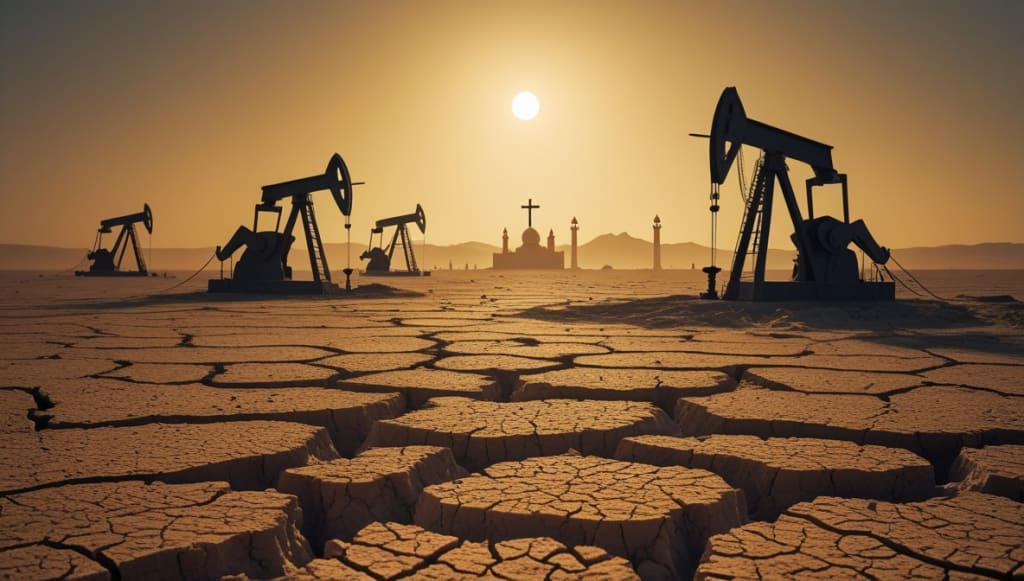
A World Fueled by Oil
For over a century, oil has been vital to the international financial system. Covering the dry terrain of Saudi Arabia to the farming areas of Iraq and Iran, the Middle East has supplied the essential resource that drives cars, promotes industrial activity, and affects international affairs. But what if the sources are diminishing more quickly than expected?
Although declining reserves is not a new event, these worries have become more obvious by 2025. Different religions' predictions of a future when the riches of the earth may vanish, thereby changing the destiny of mankind, resonate with an uncanny familiarity.
Oil and Prophetic Visions
Islamic beliefs allude to resources used in the last days. Some academics link hadith about Arabia's drying up of rivers to the exhaustion of oil, the current "river of riches" for the area.
Christianity's Book of Revelation examines an economic collapse brought on by excessive trade and luxury goods. The fall of "Babylon the Great" is described in a way that reflects the misery of a planet very dependent on oil under catastrophe.
Jewish writings also describe a situation where nations would battle over meagre Middle Eastern resources. Oil seems to be a perfect catalyst for such strife for many.
The Science of Scarcity
Statistics show a disturbing story independent of the forecasts. Global oil consumption expectations point to a steady high demand even as nations move toward alternative energy sources. Some Gulf nations' oil reserves may be exaggerated, though. Once believed to be limitless, Saudi Arabia's proven reserves, according to experts independent of any administration, could actually be much lower than expected.
If these claims have any validity, humans could face an energy crisis in a matter of decades instead of centuries.
Beyond monetary concerns—a spiritual alert
Why, nevertheless, does this strike such a deep chord? Because oil is more than just a resource. It perfectly captures human dependence, greed, and authority. Many battles have started only over this material. Depending on its market value, whole economies can soar or crash.
Many people see oil as the most obvious modern illustration when prophecies speak of the loss of resources. Should this valuable resource run out, it might not only result in economic collapse but also set off the sort of global pandemonium depicted in old legends.
What Comes After Oil?
Some people believe that renewable energy can help to bridge the distance. One glint of optimism comes from developments in nuclear technology, hydrogen energy, and solar installations. The change won't be easy, however. Countries dependent on oil could see considerable decline before substitutes might take hold.
Imagine Kuwait or Saudi Arabia devoid of their petroleum riches. Think of fractured supply lines, struggling economies, and mighty nations fighting for the last few resources. This forecast unfolding before us goes beyond mere economics.
A Word of Caution for Man
The most important lesson from this is not that oil will eventually run out but rather that our careless reliance on it justifies lessons from sacred texts: Given that society's destiny rests on limited resources, it is bound to collapse.
One day, the loss of oil supplies could be as powerful a symbol as it is a tangible reality. It serves as a reminder that what seems to be infinite is usually only fleeting and that no kingdom, no matter how affluent, can escape the route of decline.
About the Creator
Keep reading
More stories from Shahjahan Kabir Khan and writers in Journal and other communities.
AI at the Pulpit: When Technology Starts Preaching
A Sermon Written by Code On a quiet Sunday morning, a pastor in California stepped up to his pulpit. Instead of delivering his usual sermon, he read one written by artificial intelligence. Congregants listened in stunned silence. The message was heartfelt, coherent, and — to some — unsettling. Could an algorithm really deliver the Word of God?
By Shahjahan Kabir Khan4 months ago in Journal
The Quiet Link Between Evening Light and Restless Sleep
For a long time, I believed my restless sleep was caused by what happened in my head. Too much thinking. Too much stress. Too many unfinished thoughts that followed me into the night. I tried calming routines, earlier bedtimes, and stricter boundaries around work. Some nights improved. Many did not.
By illumipure5 days ago in Journal




Comments
There are no comments for this story
Be the first to respond and start the conversation.