
The Power of BIM 3D Modeling, Clash Detection, and Scan-to-BIM
How Emerging BIM Technologies Are Reshaping Collaboration, Accuracy, and Efficiency in the AEC Industry

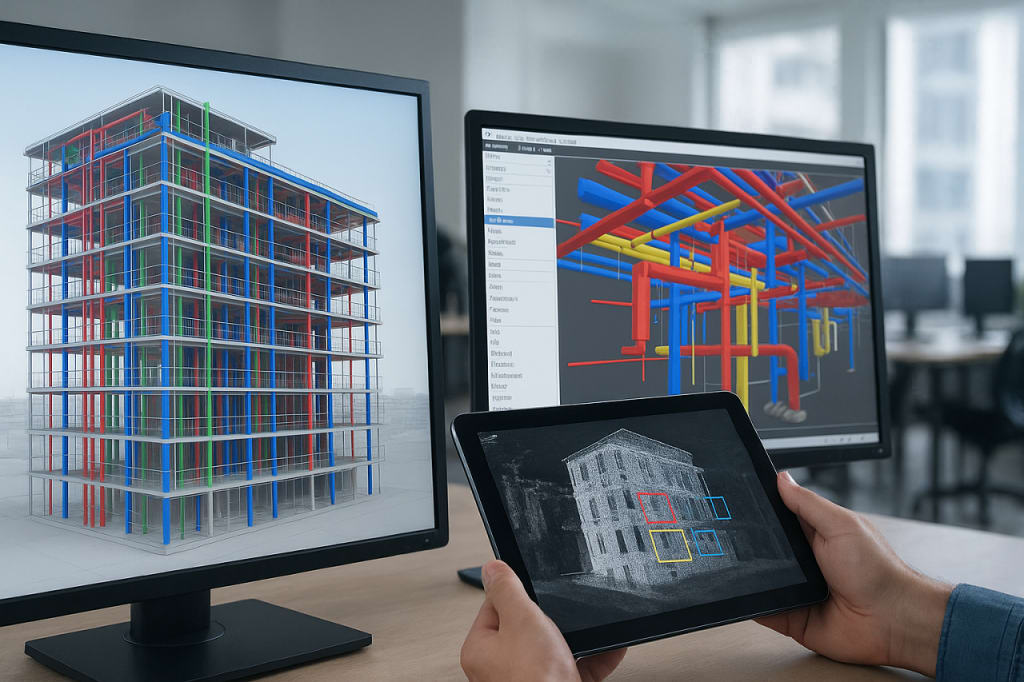
In recent years, advanced technologies such as 3D modeling, clash detection, and scan-to-BIM have significantly reshaped architecture, engineering, and construction (AEC). Moreover, improving collaboration, reducing errors, and refining resource management have all been advantages of these technologies, not just the design process. This blog will dive into how these tools transform the construction sector and why they are essential to remain competitive in today's fast-changing market.
BIM 3D Modeling: The Core of Contemporary Design
The introduction of 3D modeling in design (and its evolution over the last few years) has completely changed how we design buildings, structures, and infrastructure. For years, architects and engineers used 2D drawings to conceptualize and visualize projects, often resulting in misinterpretations, inefficiencies, and errors. Until now a range of other techniques redefined the way a building is shaped, designed, and represented, but with the birth of BIM 3D modeling, designers can work on a 1-to-1 scale to render all aspects by depicting everything in detail, visualizing each unit from every angle.
3D models allow you to immerse yourself in rich environments, enabling designers to visualize real-world scenarios and test out features for functionality before a single blade of grass is planted. This incredibly potent tool streamlines interaction amongst all parties working on a project whilst also providing a more precise, more tangible representation of the design that helps in presentations to the client and for project approbations.
In addition, the real-time manipulation and modification of 3D models enables architects and engineers to test design variations and make data-driven choices, resulting in higher quality designs and less rework on site. The industry's transition to digitized models has also paved the way for many other innovations, from AI to the integration of BIM.
Clash Detection: Reducing Conflicts in Design
One of the most significant risks in any construction project is clashes between various building systems, such as mechanical, electrical, plumbing (MEP), and structural elements. Most often, they occur if multiple teams build their systems in isolation without considering how they interact with each other. The result? Expensive delays, rework in the field, and a considerable uncertainty of costs.
That's where clash detection tools integrated into BIM workflows come into play. Clash detection software tools are widely used to examine 3d building design to find potential conflicts between two or more building elements. By running simulations that cross-reference different design aspects, BIM software identifies where systems might step on one another. These tools can catch clashes automatically and produce reports that visually retain conflicts, making it easier for the staff to fix the problems promptly.
Clash detection will also help integrate design elements with construction processes, enabling teams to avoid changes that cannot be done when construction is already in process and minimize downtime, making the final structure more comprehensive and efficacious. Addressing potential issues ahead of time helps to save companies precious time and reduces costs associated with rework, leading to improved collaboration and communication among architects, engineers, and contractors.
External Read: Importance of BIM Clash detection and MEP Co-ordination in construction
What is Scan-to-BIM: The Process of Converting Reality to Models
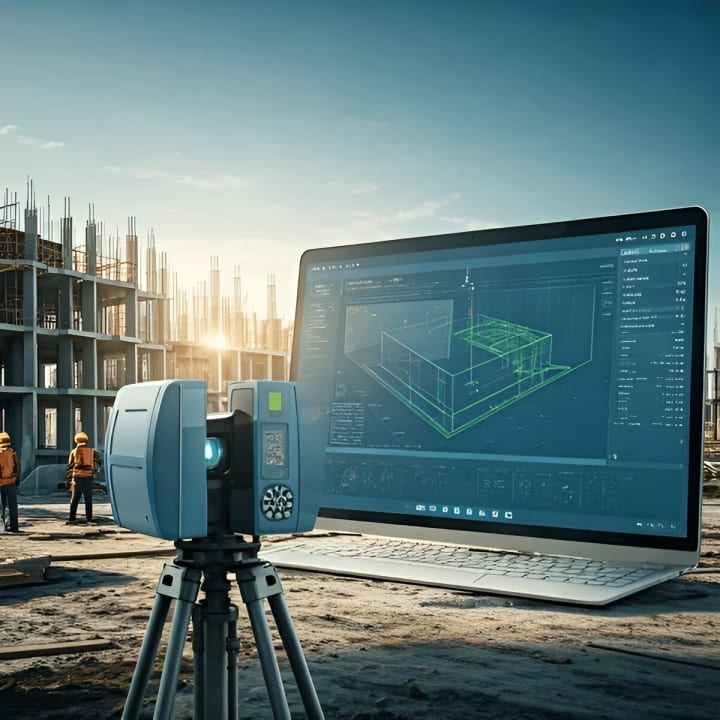
Scan-to-BIM — the ability to convert existing buildings into accurate, 3D models with specific information in the point cloud data from 3D laser scans — is a revolutionary technology that the industry will embrace. There are significant benefits to using this technology when creating documentation for existing buildings, retrofitting, or renovating buildings as a spatial view of the as-built component.
When the laser is turned on, it captures millions of data points from everything surrounding it in real time, creating a replica of the building or site where it's been placed. This data is then transformed into a BIM model that provides information for architects and engineers. Scan-to-BIM technology helps streamline the creation of accurate, detailed digital models, whether for preserving historical buildings, renovating them, or ensuring that new designs match existing structures perfectly.
It is beneficial for complex projects where it is impractical to take manual measurements, and error is likely to be introduced. Scan-to-BIM models help the team visualize the existing conditions with high precision, ensuring any new design or modification will fit in the given space. Additionally, Scan-to-BIM minimizes risks associated with discrepancies between the design and reality – an essential aspect for project accuracy and success.
How AI And ML Are Revolutionising Scan-to-BIM
Scan-to-BIM technology has been improving constantly, and the recent introduction of artificial intelligence (AI) and machine learning (ML) is taking it to the next level. For many years, converting data into usable BIM models was manual, expensive, and time-consuming. Manual interventions However, AI and ML algorithms can now automate the bulk of the process.
Improving Teamwork and Efficiency with Cloud-Based Collaboration Platforms
Cloud collaboration platforms have fundamentally transformed how project teams collaborate on BIM models. These platforms enable stakeholders — from architects to contractors to clients — to access real-time, up-to-date information about a project, regardless of location. That allows for seamless communication and coordination, which is critical to any construction project's success.
For one, this feature allows the users working on the same BIM Model to work concurrently. It does not allow for multiple model versions, thus reducing the chances of error. With real-time collaboration, decisions can be made quicker, approvals faster, and projects can be organized more efficiently. In addition, cloud-based platforms have built-in version control so that everyone can work from the latest version of the model.
As the AEC industry continues to lead towards utilizing more remote and decentralized teams, this capacity to access and update BIM models in the cloud alongside the benefits above is a feature that will increasingly make or break the success of a project. These platforms allow stakeholders to interact and exchange data as progress and updates are made in real-time, ensuring project data remains secure and protected.
Upcoming Trends: AR and VR Integration
Augmented and Virtual Reality have been widely accepted in various processes and industries. The future of BIM lies in its combination with augmented reality (AR) and virtual reality (VR), allowing users to interact with models in a much more immersive manner. AR and VR technologies provide immersive experiences for stakeholders who can interact with the 3D models in ways amenable to never before.
For instance, architects and clients can experience walking through a building utilizing VR long before it is constructed, which provides a much greater awareness of things like spatial layouts and architectural details, unlike AR, which can place digital models in the real world in a simultaneous, interactive way that impacts decision-making in real-time on the job site.
BIM will probably combine with AR and VR, which means collaboration teams can visualize and handle digital models more precisely. These immersive technologies will facilitate on-site construction processes by allowing them to visualize the different components and how they fit together and offer guidance for performing complex on-site tasks in real time.
Conclusion
3D modeling, clash detection, and scan-to-BIM tech are revolutionizing the AEC industry inside and out. This technology empowers architects, engineers, and contractors with the tools to streamline design workflows, minimize errors, and facilitate improved collaboration at every project stage. Completing the cycle, AI, machine learning, and AR & VR will make these tools smarter over time, contributing to ambitious visions still locked in the builder's mind.
Keeping abreast of trends in digitalization, collaboration, and efficiency will be critical to help counter the nature of the fast-changing AEC market; finding the right tools will be the first step to staying ahead of the curve. With these innovations in mind, the AEC industry can anticipate a brighter future with faster, more accurate, and more sustainable building processes that benefit all stakeholders.
With the ongoing transition of the AEC industry toward newer technologies, integrating 3D modeling, clash detection, and scan to BIM processes is now more necessary than luxury. These tools are at the tip of the digital transformation spear in construction, so engage with them and experiment with their use.
About the Creator
Tesla Outsourcing Services LLC
Since 2007, Tesla Outsourcing Services LLC has delivered BIM, CAD, VDC, and engineering design solutions for AEC firms worldwide
- Flexible Pricing
- Industry Best Quality
- Expert Architects and Engineers
- 4H: Honesty, Humility, Hard Work, Harmony
Keep reading
More stories from Tesla Outsourcing Services LLC and writers in Journal and other communities.
What Are As-Built Drawings? A Complete Guide
Introduction In the construction industry, accurate documentation is crucial for successful project completion. One such important document is the as-built drawing, which records all modifications made during construction. These drawings serve as a final record of what was actually built, helping contractors, architects, and facility managers maintain accurate building information.
By Tesla Outsourcing Services LLC12 months ago in Journal
Hindustan Power Accelerates India’s Clean-Energy Push with New 150 MW Solar and Storage Project Under Ratul Puri’s Leadership
New Delhi — In a significant move that underlines India’s accelerating transition to cleaner power, Hindustan Power has secured a major renewable energy contract to develop a 150 MW solar project integrated with advanced battery storage — a development that Chairman Ratul Puri says reinforces the company’s commitment to future-ready energy infrastructure.
By Chinmaya Singh6 days ago in Journal


Comments
There are no comments for this story
Be the first to respond and start the conversation.