
What Are As-Built Drawings? A Complete Guide
What Are As-Built Drawings and Why Are They Essential in Construction?

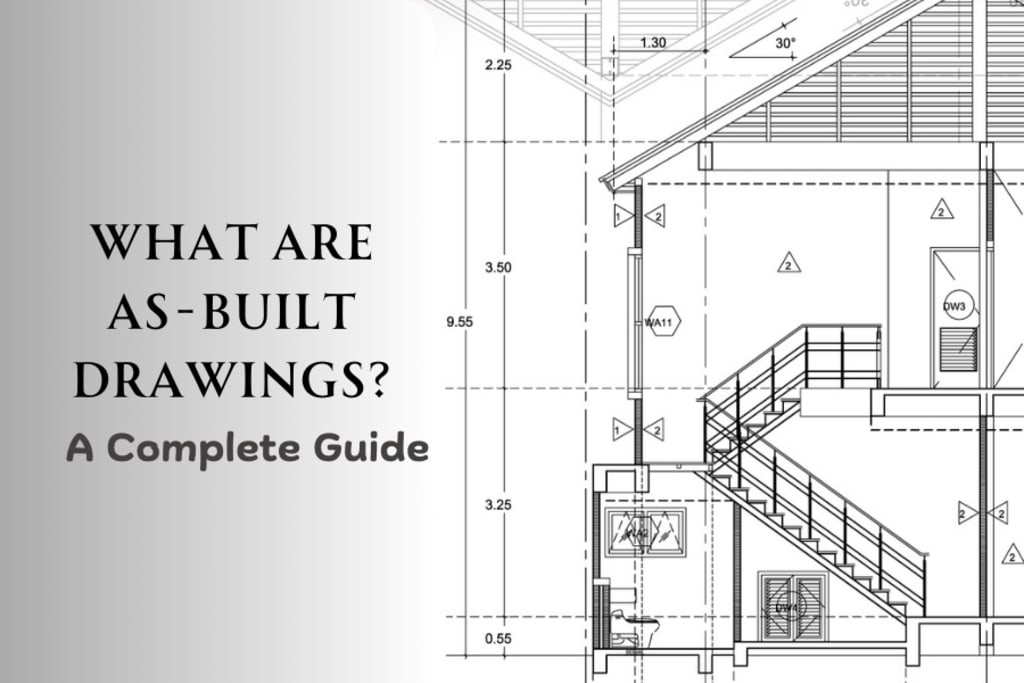
Introduction
In the construction industry, accurate documentation is crucial for successful project completion. One such important document is the as-built drawing, which records all modifications made during construction. These drawings serve as a final record of what was actually built, helping contractors, architects, and facility managers maintain accurate building information.
In this guide, we will explore what as-built drawings are, why they are important, how they are created, and their role in construction.
What Are As-Built Drawings?
As-built drawings are revised versions of original construction drawings that reflect all changes made during the building process. These modifications occur due to site conditions, design adjustments, or unforeseen challenges. Unlike initial architectural plans, as-built drawings show the actual placement of walls, doors, electrical systems, plumbing, and other structural elements.
Contractors create these drawings throughout the construction phase to keep track of real-world changes. Once the project is complete, as-built drawings become an essential reference for building owners, facility managers, and future renovations.
Why Are As-Built Drawings Important?
- Accurate Documentation: These drawings provide an exact representation of the final structure.
- Facility Maintenance & Management: They help in repairs, renovations, and future modifications.
- Legal & Compliance Requirements: Many regulatory bodies require as-built documentation for approvals.
- Project Handover & Future Planning: Contractors hand them over to owners for easy reference in future projects.
Key Components of As-Built Drawings
As-built drawings typically include:
- Structural modifications – Any changes to walls, doors, windows, or load-bearing elements.
- MEP (Mechanical, Electrical, and Plumbing) updates – Final placement of pipes, electrical wiring, and HVAC systems.
- Site conditions – Adjustments made due to ground conditions, utility placements, or environmental concerns.
- Final material specifications – Differences in materials used compared to original plans.
How Are As-Built Drawings Created?
Creating accurate as-built drawings requires a mix of traditional methods and modern technology. In the past, contractors manually updated blueprints by hand. Today, digital tools make the process more precise and efficient.
Traditional Methods:
- Hand-drawn sketches with notes on modifications.
- Redline markups on original blueprints to show changes.
Modern Technology in As-Built Drawings:
- CAD Software (AutoCAD, Revit, etc.): Used for digital documentation and easy modifications.
- 3D Laser Scanning: Captures real-time conditions of a building with high accuracy.
- BIM (Building Information Modeling): Provides a digital representation of a building’s final state.
One of the most effective ways to create accurate as-built documentation is by adapting Scan to BIM for As-Built Modeling. This method involves using laser scanning to capture the building’s actual conditions and then converting the data into a detailed BIM model. It reduces errors, improves accuracy, and enhances collaboration between teams.
Who Uses As-Built Drawings?
- Architects & Designers – Use them for renovations and remodeling projects.
- Contractors & Engineers – Ensure that construction follows planned modifications.
- Facility Managers – Maintain and manage buildings efficiently.
- Government & Legal Authorities – For approvals, permits, and property records.
Architectural Construction Drawings vs. Shop Drawings vs. As-Built Drawings
Many people confuse different types of construction drawings. Understanding the difference between Architectural Construction Drawings, Shop Drawings, and As-Built Drawings is essential.
- Architectural Construction Drawings: These are the original design plans created before construction begins. They act as a blueprint for contractors.
- Shop Drawings: These are detailed drawings from manufacturers or subcontractors showing how specific components (like steel beams or HVAC systems) will be fabricated and installed.
- As-Built Drawings: These are the final drawings showing what was actually built, including all changes made during construction.
Each type serves a unique purpose in the construction lifecycle, ensuring accuracy from design to execution.
Common Challenges in As-Built Drawings & How to Overcome Them
1. Inaccurate Documentation – If contractors don’t update plans regularly, as-built drawings may not reflect actual changes.
Solution: Regular site inspections and digital tools for real-time updates.
2. Lack of Coordination Between Teams – Miscommunication can lead to missing details.
Solution: Using As Built Services ensures that professionals manage the documentation correctly.
3. Manual Errors – Hand-drawn modifications may lead to mistakes.
Solution: Implementing As Built Drafting using CAD/BIM minimizes errors.
The Future of As-Built Drawings
With rapid advancements in technology, as-built documentation is becoming more efficient. The rise of As Built Modeling with BIM is transforming the industry, allowing for 3D visualization and seamless integration with facility management systems.
Future trends include:
- AI & Machine Learning: Automating the detection of changes in construction.
- Drones & Laser Scanning: Capturing real-time site conditions with high precision.
- Cloud-Based Collaboration: Allowing multiple stakeholders to access and update as-built data in real time.
Conclusion
As-built drawings play a critical role in ensuring construction projects are accurately documented and managed. They help contractors, architects, and facility managers keep track of modifications, ensure compliance, and plan future projects efficiently.
By utilizing modern tools like Scan to BIM, CAD, and laser scanning, the industry is moving towards more accurate and reliable as-built documentation. Investing in professional As Built Services can ensure high-quality documentation, reducing risks and improving project outcomes.
About the Creator
Tesla Outsourcing Services LLC
Since 2007, Tesla Outsourcing Services LLC has delivered BIM, CAD, VDC, and engineering design solutions for AEC firms worldwide
- Flexible Pricing
- Industry Best Quality
- Expert Architects and Engineers
- 4H: Honesty, Humility, Hard Work, Harmony
Keep reading
More stories from Tesla Outsourcing Services LLC and writers in Journal and other communities.
The Power of BIM 3D Modeling, Clash Detection, and Scan-to-BIM
In recent years, advanced technologies such as 3D modeling, clash detection, and scan-to-BIM have significantly reshaped architecture, engineering, and construction (AEC). Moreover, improving collaboration, reducing errors, and refining resource management have all been advantages of these technologies, not just the design process. This blog will dive into how these tools transform the construction sector and why they are essential to remain competitive in today's fast-changing market.
By Tesla Outsourcing Services LLC6 months ago in Journal
The goals I did not achieve
Every writing goal I made for the year is a wash. It has been this way for a while, but I think it's important to be open about my failures and the reality of how life can get in the way. This is especially true considering the several times I have posted on Vocal about my writing goals, how I was changing my approach, and where I was hoping to be for the upcoming year. I will probably do that again in a couple months, but for now, it is time to acknowledge where I am today.
By Kay Husnick24 days ago in Journal
The Councils of the Church and Why They Were Important
The Catholic Church has faced countless challenges since its founding, from doctrinal disputes to external persecution. One of the most important ways the Church has maintained unity, clarified its teachings, and preserved the faith is through ecumenical and local councils. Church councils are formal gatherings of bishops and Church leaders to deliberate on matters of doctrine, discipline, and practice. These gatherings have shaped Christianity as we know it today, ensuring that the Church remains faithful to the teachings of Christ and the apostles.
By Sound and Spirit6 days ago in Journal
Ludacris and Nelly draw backlash over bookings at MAGA-coded music festival
Ludacris and Nelly headlining a mostly right-wing event is good for them. It’s also great for the genre of hip hop. The two rap veterans have showcased their talents on other stages. Why can’t they perform for mostly MAGA folks and grab that bag?
By Skyler Saunders4 days ago in Beat


Comments
There are no comments for this story
Be the first to respond and start the conversation.