
The Making of a Writer
(or a Gifted Burnout Kid's Guide to Reinvention


Why I’m Writing This
I’ve been thinking a lot about why we write. What drives us to put our thoughts into words, to shape stories from our experiences, to send pieces of ourselves into the world?
Since I started sharing my work, I’ve been reading the incredible stories of other authors—each one a glimpse into a mind, a life, a journey. And it makes me wonder: What’s their why? What moment, what experience, what need brought them here?
So, in the spirit of sharing, here’s mine.
This is the story of how I became a writer, how I lost it, how I found it again.
And if you have a story, I’d love to hear it too.
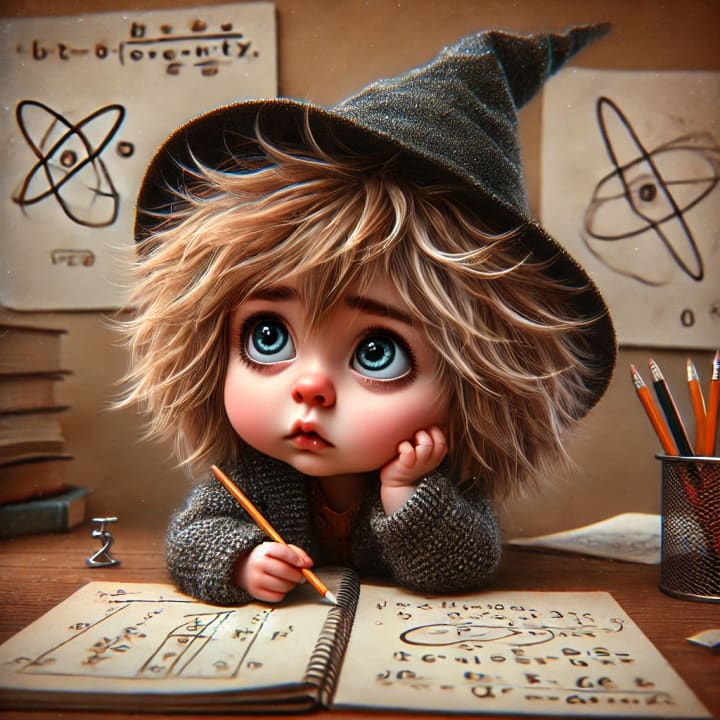
The Early Years (Birth–7)
My mother, in her ever-urgent quest for self-aggrandizing glory, saw Searching for Bobby Fischer and Home Alone and decided that children should earn their keep. Thus began my training. For what, I have no idea. I was paraded through spelling bees, dance recitals, and math drills like some kind of prodigy-in-the-making. My homework was regularly coated in tears and snot—a viscous blend of stress and premature existential dread.
At six, I was tested for the prestigious Stewart Gifted Center. They rejected me. Not mature enough, they said. Thanks, lady—now hand me a damn lollipop.

The Gifted Years (7–12)
I finally got into the gifted program, and suddenly, I was exactly what my parents had ordered: blonde-haired, blue-eyed, reading at a 12th-grade level, and casually discussing astrophysics at dinner. Straight A’s or civil war—those were the terms of my existence.
Love was technically in the air, though mostly in a sad, drunken, rage-fueled way. Also, in a can’t-put-my-finger-on-it Woody Allen kind of way.
I showed early signs of being a writer. My first-grade teacher nearly wept over a story I wrote about monsters with toenails made of candy canes. The details are fantastic, she said, eyes watering. My mother, ever the beacon of encouragement, leaned in and whispered, She needs Prozac. Because, clearly, being moved by a child’s creativity was a medical condition.

The Awkward Years (12–18)
Puberty hit. My blonde hair darkened. My mother, apparently disgusted by her own creation, now resented the very things she had instilled in me. The fact that I read Crichton, King, and Rice at ten was no longer impressive—it was evidence that something was wrong with me.
Summers were spent sweating over early attempts at writing a novel, only to be screamed at to go outside like a normal kid. But I wasn’t normal. By puberty, I had endured every kind of abuse you could imagine, and to add insult to injury, I was smart enough to know it.
I plotted my escape. Once, I tried to bribe a kid with $100 to drive me to California. My master plan? A box of hair dye and a desperate wish to leave my life behind.

The Burnout Years (18–Now)
Like many so-called wayward women, I was lured into adulthood by a very attractive older boyfriend (six years my senior). We were both Puerto Rican-Irish mutts, raised in military culture, shaped by strict discipline, high expectations, and an unspoken rule that survival meant success. He was a great dancer, charismatic, and—unlike me—raised with a strong sense of culture and family. The difference? His parents never expected intellectual greatness. Mine did. It was a recipe for disaster.
I got pregnant. My son (now 18) became my world. I raised him mostly alone while trying to prove myself to…everyone. I was going to be the best single young mom, college student, entrepreneur, no-husband-needed-I-can-do-it-all person you’d ever met. I got straight A’s. I poured myself into my studies, devouring Whitman, Jackson, Capote. I waxed eternal about Palahniuk and Bradbury. And yes, I indulged in some quality historical smut along the way.
To many, I was an inspiration—a sunny train of relentless ambition. But despite my hard work, I could never quite get ahead in an unraveling economy.
No matter how successful I became, I was always just surviving. I made over fifty grand a year—an amount that would have made us wildly comfortable in the ’90s—but in this economy? We lived in shitty apartments and room shares, barely scraping by. I had little to show for all my hard work. I could hustle, reinvent myself, climb whatever ladder I was put in front of, and still, it was never enough.
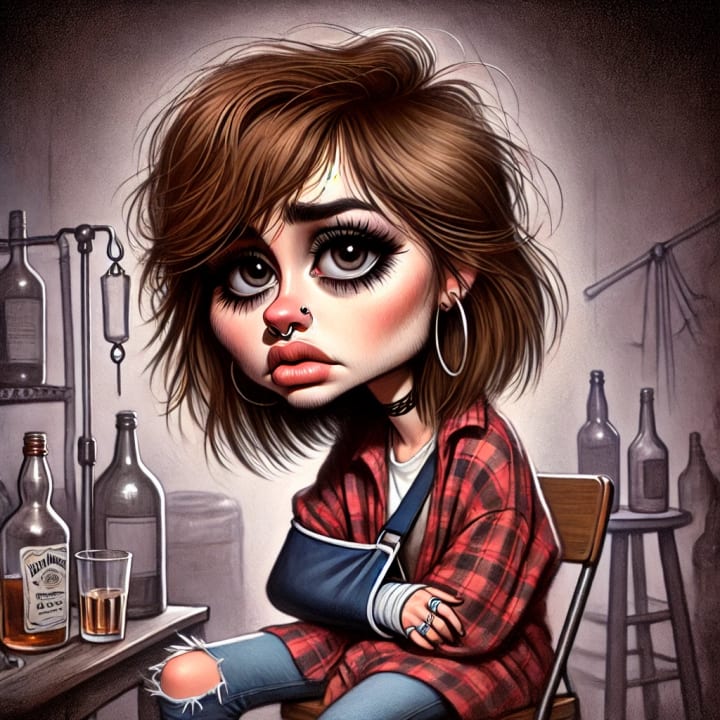
The Darkest Years
Life itself was unraveling. I survived failed relationships, a failed marriage, and heartbreak that left scars. I loved hard and left harder, constantly trying to find a place where I could just be.
And then there was the assault.
I was sexually assaulted. And I did what so many survivors do—I carried it. Silently. Alone. Until it turned into something too heavy, too sharp, too unbearable. I spiraled into bouts of depression and suicidal ideation, waking up some mornings wishing I hadn’t.
Still, I kept going. I became a top stylist, worked on sets, studied for my master’s degree in education, worked in marketing, and even started a few businesses (unsuccessfully, but hey, I tried). I kept moving, kept striving, kept reinventing myself. But I never quite felt like I was doing the thing I was meant to do.
Then, one day, I read an article about Jane Austen. She wrote because it was all she could do—as a woman in her era, her writing was a means of survival. And something clicked. I discovered Vocal and asked myself:
What if I wrote like my life depended on it?

Now
And that’s what you see now.
A woman with her nose to the grindstone. A writer with something to say. A gifted kid burnout who clawed her way back to the one thing that ever made sense: writing.
For the first time in my life, I’m not just surviving. I have a supportive partner—someone who sees me, who believes in what I’m doing. And for the first time, I have the headspace to truly dedicate myself to my craft—to build something real.

This is my second act. My son is grown. My time is mine. And I intend to use it.
I want to write literature that matters—stories that inspire, unsettle, and stick with people. Maybe, just maybe, someday someone will create something of their own, and I’ll have been a small reason why.
But I don’t just want this to be about me. One of the best things about writing on a platform like this is seeing the incredible work of other authors. Every time I read a powerful story, I wonder—what’s driven them to share their words? What moments shaped them into the writer they are today?
So if you’re a writer too, tell me—what inspires you? What made you put pen to paper for the first time? Let’s talk about it. Let’s keep creating. Because the world needs more voices willing to say something real.



About the Creator
L.K. Rolan
L.K studied Literature in college. She lives with her handsome, bearded boyfriend Tom and their two cats.
They all enjoy cups of Earl Grey tea together, while working on new stories and planning adventures for the years ahead.
Reader insights
Outstanding
Excellent work. Looking forward to reading more!
Top insights
Excellent storytelling
Original narrative & well developed characters
Heartfelt and relatable
The story invoked strong personal emotions
Keep reading
More stories from L.K. Rolan and writers in Journal and other communities.
Dogs, Dealers and Double Wides:
"Stop looking at me." The thought hit me hard as Misty—muscle-bound, blue-nosed, and entirely too enthusiastic—stared me down. I had no idea how much she weighed, but she was solid. Unshakable. The kind of dog that, in another time and place, I would have crossed the street to avoid.
By L.K. Rolanabout a year ago in Journal
Chad Pratt on Preventing Burnout in Long Distance Running
Long distance running demands more than strong legs and healthy lungs. It requires emotional balance, strategic planning, and a deep understanding of recovery. Many runners begin their journey energized and ambitious, only to find themselves sidelined by fatigue or mental exhaustion months later. Burnout does not happen overnight. It builds gradually when effort outpaces recovery and expectations exceed preparation.
By Chad Pratt5 days ago in Journal
A Historic Declaration
We the People of the Husbands of the United States of America, in Order to form a more perfect Union, and I mean you...with me...establish Justice, insure domestic Tranquility, provide for the common defence, promote the general Welfare, and secure the Blessings of Liberty to ourselves, after Puberty, do ordain and establish this Declaration of Co-Dependence.
By Gerard DiLeo5 days ago in Humans



Comments (6)
It was really interesting to read your story. I am so sorry you had those difficult periods in your life and I am happy you found your way to express yourself through writing.
Gosh. This was one of the most inspiring things I’ve read in a long time. Good on you for fighting every step of the way. Wishing you nothing but the best.
Your story was inspiring, very well written and relatable. Big hugs from one survivor to another! 🤗
I agree with Sharon. You show remarkable resilience...and are a really capable mom. I read lit in the university too...we have something in common!
You've had a very full life. Your son is so lucky to have you. You're also a very strong, brave woman who survived. Thank you for sharing your story with us.
What a fantastic/heart-wrenching story - I truly believe that all great writers have gone through some shit. This is inspiring and a great testament to the fact that writing really does get us through it all! Great work!