
The Hidden Cost of Streaming: Why Your Netflix Binge Might Be Harming the Planet
Streaming feels weightless, but its carbon footprint is massive. Here’s what you need to know.
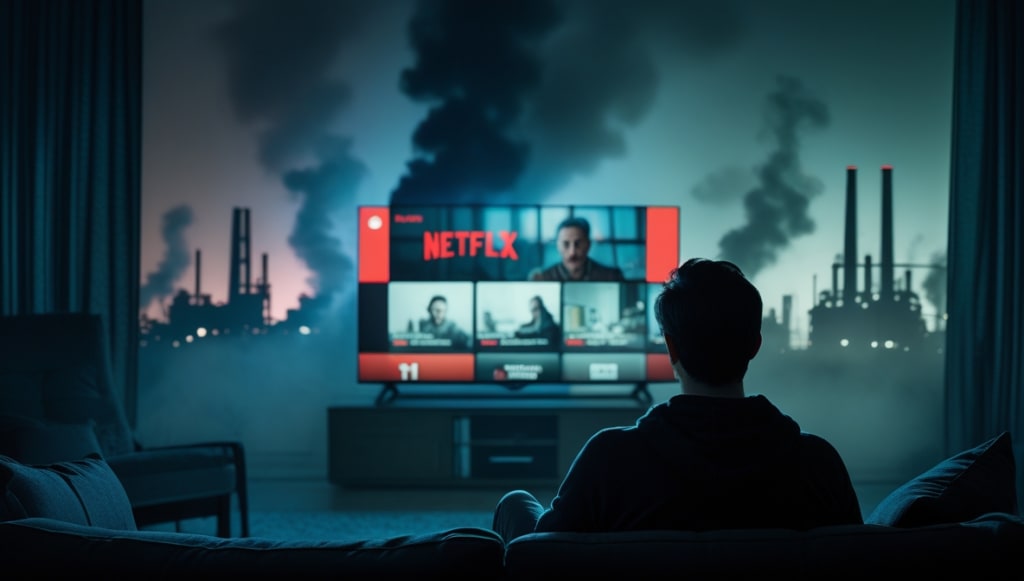
Friday night. You curl up on the couch, fire up Netflix, and start binging your favorite series. It feels effortless — just a screen, some popcorn, and endless entertainment. But while streaming feels “virtual,” the truth is it has a very real physical footprint — one that’s quietly harming the planet.
Most people don’t think about the environmental cost of their screen time. Streaming seems cleaner than buying DVDs or driving to the movies. Yet behind every click lies an invisible chain of servers, power plants, and data transfers that burn through enormous amounts of energy.
💻 The Streaming Boom
Over the past decade, streaming has exploded. By 2025, platforms like Netflix, Disney+, YouTube, and TikTok account for more than 80% of global internet traffic. On average, a single person spends 6–7 hours a day consuming digital content.
Each video you watch is stored in massive data centers. These centers run 24/7, cooled by powerful air-conditioning systems, all of which guzzle electricity — often powered by fossil fuels.
🌍 The Hidden Carbon Footprint
So how bad is it? A report from the Shift Project revealed that streaming just one hour of video produces roughly the same carbon emissions as driving a car for 4 miles. Multiply that by billions of daily streams, and you’re looking at a footprint equal to entire countries’ emissions.
In 2025 alone, global video streaming is expected to emit nearly 400 million tons of CO₂ — more than the yearly emissions of the entire United Kingdom.
📺 Ultra-HD, Ultra-Polluting
Here’s the kicker: the sharper your video quality, the bigger the footprint. Streaming in 4K or 8K uses far more data than standard HD, meaning more servers, more electricity, and more emissions.
That jaw-dropping crystal-clear image of your favorite show comes at a hidden environmental price.
⚡ Can Tech Companies Fix This?
Some companies are trying. Netflix claims it offsets its carbon emissions by investing in renewable projects. Google and Amazon Web Services are transitioning data centers toward renewable energy.
But progress is slow. Renewable energy makes up only a fraction of total power used, and demand for streaming keeps rising faster than clean energy adoption.
📱 The Role of the Viewer
The good news? Ordinary viewers can make a difference without sacrificing entertainment:
Stream in standard HD instead of 4K when quality isn’t critical.
Download instead of stream if you plan to rewatch something.
Use Wi-Fi over mobile data — mobile networks consume more energy.
Support eco-conscious platforms that publish sustainability reports.
These may feel like small steps, but multiplied by millions of users, the impact adds up.
🎬 Culture Meets Climate
The irony is hard to miss. Many of the shows we binge — from dystopian futures to documentaries about climate change — are powered by the very systems accelerating environmental damage. It’s like watching a house fire while unknowingly throwing gasoline on the flames.
The conversation about climate change often focuses on cars, planes, or factories. But digital consumption is the hidden player — invisible, yet enormous.
🌱 Toward Greener Streaming
The solution isn’t to stop streaming altogether. Entertainment is essential to culture and connection. Instead, the path forward is greener tech, smarter choices, and corporate accountability.
If platforms aggressively commit to renewable energy and viewers make mindful streaming choices, the invisible carbon monster behind our binge habits can be tamed.
🎥 Final Scene
So, the next time you hit “Play” on Netflix, remember: your binge session isn’t as weightless as it seems. Every episode has a footprint. And while we may not see the smoke, the planet certainly feels the heat.
Streaming will continue to define entertainment — but whether it defines our climate future depends on the choices we make today.
About the Creator
Keep reading
More stories from Shahjahan Kabir Khan and writers in Journal and other communities.
When the Sea Turns Red: Prophecy, Fear, and the Mystery of Galilee
In early September, the world watched in awe as a lake in Palestine—the Sea of Galilee, also known as Lake Tiberias—underwent a sudden and shocking transformation. Once a calm body of crystal-blue water, it reportedly shifted into a shade so red it resembled flowing blood. Videos and images spread across social media almost instantly, sparking waves of fascination, fear, and prophecy-driven speculation.
By Shahjahan Kabir Khan4 months ago in Journal
Federal government consulting services checklist for agency leaders?
When internal systems begin missing deadlines and compliance demands increase faster than teams can manage, federal leaders face more than a resource issue. They face a challenge in getting results. Federal government consulting services step in to solve this by offering operational clarity, strong vendor oversight, structured planning, and measurable execution. Yet not every consulting provider delivers what agencies truly need. Some bring confusion. Others fail to follow through. So how can you tell which consulting partner will actually support your mission and not slow it down? This checklist helps agency leaders focus on what matters, eliminate guesswork, and choose partners that drive real outcomes.
By Brandon Honey7 days ago in Journal



Comments
There are no comments for this story
Be the first to respond and start the conversation.