

I never believed stories could save lives.
I used to think stories were just entertainment — something people read to escape reality. I never imagined that one day, my own survival would depend on words typed with shaking hands at 3 a.m.
My name is Denis. I am eighteen years old. And my life changed the day silence entered our house.
My mother was always the sun of our home. Loud laughter, warm hugs, food on the table even when money was tight. She danced while cleaning. She sang while cooking. She called me “my little warrior” even when I was taller than her.
Then one morning, the sun didn’t rise.
She stayed in bed. Her voice was weak. Her smile was smaller. We thought it was just a flu. A few days of rest, we said. But days turned into weeks. Weeks turned into hospital visits. The smell of disinfectant became familiar. Doctors spoke in careful voices. My father nodded without fully understanding. I watched my mother’s eyes — still full of love — now carrying fear she tried to hide from me.
The diagnosis arrived like a hammer.
Serious illness. Long treatment. Uncertain future.
I remember walking home that day. The sky was blue, children were playing, cars passed by. The world looked normal. But inside me, everything had collapsed.
That night, I sat on the floor beside my bed and cried silently so my parents wouldn’t hear. I felt useless. Powerless. Small.
Illness doesn’t only attack the body.
It attacks time. Money. Peace. Relationships.
Bills started arriving like angry letters. My father worked longer hours. My mother stopped dancing. The house became quiet — too quiet.
Sometimes I’d find my father late at night in the kitchen, staring at a cup of cold coffee. When he saw me, he’d force a smile.
“I’m okay,” he’d lie.
I started skipping school some days to help at home. I learned how to cook simple meals. I learned how to clean. I learned how to pretend I was strong.
But inside, I was terrified.
What if the treatment didn’t work?
What if I lost her?
What if we lost the house?
What if love wasn’t enough?
I needed to do something. Anything.
But what can an eighteen-year-old boy do against sickness and poverty?
One night, unable to sleep, I opened my old laptop. The screen flickered like it was as tired as me. I remembered something my literature teacher once said:
“Words can carry pain out of your chest and put it somewhere else.”
I opened a blank page. I stared at it for a long time.
Then I typed:
“My mother is sick, and I don’t know how to save her.”
Tears fell on the keyboard. I kept writing anyway. I wrote about fear. About helplessness. About love so strong it hurts.
When I finished, I posted it on a writing platform I had discovered by accident weeks before.
I expected nothing.
No likes.
No comments.
No miracles.
I closed the laptop and fell asleep.
The next morning, my phone buzzed.
One notification.
Then another.
Then many.
People had read my story.
Strangers from places I’d never see. People with names I couldn’t pronounce. Yet they wrote to me:
“You are brave.”
“I went through this too.”
“Don’t give up.”
“I’m praying for your mother.”
I read every message with disbelief.
Someone… cared?
For the first time in months, I smiled without forcing it.
So I wrote again.
And again.
And again.
I wrote daily. Short stories. Poems. Letters to my mother. Fictional heroes fighting impossible monsters. Every monster looked a little like illness. Every hero looked a little like me.
Readers returned. Numbers grew. And one day, I saw something new on the platform:
Earnings: $7.43
It wasn’t much.
But it was proof.
Proof that my words had value.
With my first earnings, I bought medicine my father said we’d have to delay.
With the next, I paid part of an electricity bill.
With the next, I bought my mother flowers.
When I gave them to her, she smiled — a real smile, the kind I missed.
“You’re writing again?” she asked softly.
I nodded.
She touched my cheek.
“My little warrior.”
That night, I wrote harder than ever. Because now writing wasn’t just therapy.
It was survival.
One evening, I received a private message.
“Your story reached me. I cried reading it. Are you okay?”
Her name was Alexandra.
We started talking. At first about writing. Then about life. Then about dreams. She didn’t speak to me like someone broken. She spoke to me like someone worth knowing.
When I doubted myself, she reminded me:
“Even wounded hearts can beat loudly.”
She became my calm. My laughter. My reason to believe in futures again.
Sometimes, late at night, I told her my fears. And she listened — truly listened.
In a world that felt cold, she was warmth.
My mother still fights. Some days are better. Some days are heavy. But she is here. And we treasure every day.
My father still works too much. But now, sometimes, we laugh at dinner again.
I still write. Every day. Because words became my weapon, my shield, my bridge to tomorrow.
I am not rich.
I am not famous.
I am still afraid sometimes.
But I am no longer powerless.
Sometimes, late at night, when the house is quiet and the world finally stops rushing, I allow myself to dream.
I imagine a small home. Nothing fancy. Just warm walls, soft light, and laughter filling every corner. I see my mother in the kitchen again, stronger, stirring a pot and humming. I see my father resting without worry in his eyes. I see myself sitting at a desk, writing stories not out of desperation — but out of passion.
And in that dream, Alexandra is there too.
She sits beside me, reading my newest story before anyone else. She smiles and says, “You did it.” And this time, I believe her.
In that future, money is not a monster chasing us. Bills are just papers, not threats. Illness is a memory, not a daily fear. And love is not something we’re afraid to lose — it’s something we live inside every day.
I know the road is still long. I know tomorrow may bring new challenges. But I’ve learned something important:
A future doesn’t appear by magic.
It is written. Word by word. Step by step.
And I am still writing.
For my mother.
For my family.
For the girl who believed in me.
For the boy I used to be — afraid and powerless.
I write for him too.
Because the story is not over.
Not yet.
I am Denis.
The boy who wrote when everything fell apart.
The boy who turned pain into pages.
The boy who writes for tomorrow.
And as long as I can write…
I will not give up. 🤍
About the Creator
Pure child
just a child who read
Keep reading
More stories from Pure child and writers in Journal and other communities.
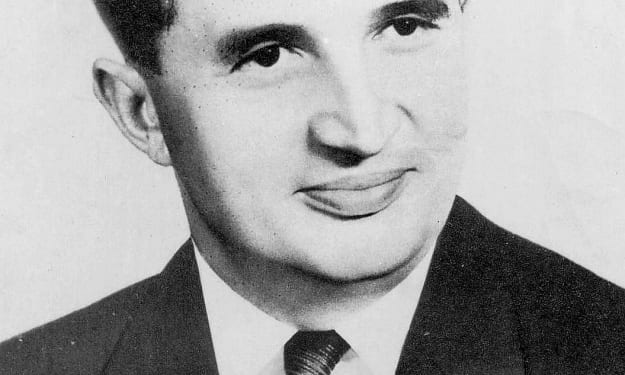
The Rise and Fall of Nicolae Ceaușescu
Nicolae Ceaușescu’s rise to power was initially marked by promise, even optimism. Born in 1918 into a poor peasant family, he entered politics early, shaped by the ideological rigidity of interwar and wartime communism. When he became General Secretary of the Romanian Communist Party in 1965, following the death of Gheorghe Gheorghiu-Dej, many Romanians saw in him a younger leader, one who might soften the harsh Stalinist legacy that had defined the previous decades. For a society weary of repression and deprivation, Ceaușescu appeared to embody the possibility of cautious change.
By Pure child7 days ago in History
Which Type of Plastic Yields the Highest Oil Output During Pyrolysis?
Plastic waste is a growing environmental challenge, and one of the promising methods for managing this waste is pyrolysis. Pyrolysis involves heating plastic to high temperatures in the absence of oxygen to break it down into smaller molecules, producing valuable by-products such as oil, gas, and solid residues. However, not all plastics yield the same amount of oil during the pyrolysis process.
By Bestonpyrolysisa day ago in Journal


Comments
There are no comments for this story
Be the first to respond and start the conversation.