movie review
Movie reviews on workplace, corporate, and business driven films.
May the 4th Be With You: Why Star Wars Day Is Celebrated Across the Galaxy . AI-Generated.
Here's Why May the 4th is Marked as Star Wars Day Around the Galaxy Every year on May 4th, all of the world's Star Wars fans unite to honor one of the most prolific science fiction properties in history. You've surely seen people cosplay Jedi robes, sporting lightsabers in public, or writing "May the 4th be with you" on Twitter. But why May 4th? Why this date became known as Star Wars Day is a delightful tale that unfurls in a neat play on words, a fan appreciation wave, and a lasting legacy in a galaxy, far, far away. Premiume acces
By MD NAZIM UDDIN 9 months ago in Journal
The Untold Sides of 'The Hobbit Trilogy'
Th The globally acclaimed fantasy saga The Lord of the Rings and The Hobbit are masterpieces by J.R.R. Tolkien. Brought to life on the silver screen by director Peter Jackson, The Lord of the Rings trilogy focused on Frodo Baggins of the Shire. A decade later came its prequel, The Hobbit Trilogy, with Frodo's uncle Bilbo Baggins taking center stage. Though it didn’t quite match The Lord of the Rings in success, The Hobbit Trilogy was fairly well-received. Today’s piece explores some lesser-known facts about The Hobbit Trilogy, which is set 77 years before The Lord of the Rings. 1. Tolkien started drafting The Hobbit around 1928. This means the story predates The Lord of the Rings and serves as its prequel. Interestingly, Tolkien had left the story half-finished. A student of his, Elaine Griffith, brought the unfinished manuscript to a publisher friend, who was highly impressed. Upon Griffith’s encouragement, Tolkien completed the tale. Hence, she played a crucial role in bringing Middle-earth’s enchanting fantasy to the world. 2. In 1994, director Peter Jackson wanted to adapt The Hobbit into a film after being inspired by the 1978 animated The Lord of the Rings. His original plan was to follow up with two Lord of the Rings films. However, due to creative differences with the production house Miramax, the project stalled. Eventually, New Line Cinema stepped in, helping bring both trilogies to the big screen.
By Riham Rahman 9 months ago in Journal
Thunderbolts Delivers the Twist Marvel Desperately Needed . AI-Generated.
The Plot Twist Rendering Thunderbolts Marvel's Most Enjoyable Movie in Years The Marvel Cinematic Universe was in need of a shake-up, and badly. After a string of overstuffed sequels, multiverse flops, and half-hearted streaming shows, the faithful started to worry the magic was gone for good. That's when Thunderbolts rode into town—a movie that could have easily been another dark gritty antihero buddy picture but finds itself being Marvel's most pleasantly surprising movie in years.
By MD NAZIM UDDIN 9 months ago in Journal
Jeffrey Dean Morgan Is Ready to Leave Negan Behind — And Maybe It’s Time. AI-Generated.
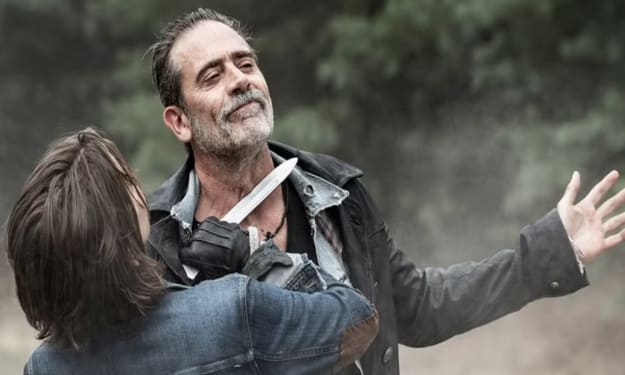
Jeffrey Dean Morgan Ready to Ride Off: Why It Might Be Time to Give Negan a Break The actor who brought The Walking Dead's most polarizing character to life recently said he's "getting dangerously close" to riding off into the sunset from the franchise that launched his career as a leading man. And you know what? That might not be so bad for him—or for the fans.
By MD NAZIM UDDIN 9 months ago in Journal
Watching ‘Rust’ After Tragedy: Art, Guilt, and the Shadow of a Life Lost . AI-Generated.
When Rust finally opened after its many-months-too-long delay, it didn't appear on the big screen as a mere western—it came wrapped in scandal, tragedy, and moral dilemma. The on-set accidental death of cinematographer Halyna Hutchins in 2021 made what would otherwise have been a budget indie genre film a national topic of conversation. Alec Baldwin, star and producer of the movie, had the gun that discharged on set in rehearsal, killing Hutchins and wounding director Joel Souza. Legal sparring, industry introspection, and emotional appeals have ensued. The movie is now out, and a haunting question persists: Should you feel guilty watching Rust?
By MD NAZIM UDDIN 9 months ago in Journal
The Untold Aspects of The Lord of the Rings Trilogy Pt.2
Last part 8. Avatar (2009) drew significant inspiration from The Lord of the Rings trilogy. How? Let’s explain. In 1994, James Cameron had already completed about 80% of the conceptual work for Avatar. However, due to the limitations of visual effects at the time, he didn’t feel confident enough to begin production. Lacking advanced CGI and VFX, he decided to wait patiently for technological advancements. In 2002, after witnessing the CGI and motion capture used for Gollum in The Two Towers, Cameron was blown away. He realized the time had finally come to bring his dream project to life. And so, he jumped in headfirst to make it happen.
By Riham Rahman 9 months ago in Journal
The Untold Aspects of The Lord of the Rings Trilogy Pt.1
Imagine a group of friends deep in discussion about the greatest fantasy franchises in the world. Naturally, names like Harry Potter, The Witcher, Game of Thrones, Star Wars, Narnia, Pirates of the Caribbean, and Marvel/DC Comics would come up. However, one name that must also be mentioned is J.R.R. Tolkien's immortal creation — The Lord of the Rings. Whether in books or on the silver screen, this franchise remains unforgettable. Formed with a unique blend of friendship, love, vengeance, lust for power, magic, and diverse races, the fantasy of this franchise can easily rival reality. In 2001, renowned director Peter Jackson brought this trilogy to the big screen with the first installment The Fellowship of the Ring. It garnered immense acclaim from critics and audiences alike, essentially immortalizing the franchise. This article dives into some lesser-known aspects of The Lord of the Rings trilogy. 1. The Production Struggle Initially, it was decided that the film would be produced under the Miramax production house, split into two parts. However, due to budget constraints, the studio informed Peter Jackson that the entire story must be condensed into a single film. Knowing this would result in a disaster due to the vast plot, Jackson stood firm. Eventually, New Line Cinema, under Warner Bros., came forward to realize the dream, greenlighting the full trilogy. 2. Casting Surprises Christopher Lee, who played Saruman, originally wanted to play the powerful wizard Gandalf. He was the only cast member who had read the entire book series multiple times—every year, in fact—and even memorized large portions. A true fan of the franchise, he was also the only cast member to have ever met J.R.R. Tolkien. Upon hearing that a film adaptation was in the works, he personally wrote to Peter Jackson requesting to play Gandalf. However, Jackson suggested he take the role of Saruman instead. Interestingly, Scottish actor Sean Connery was offered the role of Gandalf and even promised 15% of the total box office revenue. But he declined, saying he couldn't grasp the complexity of the character. Eventually, the role went to Sir Ian McKellen, who brought Gandalf to life brilliantly. For the role of Aragorn, actors like Nicolas Cage, Stuart Townsend, and Russell Crowe were approached but declined. Ultimately, it went to Viggo Mortensen. American actor Jake Gyllenhaal auditioned for Frodo, but Elijah Wood was chosen instead. 3. Helicopter Fear on Set Sean Bean, who played Boromir, had a severe fear of helicopters. The mountain scenes in the first film were shot in New Zealand, and most cast and crew were flown in by helicopter. But Bean refused to fly, so he would hike for nearly two hours to reach the shooting location. As a result, the entire crew had to wait for him every day on the mountain. 4. Differences Between the Book and the Film While four hobbits accompany Frodo in the films, there were five in the book. The missing one was Fredegar “Fatty” Bolger, who stayed behind in the Shire. He played a role in defending the Shire when Saruman attacked later. He briefly appears in the extended cut. Sauron is only shown as a giant eye atop a tower in the films, but in the book, he has a full physical description. His hunt for the One Ring was aimed at world domination. While the film shows Frodo setting out shortly after Bilbo gives him the ring, in the book, his journey begins 17 years later. Saruman’s death also differs. In the book, after the ring is destroyed in Mount Doom, the hobbits return to find that Saruman has taken over the Shire. They fight him, and eventually, Gríma Wormtongue kills Saruman by slitting his throat in a place called the Scouring of the Shire. 5. Epic Runtime Binge-watching this trilogy is no easy task. Each movie runs for nearly 3.75 hours on average. The original theatrical cuts total 9 hours and 18 minutes, while the extended editions stretch to an astounding 11 hours and 55 minutes — a record-setting runtime for a trilogy. 6. Groundbreaking Effects When the first film was released in 2001, CGI and VFX were just emerging technologies. Many new techniques debuted in this trilogy. To maintain realism, the director heavily used practical elements. Astonishingly, around 18,000 costumes were used, with 30–40 duplicates for each main character. There were also 2,000 unique weapons and about 10,000 arrows used, along with nearly 300 horses. The differences in character heights were achieved using clever camera angles and new visual effects. 7. Editing Nightmare The three films were released in 2001, 2002, and 2003, respectively. The editing team was pushed to their limits managing such large-scale productions. At one point, editing for The Fellowship of the Ring had just finished while The Two Towers was in production, and footage for The Return of the King was already being cut. Even after the theatrical release of the final movie, Peter Jackson shot additional scenes for the extended edition.
By Riham Rahman 9 months ago in Journal
AI Movie Recommendation Engine for Personalized Movie Picks
In today’s streaming era, endless scrolling has become a common frustration. With thousands of titles spread across platforms, deciding what movie to watch often takes longer than watching the film itself. That’s where Movie For Today comes in, an AI movie recommendation engine designed to make your decision simple, fast, and personalized. No more arguments with friends, no more wasted time. This tool finds movies that fit your mood, taste, and even group preferences.
By Neeraj Baruah9 months ago in Journal
Revisiting The Four Seasons: From Misogyny to Empowerment in Netflix’s Bold Remake. AI-Generated.
Alan Alda has been famous for decades as one of Hollywood's earliest male feminists. He campaigned for the Equal Rights Amendment, popped up on the iconic Free to Be. You and Me record, and used his fame to take a stand for women's rights during a time when many of his peers held their tongues. In 1981, Alda wrote, directed, and starred in The Four Seasons, a bittersweet comedy of midlife marital angst. While the film was popular when it was first released, a contemporary re-viewing has disturbing undertones that, upon reflection, appear radically misogynistic. The new Netflix remake this year, however, offers a significant re-consideration of the original piece, bringing much-needed feminist lenses to the story.
By MD NAZIM UDDIN 9 months ago in Journal
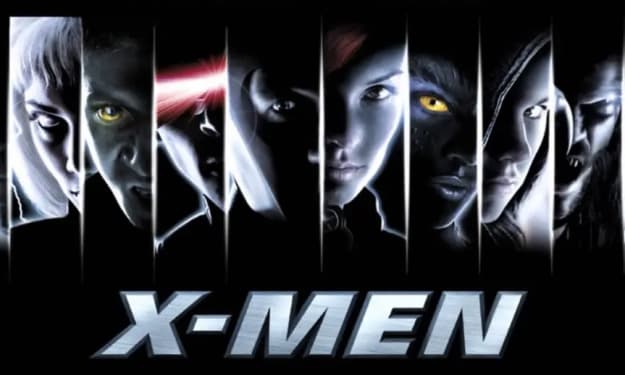
X-Men: Impact of a Legend
What do you get when humanity evolves from its relative identity and leaps forward on the evolutionary ladder? According to comic book writers Stan Lee and Jack Kirby you get mutants, but since no one in 1963 knew what mutants were they just decided to call them X-Men and 37 years after they first evolved into the world of literature they made their leap to the big screen in a way that elevated the brand of Marvel into what we know today.
By Joe Patterson9 months ago in Journal