business wars
Iconic and sometimes notorious business wars between key thought leaders and competitors in multiple categories, genres, and topics. From Nintendo and Sega to Penthouse and Playboy.
War clouds in the Middle East — US, Israel and Iran face to face. AI-Generated.
oman: (special report)journalist malik sarfraz hussain awan. The Middle East is once again in the grip of severe military tension, where after joint air and missile attacks by the US and Israel on important military and strategic targets inside Iran, Iran retaliated vigorously, targeting not only Israel but also US military installations in the Gulf region. According to the initial military briefing, the Israel Defense Forces and the United States Armed Forces attacked various cities in Iran, including the capital Tehran, the industrial and defense center Isfahan, Qom, Kermanshah and other sensitive locations. According to the Israeli position, this operation was carried out to limit Iran’s growing missile and drone capabilities, while US officials called it a preemptive measure to defend their allies and stabilize the region. According to Iranian media, some military installations were damaged in the attacks and a few personnel were killed and injured, but the full damage estimate is still underway. Iran responded immediately by launching ballistic missiles and drones towards Israel through the Islamic Revolutionary Guard Corps and also attempted to target US bases in the Gulf countries. According to reports, alarm sirens were sounded and air defense systems were activated near the Al-Udeid Air Base in Qatar, the US Navy Fifth Fleet headquarters in Bahrain, and some military installations in Kuwait and the United Arab Emirates. Several missiles were claimed to have been destroyed in the air, while reports of limited material damage were also received. Israel said its defense system was largely effective, but explosions were heard in a few places. Iran has warned that if its territory is attacked again, the response will be more severe and widespread. The most immediate and significant impact of this military exchange was on the airspace of the entire region, where Iran completely closed its airspace and suspended all international and domestic flights. Israel also temporarily closed its airspace and stopped civilian flights as a precautionary measure. Iraq has been warned of becoming a potential missile passageway. Due to the fear, it immediately closed its airspace and dozens of flights were canceled. Jordan closed its airspace for a few hours as a precaution and later allowed limited flights. Qatar increased air surveillance, suspended some routes and issued special instructions to pilots. Bahrain announced restrictions on air traffic in view of the security situation. Kuwait diverted several international flights. The United Arab Emirates tightened surveillance in its northern airspace and instructed many aircraft to take alternative routes. Saudi Arabia did not announce a complete closure, but it imposed additional surveillance in the eastern sector and temporarily suspended some flights. Lebanon and Syria also issued alerts, while Turkey increased security measures in its eastern airspace. As a result of these extensive closures, flights from Europe to the Gulf and Asia had to take longer routes, which increased fuel costs and travel times. International airlines made urgent changes to schedules and canceled or postponed several flights, keeping in mind the safety of passengers. This extraordinary closure has practically turned the region into a military zone where defense systems are active 24 hours a day and radars are on full alert. Security is on high alert on the ground as well. An emergency has been declared in hospitals and civil defense agencies are mobilized. Oil prices fluctuated in global markets while investors adopted a cautious attitude. Activities on the diplomatic front have intensified and the United Nations Security Council has called an emergency meeting and appealed to the parties for an immediate ceasefire, restraint and diplomatic negotiations. In the Security Council meeting, some countries expressed concern over unilateral military actions, while others questioned Iran's missile program and regional role. The statement issued after the meeting said that the continuation of tensions in the region could pose a serious threat to global peace and security and that all relevant parties should abide by international law and the UN Charter. The UN Secretary-General also stressed that the civilian population and civilian aviation should be protected at all costs. Experts say that if these clashes are not limited, Lebanon, Syria, Iraq and the Gulf states could also be directly or indirectly involved in the conflict. According to military analysts, the two sides are currently sending each other messages through limited but symbolic use of force. However, in the event of any miscalculation or additional attacks, the situation could quickly turn into a full-scale war. The biggest question in the current situation is whether behind-the-scenes diplomatic efforts will succeed in reducing tensions or whether this crisis will take the form of a long and destructive regional conflict. The region is currently in a state of uncertainty, airspace closures remain partially in place, military preparations are increasing, and the eyes of the international community are focused on the next few days, which will determine the future of this crisis.
By Malik Sarfraz Hussain Awanabout 6 hours ago in Journal
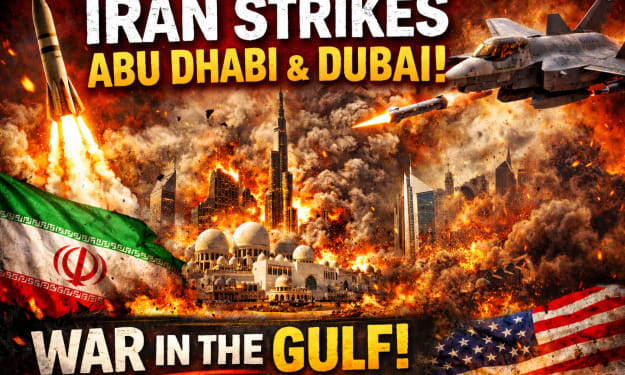
Iran–Israel–U.S. War 2026: Gulf Cities on Edge as Missiles, Drones, and Airstrikes Shake the Middle East
The Middle East is once again at the center of global tension as the conflict between Iran, Israel, and the United States has escalated dramatically in 2026. In the past few days, coordinated airstrikes, ballistic missile launches, and drone attacks have pushed the region into one of its most dangerous moments in years. Gulf cities such as Abu Dhabi and Dubai have felt the shockwaves, while global markets and oil prices react to the rising instability.
By Waqar Khanabout 9 hours ago in Journal
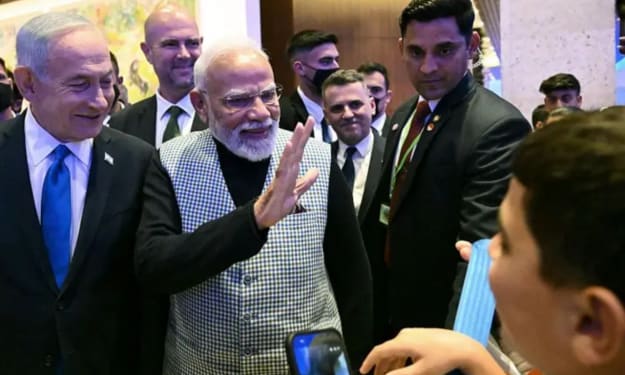
Fake Deepfake Video Links Modi and Netanyahu to Afghan Taliban Support
A fake video of Israeli Prime Minister Benjamin Netanyahu has gone viral during Indian Prime Minister Narendra Modi’s visit to Israel, in which he is allegedly heard saying that India and Israel will provide every possible support to the Afghan Taliban.
By Real content2 days ago in Journal
Powerful Mindsets That Separate Rich Entrepreneurs
Success in entrepreneurship is often attributed to funding, connections, or timing. While these factors can help, research and real-world case studies consistently show that mindset plays a more decisive role than resources.
By Stories Today5 days ago in Journal
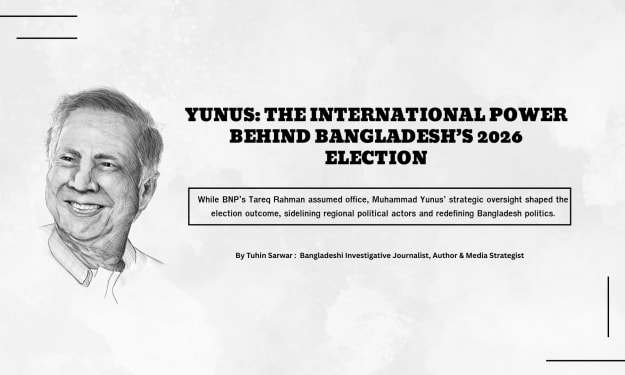
Yunus: The International Power Behind Bangladesh’s 2026 Election
By: Tuhin Sarwar। Dhaka । February 18, 2026 । Eight months after Bangladesh’s caretaker government assumed power following the collapse of the previous administration in August 2024, the nation experienced one of its most closely watched democratic transitions in recent memory. On 12 February 2026, the country concluded a general election that delivered a two-thirds parliamentary majority to the Bangladesh Nationalist Party (BNP), enabling Tarique Rahman to take office as Prime Minister. Yet an analysis by India Today reflected across global media outlets frames the story differently: the true strategic victor of Bangladesh’s 18‑month political transition was Muhammad Yunus, the Nobel laureate economist whose international stature and tactical maneuvering shaped the nation’s political landscape in ways no conventional politician has before.
By Tuhin Sarwar10 days ago in Journal
Adriana Kostov Appointed to Lead Australian Chapter of the Hedge Fund Association
The appointment of Adriana Kostov as head of the Hedge Fund Association’s newly established Australian chapter marks a significant milestone not only in her career but also in the continued evolution of Australia’s alternative investment landscape. With a background that bridges law, commerce, and high-level financial strategy, Kostov’s professional journey reflects the kind of global perspective and disciplined expertise required in today’s complex hedge fund environment.
By Financial Services Media10 days ago in Journal
Content Without Context Is Just Noise
In the digital world, everyone's screaming for attention. There are posts, ads, and videos everywhere, and all are screaming to get seen. But let's get down to brass tacks: all that content means squat if it's not being seen by the right eyes or telling a useful story. Without context, good intent can turn to waste quickly. It is just noise being sent directly into space.
By Ahsan Raza11 days ago in Journal
If God Is Not Physically Here, How Are We Supposed to Have a Relationship With Him?
If God is not physically standing in front of us… if we cannot see Him, hear Him audibly, or sit across from Him at a table… then how are we supposed to have a real relationship with Him?
By Sound and Spirit13 days ago in Journal