
Iran–Israel–U.S. War 2026: Gulf Cities on Edge as Missiles, Drones, and Airstrikes Shake the Middle East
Breaking News Analysis: What Has Been Destroyed, Who Attacked First, and What Happens Next?

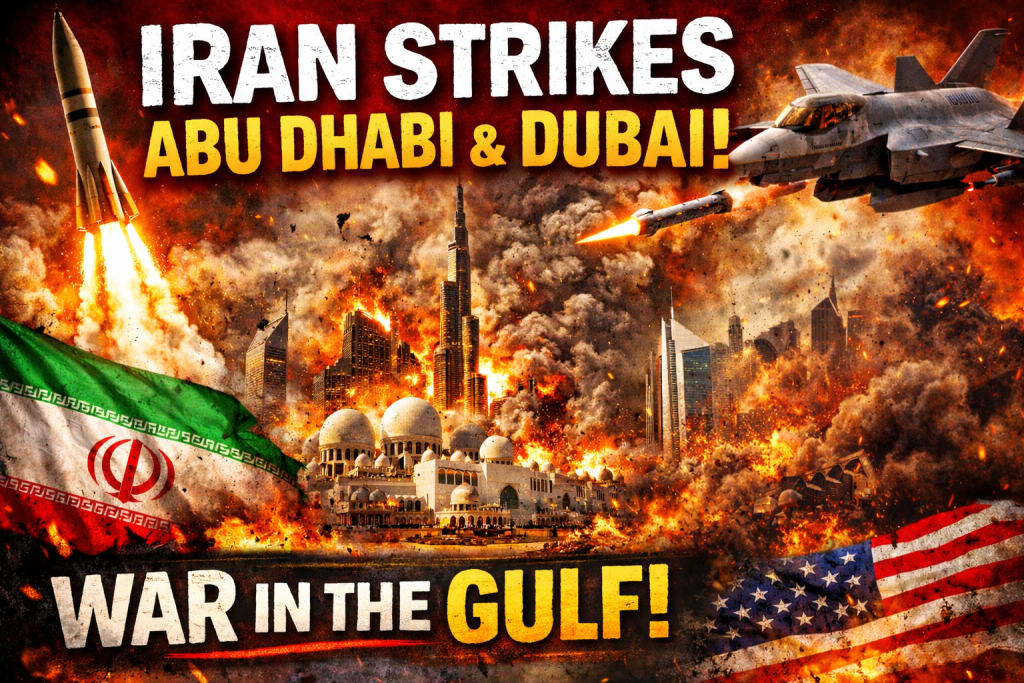
The Middle East is once again at the center of global tension as the conflict between Iran, Israel, and the United States has escalated dramatically in 2026. In the past few days, coordinated airstrikes, ballistic missile launches, and drone attacks have pushed the region into one of its most dangerous moments in years. Gulf cities such as Abu Dhabi and Dubai have felt the shockwaves, while global markets and oil prices react to the rising instability.
Who Attacked First?
According to multiple international reports and official statements, the current escalation began after joint military operations were launched by Israel and the United States targeting Iranian military and strategic sites. The strikes reportedly focused on missile facilities, drone production centers, and key Revolutionary Guard positions inside Iran. The stated objective from Washington and Tel Aviv was to weaken Iran’s advanced weapons programs and prevent further regional threats.
Iran quickly labeled the attacks as aggression and responded with what it called “defensive retaliation.” Within hours, missiles and long-range drones were launched toward U.S. military bases across the Gulf region. Several interception systems were activated in Gulf countries, preventing wider casualties, but debris and shock impacts caused damage in certain areas.
What Has Been Destroyed So Far?
Inside Iran, early assessments indicate that multiple military installations suffered structural damage. Satellite imagery analysis from defense observers suggests that some drone storage sites and missile infrastructure were directly hit. Iranian authorities have acknowledged damage but have not released full details.
In the Gulf region, attempted strikes targeted facilities associated with U.S. forces. Air defense systems in the United Arab Emirates and neighboring countries intercepted several projectiles. However, falling debris caused localized destruction in parts of Abu Dhabi. Reports confirmed at least one civilian fatality and minor structural damage to buildings.
Airspace closures followed almost immediately. Major airports in the UAE temporarily suspended or rerouted flights. International airlines diverted routes away from the Gulf corridor, leading to global travel disruption. Insurance costs for shipping through the Strait of Hormuz — one of the world’s most critical oil routes — spiked sharply within hours of the escalation.
What About Saudi Arabia?
There have been heightened alerts in Saudi Arabia, though confirmed large-scale destruction there remains limited as of now. Saudi air defense systems remain on high alert, and authorities have increased security around oil infrastructure. Energy markets reacted quickly, with crude oil prices rising due to fears of potential supply disruption.
It is important to clarify that while tensions are extremely high, verified reports do not confirm that “everything was destroyed” in Saudi Arabia or the UAE. Most missile threats were intercepted, preventing large-scale devastation. However, the psychological and economic impact is significant.
Current Conditions on the Ground
The situation remains fluid and unpredictable. Governments across the Gulf have urged residents to remain calm but vigilant. Schools and public services in some districts operated under precautionary measures. Military bases throughout the region are on elevated alert status.
In Israel, authorities also activated air defense systems amid fears of further retaliation. Emergency response teams remain mobilized. Meanwhile, in Iran, state media continues to broadcast strong warnings of additional counterstrikes if attacks continue.
Diplomatic channels appear strained. Calls for de-escalation have come from global powers, warning that a prolonged conflict could destabilize the entire Middle East and disrupt global energy supplies. Financial markets are closely monitoring developments, especially oil and defense stocks.
Global Impact and What Happens Next
The biggest international concern centers on escalation. If direct strikes expand further, the conflict could widen beyond targeted military facilities. The Strait of Hormuz remains a key flashpoint, as nearly one-fifth of global oil passes through this narrow waterway.
Military analysts believe both sides are currently attempting to show strength without triggering full-scale war. However, miscalculations are possible in such a tense environment. Any major casualty event or strike on critical infrastructure could rapidly intensify the crisis.
For now, air defenses across the Gulf remain active, intelligence monitoring is heightened, and diplomatic pressure is mounting behind the scenes.
Final Analysis
The Iran–Israel–U.S. confrontation has entered a dangerous phase. Confirmed military strikes have occurred. Missile retaliation has reached Gulf territory. Civilian casualties, though limited, have been recorded. Infrastructure damage exists, but catastrophic destruction across Saudi Arabia and the UAE has not been verified by reliable sources.
The region stands at a crossroads. Whether this becomes a prolonged regional war or a contained military exchange depends on the next moves made by Tehran, Washington, and Tel Aviv.
As the situation evolves, accurate information and verified reporting remain essential. The coming days will determine whether diplomacy can prevent a wider Middle East conflict — or whether the world is witnessing the beginning of a deeper geopolitical crisis.
About the Creator
Waqar Khan
Passionate storyteller sharing life, travel & culture. Building smiles, insights, and real connections—one story at a time. 🌍
Every read means the world—thanks for your support! 💬🖋️
Keep reading
More stories from Waqar Khan and writers in Journal and other communities.
Trump’s 10–15% Global Tariff Shock
Former U.S. President Donald Trump has once again made headlines with a bold economic move: a proposed 10% to 15% global tariff on imported goods. The announcement has sparked debates across financial markets, business communities, and political circles. Many people are now asking the same questions: Why is this tariff being introduced? When will it be implemented? And how will it affect everyday consumers and global trade?
By Waqar Khan6 days ago in Journal
Rethinking Healthcare Supply Chain Systems
Have you ever wondered how hospitals manage to provide the right medications, equipment, and supplies exactly when patients need them? Behind every successful treatment lies a carefully coordinated system known as supply chain management for healthcare organizations. This system ensures that essential resources move smoothly from manufacturers to healthcare facilities and ultimately to patients.
By Brady Beitlich5 days ago in Journal



Comments
There are no comments for this story
Be the first to respond and start the conversation.