
Synthetic Biology: Redefining the Future of Life Sciences and Sustainable Innovation
Where Biology Meets Engineering to Transform Medicine, Energy, and the Environment
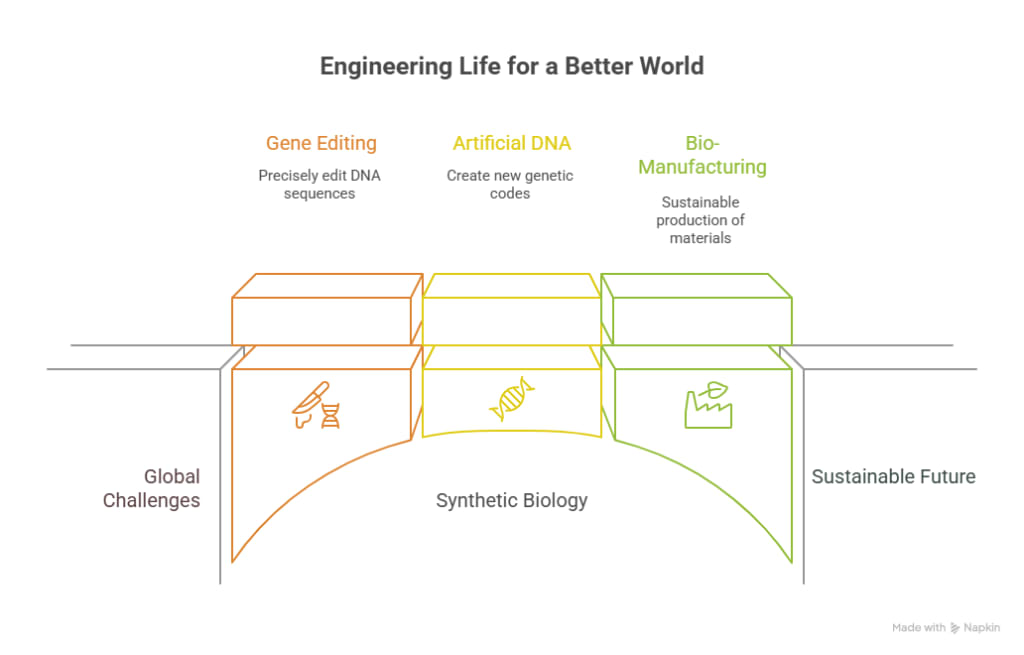
Synthetic biology stands at the frontier of modern science, merging the principles of biology, chemistry, computer science, and engineering to redesign and construct new biological parts, systems, and organisms. Unlike traditional genetic modification, which merely alters existing genes, synthetic biology enables scientists to create entirely new biological components that can perform specific, programmable functions. From curing diseases to producing sustainable materials, this groundbreaking field is reshaping how we understand and utilize life itself.
What Is Synthetic Biology?
At its core, synthetic biology involves the design and creation of biological systems that do not exist in nature. It uses advanced tools such as gene editing, DNA synthesis, and computational modeling to reprogram living cells or create synthetic organisms capable of performing desired tasks.
Think of it as building with biological “Lego blocks.” Scientists use standardized genetic parts—often called biobricks—to assemble new biological pathways or redesign existing ones. The result can be bacteria that produce biofuels, yeast that synthesize medicines, or plants that capture carbon more efficiently.
Key Innovations Powering Synthetic Biology
1. Gene Editing and CRISPR Revolution
The emergence of CRISPR-Cas9 technology has been one of the most transformative developments in synthetic biology. It allows scientists to precisely edit DNA sequences, switch genes on or off, and introduce new traits with unprecedented accuracy. This precision is opening new pathways for developing personalized therapies, disease-resistant crops, and efficient bio-manufacturing systems.
2. Artificial DNA and Genetic Circuits
Synthetic DNA enables the creation of entirely new genetic codes, while genetic circuits act like biological software that directs cellular behavior. By programming these circuits, researchers can instruct cells to produce therapeutic proteins, sense environmental toxins, or even self-destruct when a specific condition is met. These capabilities have immense potential for drug delivery, biosensing, and environmental monitoring.
3. Bio-Manufacturing and Sustainable Production
One of the most exciting applications of synthetic biology lies in sustainable manufacturing. Instead of relying on petroleum-based chemicals or animal-derived products, companies are engineering microorganisms to produce biodegradable plastics, fragrances, textiles, and even food ingredients. These bio-based production methods significantly reduce carbon emissions and resource consumption, paving the way for a circular and eco-friendly economy.
Transformative Applications Across Industries
Healthcare and Medicine
Synthetic biology is revolutionizing healthcare through gene therapies, vaccine development, and regenerative medicine. The technology has already proven its worth in the rapid development of mRNA vaccines, demonstrating its agility in responding to global health challenges.
Researchers are also designing living cells that can act as “smart drugs”—detecting disease markers within the body and releasing treatment precisely where needed. Engineered bacteria are being explored as vehicles to deliver therapies directly to tumors or repair damaged tissues, marking a new era of precision medicine.
Agriculture and Food Security
In agriculture, synthetic biology offers solutions to some of the world’s most pressing challenges, including food scarcity, climate change, and soil degradation. Scientists are engineering plants to be more resilient to drought and pests, and creating microbes that naturally enrich soil with essential nutrients.
Moreover, synthetic biology is powering the rise of cultivated and alternative proteins, where meat, dairy, and seafood are produced without animal farming. This innovation not only supports animal welfare but also significantly reduces land use, water consumption, and greenhouse gas emissions.
Energy and Environment
The push for cleaner energy is another domain where synthetic biology is making waves. Engineered microorganisms can convert waste biomass or carbon dioxide into renewable fuels like ethanol, butanol, and hydrogen. This bioconversion process offers a sustainable alternative to fossil fuels while simultaneously reducing environmental impact.
In environmental protection, synthetic organisms are being designed to detect and neutralize pollutants such as heavy metals or oil spills. Some engineered bacteria can even capture atmospheric carbon, offering potential pathways to combat global warming.
Challenges and Ethical Considerations
While the potential of synthetic biology is vast, it also raises important ethical, safety, and regulatory questions. The deliberate creation or release of engineered organisms requires strict biosecurity measures to prevent unintended consequences. Concerns about ecological disruption, gene transfer, and misuse of biotechnology underscore the need for responsible innovation and governance.
Furthermore, the balance between innovation and ethics is crucial. Transparency, global collaboration, and inclusive public dialogue will play vital roles in shaping the future of this rapidly evolving field. As the technology matures, establishing international standards for biosafety, intellectual property, and environmental monitoring will become increasingly important.
Driving Forces Behind the Rapid Growth
Several factors are fueling the accelerated adoption of synthetic biology across industries:
• Advancements in DNA sequencing and synthesis have made genetic manipulation faster, cheaper, and more accessible.
• Integration of artificial intelligence and automation allows researchers to design and test biological systems at unprecedented scales.
• Government and private-sector investments are boosting research initiatives and commercialization efforts across the United States.
• Interdisciplinary collaborations between biologists, engineers, data scientists, and entrepreneurs are unlocking new possibilities in bio-innovation.
These forces are transforming synthetic biology from a niche research discipline into a cornerstone of modern science and sustainable development.
The Future of Synthetic Biology
Looking ahead, the future of synthetic biology promises to be transformative, personalized, and sustainable. As technology evolves, we may soon witness the creation of living materials that repair themselves, crops that adapt to changing climates, and organisms engineered to produce complex pharmaceuticals on demand.
The fusion of AI with synthetic biology will further accelerate discovery cycles, enabling researchers to predict genetic behavior, design metabolic pathways, and optimize biological systems in silico before laboratory testing. This convergence will not only enhance efficiency but also reduce the environmental footprint of industrial processes.
In healthcare, next-generation gene therapies could eliminate hereditary diseases, while regenerative medicine may allow the growth of replacement organs from a patient’s own cells. Beyond medicine, the potential to reprogram nature at the molecular level holds the key to solving global challenges in food, energy, and environmental conservation.
Conclusion
Synthetic biology is more than just a scientific discipline—it is a revolution in how humanity interacts with the natural world. By designing biology with precision and purpose, researchers and innovators are laying the foundation for a future that is healthier, cleaner, and more sustainable.
As new breakthroughs continue to emerge, synthetic biology will not only change industries but also redefine the boundaries of what is biologically possible. From reimagining medicine to reinventing manufacturing, this powerful field symbolizes the next chapter in human ingenuity—where engineering meets life to create a better world.
About the Creator
Keep reading
More stories from Rachel Paul and writers in Journal and other communities.
The Future of Biomedical Innovation: Organ-on-Chip Technology
In recent years, the biomedical landscape has undergone a profound transformation with the emergence of micro-engineered platforms that replicate the functional units of human organs. Among these innovations, Organ-on-Chip technology stands out as a groundbreaking tool poised to redefine how we study diseases, develop drugs, and personalize medical treatments. Combining advances in tissue engineering, microfluidics, and cellular biology, this technology offers a highly sophisticated alternative to conventional animal testing and 2D cell cultures.
By Rachel Paul3 months ago in Journal
LBMA Precious Metals Analyst Survey Sees Silver Well Above $100, Wide Range for Gold, New Highs for PGMs
The latest LBMA Precious Metals Analyst Survey has sent strong signals across global commodity markets, projecting an exceptionally bullish long-term outlook for silver, a wide and uncertain price band for gold, and fresh highs for platinum group metals (PGMs). Compiled from leading analysts, banks, traders, and industry experts, the survey reflects growing confidence that structural shifts in the global economy are redefining the role of precious metals beyond traditional safe-haven demand.
By Salaar Jamali4 days ago in Journal
Autonomy Is The Real Privilege
Good morning, freedom-seekers! Today we’re gonna be looking at autonomy. A strange word, I know; one many would probably look at blankly and run away from on sight. We’re gonna figure out what it actually means, consider how it’s achieved, and decipher just how deeply most of us are tangled up in dependence without realising it.
By That ‘Freedom’ Guy5 days ago in Humans



Comments
There are no comments for this story
Be the first to respond and start the conversation.