
Star Wars: Visions Season 3 Inverts Return Of The Jedi In A Brilliant Way
This is awesome

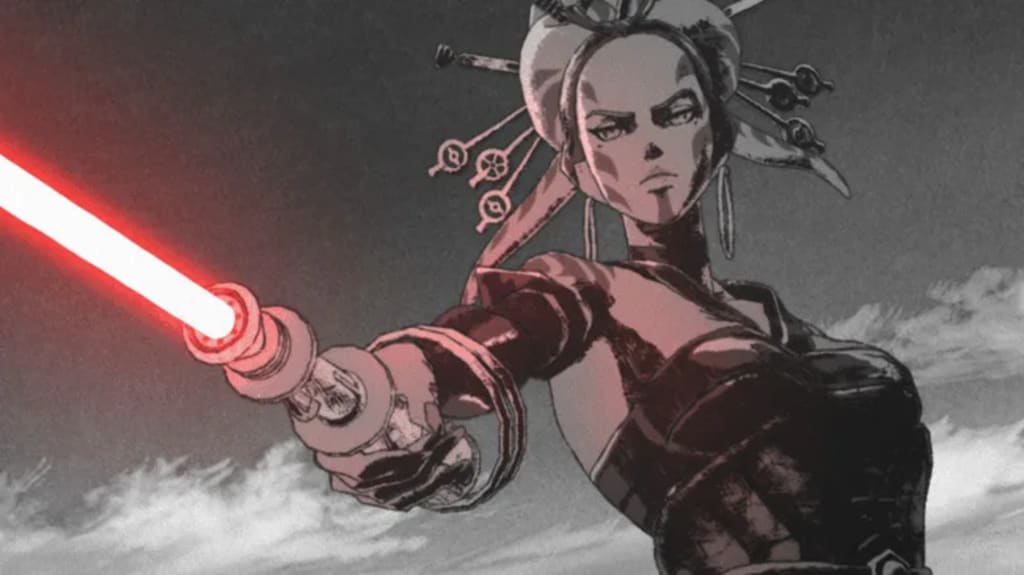
If George Lucas had painted with philosophy instead of film, Star Wars: Visions would be his abstract masterpiece. And now, with Season 3’s “The Duel: Payback,” that brushstroke has gone bold red — slicing through nostalgia, mythology, and morality with the precision of a lightsaber in meditation mode.
Because this time, the galaxy far, far away doesn’t just expand. It inverts.
Welcome to a world where Jedi aren’t always good, where Sith might be saviors, and where Ewoks aren’t dancing around campfires — they’re setting traps.
Let’s talk about the financial orgasm of the Star Wars multiverse — that euphoric jolt you feel when storytelling flips your expectations, shocks your senses, and still feels so satisfying that you whisper, “Do it again.”
Why “The Duel” Became a Cult Obsession
When Star Wars: Visions first dropped, it wasn’t just another spinoff — it was a love letter to experimentation. “The Duel,” directed by Takanobu Mizuno, was the standout episode that asked a simple yet heretical question:
What if a Sith hunted other Sith to protect peace?
It was a story told in black-and-white, dusted with crimson energy — like watching Kurosawa’s Yojimbo after an espresso shot of the Force. The mix of CGI and hand-drawn animation made every frame feel like calligraphy painted in chaos.
But it wasn’t just beautiful — it was existentially rebellious.
Here was a galaxy where morality didn’t live in the binary of Jedi = good and Sith = bad. It asked, “What if the Force itself is tired of being judged?”
The protagonist, The Ronin, wasn’t saving the universe — he was surviving it.
The Sequel Strikes Back: “The Duel: Payback”
Now, Mizuno returns with The Duel: Payback — and he’s not just following up. He’s flipping the galactic chessboard.
Picture this: our lone Ronin, wounded and broken after his first duel, is rescued not by wise Jedi or humble villagers… but by Ewoks.
Yes, those Ewoks — the furry forest folk from Return of the Jedi who danced with Stormtrooper helmets like it was Woodstock on Endor.
Only this time, they’re different. Think less “teddy bears with spears,” more “forest guerrillas with vengeance issues.”
The Ronin, much like Toshiro Mifune’s battered samurai in Yojimbo, recuperates in their hot springs — a metaphor for rebirth. And when the Crusaders return to finish the job, these Ewoks don’t sing. They slaughter.
Mizuno just performed the ultimate cinematic inversion: he turned Return of the Jedi’s cutest heroes into primal instruments of retribution.
And here’s the genius — it works.
Symbolism in a Galaxy Gone Rogue
The beauty of The Duel: Payback isn’t in its fight choreography (though it’s stunning). It’s in its symbolic inversions.
In Return of the Jedi, the Ewoks represent innocence defeating tyranny through faith and friendship.
In The Duel: Payback, they embody the corruption of innocence — the price of surviving oppression for too long.
This duality mirrors today’s world: even the purest ideals can be weaponized when survival is at stake.
And then comes the Grand Master — a Jedi hunting Sith but also enslaving civilians, locking down planets, and killing anyone who disobeys.
If that doesn’t echo the moral gray zones of our own history — from crusades to colonialism — nothing does.
Mizuno doesn’t draw villains. He draws reflections.
The Mask Comes Off — Literally
As the Ronin faces the Grand Master, the duel becomes more than a fight — it’s a metaphysical unmasking.
Blades clash. Sparks fly. And as the Grand Master’s mechanical parts fall away, his faceplate cracks open — a direct mirror to Darth Vader’s unmasking in Return of the Jedi.
But here’s the twist: where Vader’s unmasking represented redemption, the Grand Master’s symbolizes the loss of humanity.
It’s storytelling jujitsu — using your nostalgia against you.
The mask that once meant freedom now means enslavement. The light that once redeemed now corrupts.
That’s the brilliance of The Duel: Payback: it takes your emotional investments in Star Wars’ moral compass and says, “Let’s see how it spins in zero gravity.”
When Kurosawa Meets Lucas in a Meditation Chamber
Both The Duel and Payback are heavily inspired by Akira Kurosawa’s samurai epics, particularly Yojimbo. Mizuno borrows the visual grammar of ancient Japanese cinema — dust, silence, tension — and fuses it with Lucas’ mythic Force philosophy.
The result?
A space western wrapped in Buddhist paradox.
The Ronin is neither Jedi nor Sith. He’s balance personified — a nomad between extremes. His journey isn’t about victory; it’s about discipline — the art of knowing when to fight and when to fall silent.
Every slash of his saber feels like a koan — a riddle meant to break your attachment to simple answers.
And perhaps that’s why Visions works so well: it doesn’t need canon to be compelling. It just needs conviction.
The Inverted Hero’s Journey
Most Star Wars stories follow Joseph Campbell’s classic “Hero’s Journey.”
But The Duel: Payback inverts it.
The call to adventure? It’s survival, not destiny.
The mentor? The Ewoks, creatures of instinct, not intellect.
The abyss? The realization that light and dark are masks — not moralities.
It’s Star Wars reimagined as a Zen parable about ego.
The Ronin doesn’t conquer his enemy. He outlasts him.
Because sometimes, the only way to win in a corrupt system is to refuse to play by its rules.
The Return of the Mirror
Here’s where Mizuno’s brilliance peaks: everything in Payback is a mirror of Return of the Jedi, but bent through the prism of moral irony.
Return of the Jedi The Duel: Payback
Ewoks free Endor through innocence Ewoks avenge Endor through rage
Vader’s mask removed = redemption Grand Master’s mask removed = corruption
Jedi vs. Sith = good vs. evil Jedi vs. Sith = tyranny vs. resistance
Hope in unity Salvation in solitude
It’s like watching your favorite fairy tale rewritten by Nietzsche and animated by Studio Ghibli.
Metaphor of the Century: The Force as a Currency
Let’s get philosophical for a second.
If the Force is energy — flowing, infinite, transferable — then each duel, each conflict, is an economic exchange.
Every time one side takes power, it bankrupts the other.
Every act of domination incurs karmic debt.
By that logic, The Duel: Payback isn’t just a story about revenge. It’s about spiritual inflation. The more we cling to righteousness, the less value it holds.
This is why the Ronin’s neutrality is so profound — he doesn’t hoard the Force. He circulates it. Like a monk who’s learned that peace, like money, only holds meaning when shared wisely.
The Art of Rebellion: Why “Visions” Matters
With Disney+ overflowing with canon content — Ahsoka, The Mandalorian, Andor — it’s easy to forget what Star Wars really is: a playground for philosophy in space.
Visions brings back that spirit of experimentation. It reminds us that stories don’t have to fit; they just have to feel.
And “The Duel: Payback” feels like a revelation. It’s the story of the outsider — the wanderer who refuses to choose sides in a war that never ends.
In an age where fandoms battle over who’s “right,” Mizuno whispers, “Maybe everyone’s wrong.”
Hilarious Truth: Ewoks Are the Galaxy’s Best HR Managers
Let’s lighten up for a second. Imagine the Ewoks in modern times:
HR department on Endor, posting job openings for “Tree Trap Technicians.”
Weekly team-building chants instead of emails.
And their wellness policy? Unlimited hot springs and revenge therapy.
But behind the humor lies a deeper truth: survival transforms us. Even innocence can learn efficiency when faced with extinction.
That’s why The Duel: Payback hits harder than any blaster — it’s not just about survival. It’s about what survival costs.
The Legacy of “The Duel: Payback”
At its core, The Duel: Payback is a parable for our times:
It challenges blind faith in institutions (Jedi).
It honors self-awareness and autonomy (The Ronin).
It asks whether peace can ever exist without conflict.
Mizuno doesn’t hand us answers — he hands us mirrors.
And in that reflection, we see the truth: every light casts a shadow, and every shadow hides a flicker of light.
Final Verdict: The Force Evolves
When the credits roll, you realize this isn’t just an episode — it’s an awakening.
The Duel: Payback doesn’t just invert Return of the Jedi — it evolves it. It transforms nostalgia into a new kind of wisdom: that the greatest duel isn’t fought with sabers, but with the self.
And that, perhaps, is the truest meaning of balance.
So, next time you rewatch Return of the Jedi, remember: maybe the Ewoks weren’t celebrating the Empire’s fall. Maybe they were already planning Payback.
Because in this galaxy, as in ours, even peace has a price tag.
And the Force?
It always collects.
About the Creator
Omasanjuwa Ogharandukun
I'm a passionate writer & blogger crafting inspiring stories from everyday life. Through vivid words and thoughtful insights, I spark conversations and ignite change—one post at a time.
Keep reading
More stories from Omasanjuwa Ogharandukun and writers in Journal and other communities.
Child Star Floyd Roger Myers Jr. Dead at 42
He once had the world in his hands — a bright smile, boundless charisma, and the kind of effortless charm that made casting directors lean forward and say, “That’s the one.” Floyd Roger Myers Jr. was the little spark on set, the face audiences couldn’t forget. To millions who grew up in the golden era of ’90s television, he was part of the magic that made The Fresh Prince of Bel-Air not just a show, but a cultural phenomenon.
By Omasanjuwa Ogharandukun3 months ago in Journal
The Trouble with /My/ Time
Today is supposed to be my fresh start to a new week, but I am still reeling with the realization that my private property means absolutely nothing to my children's father, that my parenting time and my personal plans are irrelevant enough to him to risk our child going without the prescription drink he needs - just because said adult's schedule is the sole valuable one?, and that there is likely nothing I can do to stop this behavior from simply continuing.
By The Schizophrenic Mom2 days ago in Journal



Comments
There are no comments for this story
Be the first to respond and start the conversation.