
Rightwingers of the World Unite to Endorse Orbán Ahead of Hungary’s Election
Global right-wing leaders and movements rally behind Viktor Orbán as Hungary prepares for a pivotal election”

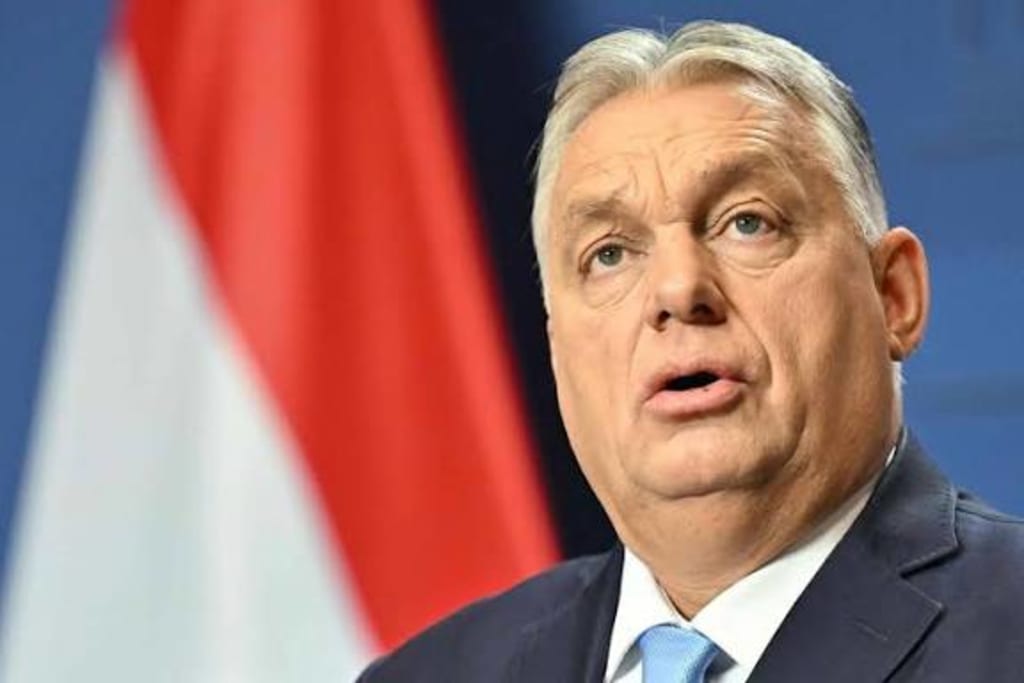
As Hungary gears up for its next parliamentary elections, Prime Minister Viktor Orbán has found support not just at home but across the global right-wing spectrum. From Europe to the Americas, conservative leaders, nationalist movements, and far-right political organizations are openly backing Orbán, citing his policies on national sovereignty, immigration control, and cultural conservatism as a model for their own agendas.
Orbán’s Appeal Beyond Hungary
Viktor Orbán, Hungary’s Prime Minister since 2010, has built a reputation as a staunch defender of national identity and traditional values. His government’s policies, particularly regarding strict immigration laws, family incentives, and anti-globalist stances, resonate with conservative and nationalist factions worldwide.
In the lead-up to the election, high-profile endorsements have come from several European right-wing leaders. Italy’s Matteo Salvini, Poland’s Law and Justice party officials, and Czech Republic’s Prime Minister Petr Fiala have praised Orbán for upholding sovereignty and resisting supranational pressures from the European Union.
Even beyond Europe, political figures in Brazil, the United States, and Israel have expressed admiration for Orbán’s ability to maintain domestic control while challenging liberal international norms. Many see his leadership as a blueprint for countering what they perceive as the liberal overreach of global institutions.
Domestic Context
Within Hungary, Orbán’s party, Fidesz, continues to enjoy significant support, especially in rural areas and among older voters. His government emphasizes job creation, family-oriented policies, and conservative social values, which remain central pillars of his campaign.
However, opponents argue that Orbán’s consolidation of power threatens democratic checks and balances. Media freedom, judicial independence, and minority rights have been recurring points of contention, both domestically and internationally. Critics warn that the global endorsements he is receiving may embolden further anti-democratic tendencies in Hungary.
The Role of Right-Wing Networks
The international backing Orbán enjoys is facilitated through a network of think tanks, political foundations, and media outlets that promote conservative and nationalist ideologies. These networks highlight Hungary as a success story, citing Orbán’s economic policies, border security measures, and defiance against EU directives on migration and human rights.
Social media campaigns have also amplified Orbán’s message to international audiences, portraying him as a leader capable of resisting globalist pressures while safeguarding national interests. Influencers and commentators sympathetic to his cause share content that reinforces his image as a “protector of European civilization” and a symbol of a new right-wing resurgence.
Implications for Hungary’s Election
The international right-wing support provides Orbán with both symbolic and practical benefits. Symbolically, it positions him as part of a global movement, boosting his image among nationalist and conservative voters. Practically, it helps mobilize resources, campaign strategies, and advice from successful campaigns elsewhere.
Political analysts suggest that the global endorsements may also pressure domestic opposition parties. With foreign figures framing Orbán as a model of governance, challengers must not only counter his policies but also contend with the perception that he enjoys international legitimacy.
Criticism and Controversy
The cross-border support for Orbán has not gone unchallenged. Critics argue that it signals a worrying trend of international interference in domestic politics. The European Union has repeatedly voiced concern over Hungary’s democratic backsliding, pointing to media control, weakened judicial independence, and election irregularities as areas of concern.
Human rights organizations have also warned that Orbán’s hardline approach to migration and minority groups is setting a dangerous precedent. By endorsing him, global right-wing actors risk normalizing policies that may undermine democratic norms and minority protections elsewhere.
What This Means for Europe
Orbán’s international endorsements reflect a broader trend in European politics: the rise of nationalist, conservative movements challenging the EU’s liberal agenda. With right-wing parties gaining traction in countries like Italy, Poland, and Spain, Hungary under Orbán is increasingly positioned as a hub for ideological cooperation among these factions.
Observers note that the success of Orbán’s campaign could inspire similar strategies across the continent. If his Fidesz party maintains or expands its power, it may embolden other nationalist leaders to push for policies that prioritize sovereignty and conservative social agendas over collective EU mandates.
Conclusion
As Hungary approaches its election, Viktor Orbán is not just fighting for domestic political dominance but also symbolically representing a global right-wing resurgence. Endorsements from leaders and movements worldwide reinforce his image as a guardian of national sovereignty and cultural conservatism.
While this support energizes his base, it also heightens the stakes for critics and democratic institutions. The election outcome will not only shape Hungary’s political future but could also influence the trajectory of nationalist movements across Europe and beyond.
For voters, the choice is as much about domestic policies as it is about Hungary’s place in the broader ideological landscape—a test of whether Orbán’s vision of conservative nationalism will continue to guide the country or whether opposition voices can reclaim space for a more pluralistic democracy.
About the Creator
Fiaz Ahmed Brohi
I am a passionate writer with a love for exploring and creating content on trending topics. Always curious, always sharing stories that engage and inspire.
Keep reading
More stories from Fiaz Ahmed Brohi and writers in Journal and other communities.
Indian weapons must on all 114 Rafale jets, govt tells Dassault
India’s defense modernization plans received a strategic boost as the government officially directed Dassault Aviation, the French manufacturer of Rafale fighter jets, to equip all 114 aircraft with Indian-made weapons. This move underlines India’s commitment to self-reliance in defense technology while strengthening the combat readiness of its air force. The Rafale jets, considered among the most advanced multi-role fighters globally, are now set to carry the nation’s indigenous missile systems, bombs, and electronic warfare packages, blending cutting-edge French airframe technology with homegrown armaments. The Rafale Program and Indigenous Weapons India’s Rafale acquisition, initially contracted in 2016, brought 36 jets into the Air Force inventory, with an additional 114 aircraft to be delivered in subsequent batches. While Dassault’s jets are equipped with state-of-the-art French systems, the Indian government has long emphasized the integration of locally produced weapons. These include BrahMos supersonic cruise missiles, Astra beyond-visual-range air-to-air missiles, and indigenous precision-guided bombs. By mandating the use of Indian weapons across all 114 Rafales, the government aims to reduce dependency on foreign arms supplies and ensure that India’s air force maintains operational flexibility in critical combat scenarios. A senior defense official stated, “Our aim is to ensure that the Rafale platform not only brings in technological superiority but also becomes a force multiplier for our indigenous weapons programs.” Strategic Implications The integration of Indian weapons on Rafale jets carries both operational and strategic significance. From an operational perspective, using indigenous weapons allows for standardized maintenance and training protocols across the fleet. It simplifies logistics, reduces costs, and ensures that India is not constrained by export restrictions or supply chain uncertainties from foreign manufacturers. Strategically, the decision sends a strong signal to both allies and adversaries. India demonstrates its growing capability in defense production and its intention to assert technological independence in critical military domains. Given the geopolitical tensions in the Indo-Pacific, particularly with China and Pakistan, equipping the Rafales with locally produced weapons enhances India’s deterrence posture. Challenges in Integration Integrating indigenous weapons with Rafale aircraft, however, is not without technical challenges. Aircraft and weapons systems must be seamlessly compatible, including software integration, aerodynamics, and avionics. The Air Force’s testing and evaluation teams, along with Dassault engineers, will have to ensure that Indian missiles, bombs, and sensors work flawlessly with French-designed flight systems. Past collaborations, such as integrating the BrahMos missile on Su-30MKI aircraft, offer a blueprint for success, but the Rafale’s advanced avionics and fly-by-wire systems necessitate meticulous engineering and rigorous testing. Officials assure that phased testing and gradual integration will ensure minimal disruption to the aircraft’s delivery schedules. Boosting India’s Defense Industry This directive aligns closely with India’s “Make in India” initiative, which aims to build a robust domestic defense manufacturing ecosystem. By mandating the use of Indian weapons, the government hopes to create opportunities for local defense firms, enhance research and development capabilities, and encourage private sector participation in high-tech defense projects. According to industry experts, this approach will provide a significant boost to companies involved in missile development, precision-guided munitions, and electronic warfare systems. It also signals potential for future export opportunities, as Rafale jets equipped with Indian weapons could be offered to other countries, increasing India’s global defense footprint. Diplomatic and Industrial Balance While this move strengthens India’s self-reliance, it also requires careful diplomatic balancing. Dassault Aviation, which must now adapt its jets to accommodate Indian weapons, plays a critical role in maintaining delivery timelines and contractual obligations. Successful collaboration will require constant communication and technical coordination between French and Indian engineers. In the long term, this partnership could evolve into a model for international collaboration, where global platforms are paired with indigenous systems to create hybrid solutions tailored to specific national needs. Looking Ahead India’s decision to equip all Rafale jets with local weapons is a bold step toward achieving strategic autonomy in defense. It demonstrates the country’s commitment to blending cutting-edge technology with self-reliance, ensuring that the Air Force is equipped with a versatile, powerful, and locally sustainable arsenal. As the delivery of Rafale jets continues, the coming years will likely see a seamless integration of India’s missiles, bombs, and electronic warfare systems into the fleet, creating a formidable air power platform that combines the best of French aeronautical engineering with India’s indigenous defense innovation. This initiative not only strengthens India’s air defense capabilities but also reinforces its position as a rising power in global defense technology. It’s a reminder that modern warfare increasingly depends on the ability to combine advanced platforms with locally developed systems—a strategy India is now executing with clarity and purpose.
By Fiaz Ahmed Brohi4 days ago in Journal
The goals I did not achieve
Every writing goal I made for the year is a wash. It has been this way for a while, but I think it's important to be open about my failures and the reality of how life can get in the way. This is especially true considering the several times I have posted on Vocal about my writing goals, how I was changing my approach, and where I was hoping to be for the upcoming year. I will probably do that again in a couple months, but for now, it is time to acknowledge where I am today.
By Kay Husnick25 days ago in Journal




Comments
There are no comments for this story
Be the first to respond and start the conversation.