
Rise and Fall of the Roman Empire
Historical analysis of the Roman Empire

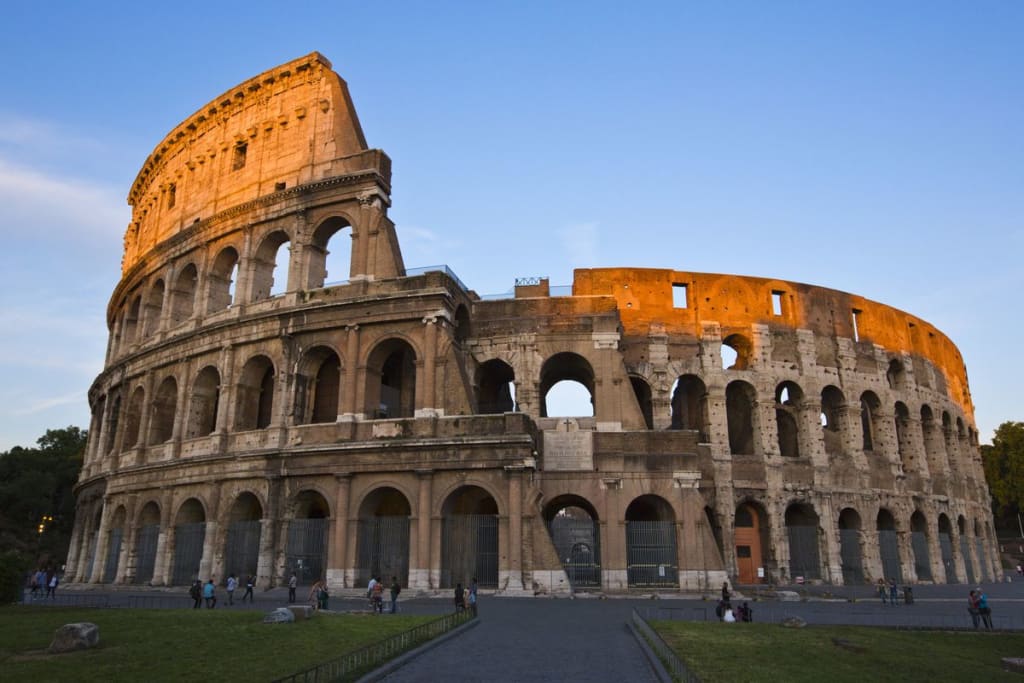
The Roman Empire was one of the most powerful and enduring empires in human history, lasting for over 500 years from its founding in 27 BC to its collapse in 476 AD. The rise of the Roman Empire was a complex process that was influenced by many factors, including military conquests, political reforms, and cultural achievements.
The origins of the Roman Empire can be traced back to the Roman Republic, which was established in 509 BC after the overthrow of the Roman monarchy. The Republic was a system of government in which power was divided among two consuls and a Senate, and was characterized by its expansionist policies and military conquests.
In the third century BC, Rome began to expand its territory beyond Italy, conquering neighboring territories such as Sicily, Sardinia, and North Africa. By the second century BC, Rome had become the dominant power in the Mediterranean world, with its conquests reaching as far as Greece, Spain, and Asia Minor.
One of the key factors that contributed to the rise of the Roman Empire was the military prowess of the Roman army. The Roman legions were highly disciplined and well-trained, and were able to defeat even the most formidable opponents. This military strength allowed Rome to conquer and control vast territories, and to establish a network of colonies and provinces throughout its empire.
Another factor that contributed to the rise of the Roman Empire was the political and social reforms of its leaders. In the second century BC, the Gracchus brothers introduced a series of reforms aimed at addressing the social and economic inequality that had developed in the Roman Republic. These reforms included land redistribution, the creation of public works projects, and the extension of citizenship to non-Roman Italians.
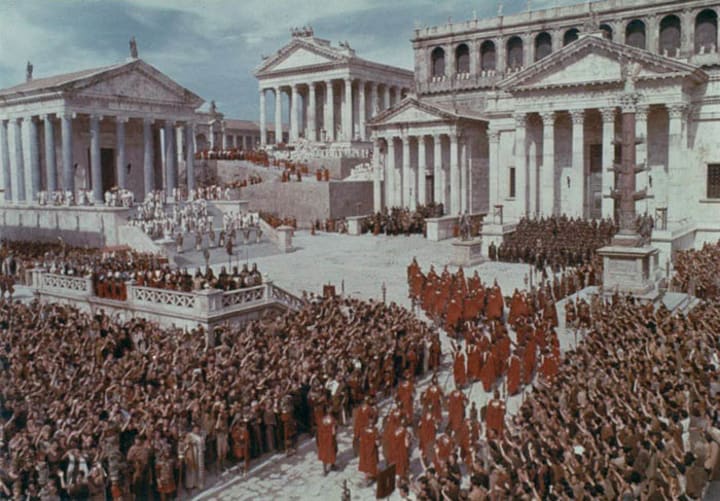
In the first century BC, Julius Caesar emerged as one of the most powerful figures in Rome, consolidating his power through military conquests and political maneuvering. In 44 BC, he was assassinated by a group of senators who feared his growing power. His death led to a period of political instability, which was eventually resolved by the rise of Caesar's adopted son, Octavian, who became the first Roman Emperor in 27 BC.
Under the rule of the emperors, Rome continued to expand its territory and exert its influence over the Mediterranean world. The emperors also implemented a series of administrative and cultural reforms, such as the establishment of a system of laws, the construction of monumental buildings and public works, and the spread of Latin language and culture throughout the empire.
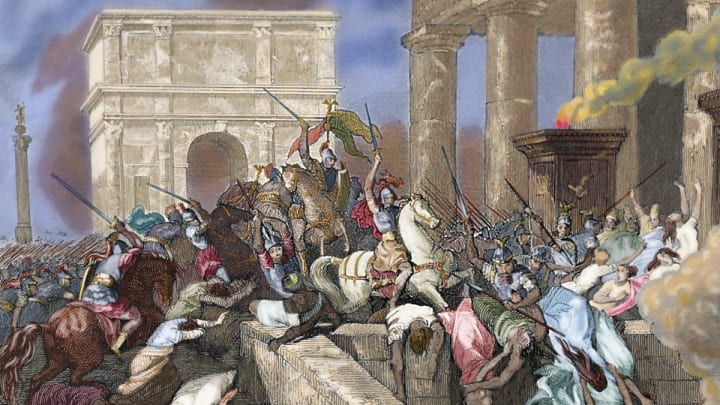
The fall of the Roman Empire is one of the most studied and debated events in world history. The decline and eventual collapse of the empire took place over several centuries and was caused by a combination of internal and external factors.
One of the most significant internal factors that contributed to the fall of the Roman Empire was economic instability. The Roman economy was based on agriculture and the exploitation of natural resources, such as mines and forests. As the empire expanded, however, it became increasingly difficult to maintain control over the vast territories and resources it had acquired. Inflation, taxation, and corruption also took their toll on the economy, making it increasingly difficult for the government to fund its military and administrative operations.
Political instability and corruption were also major factors in the decline of the Roman Empire. The empire was ruled by a series of emperors, many of whom were weak, incompetent, or corrupt. Succession disputes, assassinations, and coups were common occurrences during this period, and the government was often paralyzed by infighting and internal conflict.
External factors also played a role in the fall of the Roman Empire. In the fourth and fifth centuries AD, barbarian tribes such as the Visigoths, Huns, and Vandals began to invade the empire from the north and east. These tribes were able to exploit the weaknesses of the Roman military and government, and were often able to establish their own kingdoms on Roman soil.
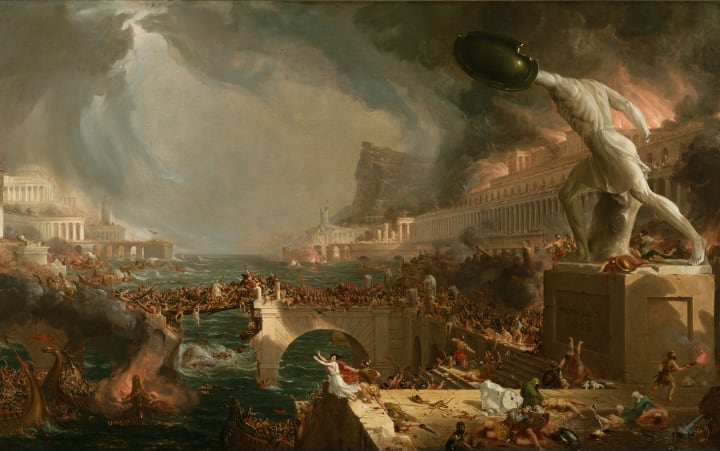
The fall of the Western Roman Empire in 476 AD is usually attributed to the deposition of the last Roman Emperor, Romulus Augustus, by the Germanic general Odoacer. This event marked the end of over 500 years of Roman rule in the Western Mediterranean and ushered in a new era of European history.
The collapse of the Roman Empire had a profound impact on world history. It marked the end of one of the most powerful and enduring empires in human history and led to a period of political, economic, and cultural fragmentation in Europe. However, the legacy of Rome continued to influence Western civilization for centuries to come, shaping everything from law and government to art and architecture.
About the Creator
Sujan Paudel
I love to write. And in a hunt for a platform to express my feelings, I have arrived in Vocal Media. Let's see where this journey takes me from here.
Keep reading
More stories from Sujan Paudel and writers in Journal and other communities.
Aliens do exist. Do you believe it?
The question of whether or not aliens exist has been a topic of discussion and debate for centuries. While there is no conclusive evidence to prove the existence of extraterrestrial life, there are several compelling arguments and examples from the past that suggest it is a possibility.
By Sujan Paudel3 years ago in Journal
The goals I did not achieve
Every writing goal I made for the year is a wash. It has been this way for a while, but I think it's important to be open about my failures and the reality of how life can get in the way. This is especially true considering the several times I have posted on Vocal about my writing goals, how I was changing my approach, and where I was hoping to be for the upcoming year. I will probably do that again in a couple months, but for now, it is time to acknowledge where I am today.
By Kay Husnick21 days ago in Journal
The Hour the World Went Quiet
It began with a flicker. Not of light, but of absence. The hum of my devices—the soft chime of messages, the buzz of updates, the endless scroll of curated lives—simply stopped. At first, I thought it was a glitch. I tapped screens. Checked cords. Restarted everything twice. But the silence held.
By KAMRAN AHMAD2 days ago in Journal
Do You have a Support Network?
Life is harder when you’re on your own. Human beings are social creatures, and we usually feel better when we have support from a strong social network around us. For most people, it’s our families that hold us together like glue.
By Elizabeth Woodsabout 16 hours ago in Psyche



Comments
There are no comments for this story
Be the first to respond and start the conversation.