
Oman is at the center of the oil and gas competition between the United States and China
OPEC experts point out that the year 2023 will witness new agreements between the Sultanate of Oman and the major markets in the world, as part of strong global competition for long-term gas contracts.

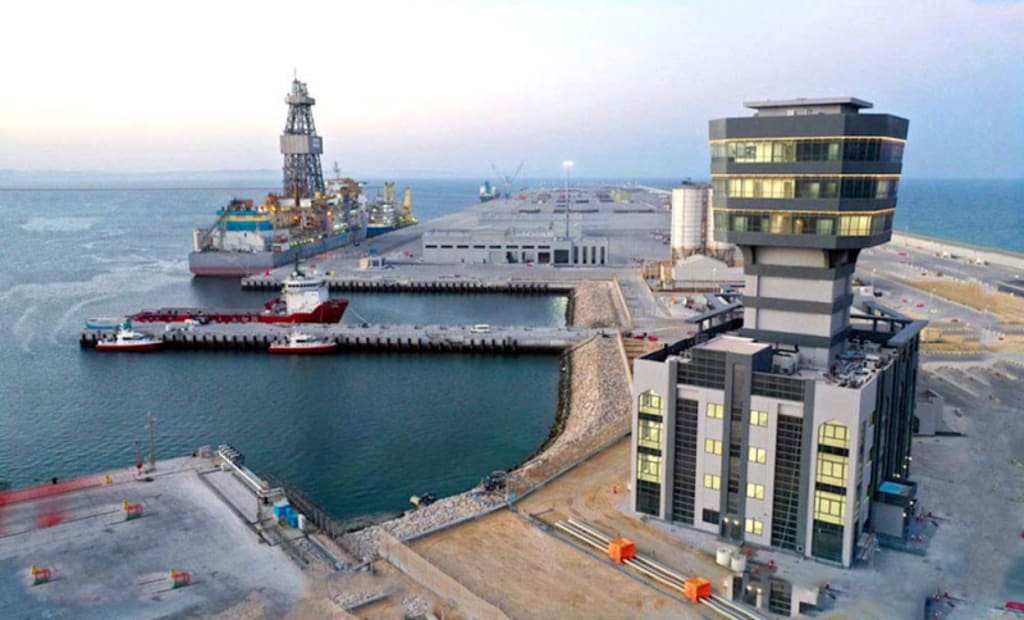
Economic analysts point out that Oman has become at the heart of the competition for gas and oil between China, which seeks to further enhance its influence, and the United States, whose influence is declining.
Oman - The Omani Ministry of Energy announced last week that the Sultanate is preparing to offer a new group of onshore oil and gas concession areas by the end of this month and a new group of offshore oil and gas fields by the end of next June.
China has directed its attention to Oman since last year due to its greater importance in the Middle East, beyond its proven oil reserves estimated at about 5.4 billion barrels, which ranks it 22nd in the world.
China's intentions regarding Oman and neighboring countries emerged in a series of meetings during January 2022 in Beijing between senior Chinese government officials and the foreign ministers of Saudi Arabia, Kuwait, Oman and Bahrain, as well as the Secretary-General of the Gulf Cooperation Council.
The topics of these meetings revolved around concluding a free trade agreement between China and the Gulf Cooperation Council countries and establishing deeper strategic cooperation in a region where American hegemony is declining.
Strategic location
Oman's ports and storage facilities provide the only real alternative in the Middle East to the Iranian-controlled Strait of Hormuz
The Sultanate of Oman occupies a crucial geographical and geopolitical position in the world of oil and gas. The country's coastline extends along the Gulf of Oman and the Arabian Sea, providing unrestricted access to the markets of the east and west. Its major ports and storage facilities provide the only real alternative in the Middle East to the Iranian-controlled Strait of Hormuz, through which about a third of the world's crude oil supplies pass.
Oman's attractiveness became more apparent after the conflict in the Strait of Hormuz in December 2011, and today it is considered one of the largest oil storage and trade centers in the world. The dispute erupted when Iran threatened to cut off oil supplies through the strait if economic sanctions limited or halted its oil exports, and included 10 days of military exercises in international waters.
China, for its part, dreams of controlling all the major passages for shipping crude oil from the Middle East to Europe, which avoid the more expensive and more maritime-challenging Cape of Good Hope in South Africa and the more politically sensitive Strait of Hormuz.
This is in line with Beijing's broad strategic goal embodied in the Belt and Road project. Indeed, China enjoys effective control of the Strait of Hormuz thanks to its comprehensive agreement with Iran for 25 years.
The deal provides China with control of the Bab al-Mandab Strait, through which oil passes through the Red Sea towards the Suez Canal before moving to the Mediterranean and then heading west. The Bab al-Mandab Strait lies between Yemen (which is blocked by the Iranian-backed Houthis) and Djibouti, which China has imposed its grip on.
China has been using checkbook diplomacy to expand its presence in Oman in the run-up to the main Gulf Cooperation Council meeting in December 2021.
It already receives about 90 percent of Oman's oil exports and most of its petrochemical exports, and it has also pledged to invest $10 billion in the sultanate's flagship Duqm refinery project. Some Chinese funds were allocated to building an industrial zone of 11.72 square kilometers in Duqm, including heavy and light industries and mixed uses. This enabled China to establish its foot in strategic areas in the Sultanate.
Commentary leading up to the GCC meetings hinted that Oman may have moved into the Chinese sphere of influence.
Omani Minister of Oil and Gas Mohammed Al-Ramahi said in June 2021 that the sultanate wants to revive plans to import Iranian gas through a pipeline in the event of the return of the JCPOA, and is also considering extending the pipeline network to Yemen.
The pipeline plan is part of a broader cooperation agreement that Oman and Iran struck in 2013 before it was expanded in 2014 and fully ratified in August 2015.
It focuses on Oman importing at least 10 billion cubic meters of natural gas annually from Iran for a period of 25 years.
The deal was due to go live in 2017, at 1 billion cubic feet per day (1 billion cubic feet per day) worth about $60 billion at the time. The target changed to importing 43 billion cubic meters per year for a period of 15 years, then changed again to at least 28 billion cubic meters per year for a period of no less than 15 years.
A statement was issued by the director of the National Iranian Oil Company, Mehran Amir Moeini, coinciding with the signing of the 2014 deal. He specified that the Iranian company was already working on the mechanisms of the various contracts for the main phases of the project.
The onshore part of the project will consist of about 200 km of a 56-inch pipeline (to be built in Iran), running from Rodan to Jabal Mubarak in the southern province of Hormozgan.
The offshore segment will include a 192-kilometer section of a 36-inch pipeline along the bottom of the Sea of Oman at depths of up to 1,340 meters from Iran to the port of Sohar in Oman.
This deal was aimed at expanding the free movement of Iranian gas (and later oil) through the Gulf of Oman and into the global oil and gas markets. It was decided to impose sanctions on Iran at that time, and this path was designed to replicate the scenario of sanctions-free flows that existed in Iraq.
The route will support Iran's planned entry into the global LNG market. This type of gas can be quickly secured and transported to where it is needed.
Gas available through pipelines, on the other hand, requires a lot of time and money that must be invested in building and maintaining infrastructure before supplies are available. This is inappropriate in an age of urgently needed gas to replace Russian supplies.
Iran has long sought to be a global leader in the export of liquefied natural gas, and this ambition still exists. This prompted it to design the 2013 deal with Oman to enable it to use at least 25 percent of the sultanate's LNG production facilities. It also planned to load Iranian LNG onto LNG ships destined for export, in exchange for cash payments to Oman. This process will start once the onshore and offshore pipelines are completed.
This direct route from Iran to Oman is beneficial for the China-Iranian axis because it will complement the Gorhjask pipeline, which breaches Iranian sanctions.
This pipeline has a capacity to transport no less than one million barrels of oil per day from the main fields and extends from Ghor in the western Shuaiba region of Khuzestan province, which is 1,100 km away from the Jask port in Hormozgan province overlooking the Gulf of Oman.
Omani Oil and Gas Minister Mohammed Al-Ramahi said when signing the Iran-Omani gas deal, and then on several occasions after that, that Muscat welcomes being a conduit for the gas pipeline that originates from Iran's giant South Pars field and extends to Sohar in northern Oman.
The pipeline then connects to the existing pipeline to Salalah, near the Yemeni border. It could then extend deeper into Yemen, where the Iran-backed Houthis are at war with Saudi Arabia.
About the Creator
News Correct
Information WorldWide MORE INFORMATION
Keep reading
More stories from News Correct and writers in Journal and other communities.
Beyond the Balance Sheet: The Evolving Role of the Chief Financial Officer
The responsibilities of a Chief Financial Officer have changed considerably over time. While financial accuracy and compliance remain important, many organizations now rely on CFOs for much more than reporting. Today’s financial leaders are expected to contribute to planning, risk assessment, and long-term stability. This broader role reflects how businesses increasingly recognize finance as a tool for clarity rather than control.
By ORM_Specialist6 days ago in Journal
Wild Card Weekend Recap: What Happens Now?
I think I figured out why I love Wild Card Weekend so much. It's because it's the first playoff anything of the calendar year. The NFL season starts in the fall, and once upon a time, the champion was crowned either on or slightly before New Year's. The evolution of the NFL schedule has resulted in the playoffs starting just into the New Year, and currently, the final week of the season falls on the first weekend of the New Year, with Wild Card Weekend coming a week after that. So yes, chronologically, the NFL's Wild Card Weekend serves as the first playoff anything of the calendar year.
By Clyde E. Dawkins7 days ago in Unbalanced



Comments
There are no comments for this story
Be the first to respond and start the conversation.