
Egypt announces a new discovery inside the pyramid of Khufu
The President of Cairo University, Muhammad Othman Al-Khasht, announced the discovery of a global Egyptian scientific discovery in the pyramids, as a new corridor was discovered on the northern face of the Great Pyramid of Khufu.

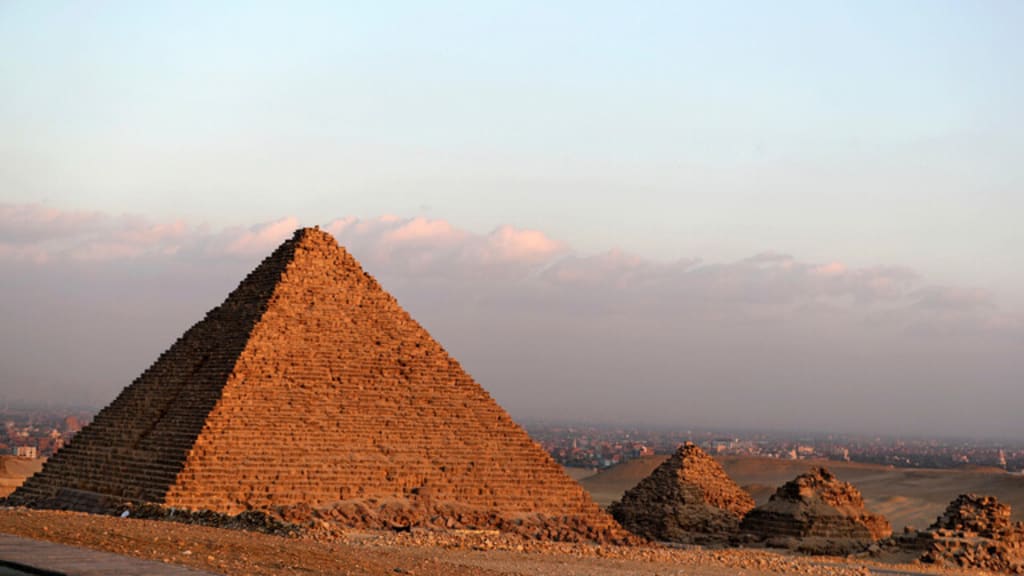
Elkhosht explained that the global discovery is the result of work for 7 continuous years and using the latest scientific findings in this field.
Dr. Muhammad Al-Khasht added that the team finished the research project and was accepted for international scientific publication in January 2023 in the largest international scientific journals, Nature and NTD&E, indicating that the publication will take place after the approval of the Archaeological Scientific Committee headed by Dr. Zahi Hawass, Egyptologist and former Minister of Antiquities.
He stated that the research team monitored, during its study and research project, all the details related to the global detection with the utmost precision, from the beginning of the team’s work, through all modern technologies in cooperation with foreign partners, until completion and confirmation of the detection, indicating that the research team discovered the void for the first time in 2016, and then it was confirmed. In the years 2017, 2018 and 2019 using 5 different non-destructive techniques to explore the truss area at the northern face of the Great Pyramid, namely infrared techniques, monitoring of cosmic muon particles, georadar, acoustic measurements, simulation and 3D digital architectural analysis.
Al-Khosht stated that the research team monitored through the results that this void is a horizontal corridor with an approximate length of 9.5 meters and is located directly behind the northern entrance truss, adding that it conducted a radar survey using georadar devices at different frequencies of 200, 400 and 600 MHz, and the results showed the presence of a region of reflections The strobe in the lower half of the truss and the boundaries of the space and its relative location.
And he added that the research team scanned with UST ultrasound technology to test the truss area in the Khufu pyramid, and the technology confirmed the presence of reflections consistent with other techniques, in addition to merging images of measurements and analyzing all line scans in two and three dimensions, which led to determining the boundaries of the void, its shape and location. With high precision, up to a few centimeters.
The President of Cairo University stressed that the research team recommended making a small hole in the vertical separator in the lower half of the truss and inserting a telescope or a small robot to explore and study the corridor and decide how to open it in the future.
He stressed that this important event can be used globally in tourism advertising through a press conference to announce the scientific discovery, provided that the date of the hole procedure to insert the robot is announced after the conference for a period of not less than two months and the direct broadcast of the required hole process and the introduction of the robot inside the new corridor, in addition to To produce a promotional short film about the event and the possibility of making a documentary about the important discovery from its inception until now.
The President of the University thanked the Faculty of Engineering at the Deanship of Dr. Hossam Abdel Fattah and the research team under the supervision of Dr. Hani Helal and all the team members from the university.
Source: Cairo 24
RT reveals the details of the new discovery inside the pyramid of Khufu in Egypt
Zahi Hawass, former Egyptian Minister of Antiquities and head of the archaeological mission participating in the "Pyramids Population" project, described the discovery of King Khufu's corridor as the most important scientific discovery that took place in the modern era.
During a conference announcing the details of the pyramids exploration project in the Giza pyramids area, Hawass said that the Ministry of Antiquities must work to complete the exploration process and use modern scientific equipment to complete information about the tomb of King Khufu.
For his part, Hani Helal, the former Minister of Education, and a member of the archaeological mission participating in the "Scan Pyramids" project, confirmed that the mission used 5 non-destructive methods during the process of exploring the Khufu pyramid corridor.
During a conference announcing the details of the pyramids exploration project in the Giza pyramids area, he explained that the mission cannot use one method during the exploration, because each method reveals information for the next method.
It is noteworthy that the aim of the "Pyramids Residents" project is to search for the antiquities of King Khufu, especially since there are no antiquities of him so far, except for a small statue in the Egyptian Museum in Tahrir.
The archaeological mission based on the Pyramids Exploration Project includes members from Germany, Japan, Canada, the United States of America and France.
The sources pointed out that Egypt's announcement of the results of the pyramids exploration project, "Pyramids Residents", will greatly help in protecting Egyptian antiquities from earthquakes, especially since Egypt was subjected to many earthquakes in the past, but the pyramids were not damaged, referring to the 1992 earthquake, during which Islamic antiquities were affected and were not The pyramids and ancient pharaonic monuments are affected.
Sources confirmed to RT that the pyramids exploration project is one of the important projects that the ministry has worked on since 2015, in cooperation with the Faculty of Engineering, Cairo University, and the Institute for Heritage Preservation and Innovation in Paris (HIP).
She pointed out that the study is the latest technology in the field of scanning, which is the technique of radiographic imaging muons, cosmic particles, thermal imaging using infrared rays, photogrammetry, scanning and 3D reconstruction, in order to penetrate the heart of the largest Egyptian pyramids without excavation.
The sources pointed out that this large scientific project will help in knowing a lot about Egyptian antiquities and means of protecting them, stressing the importance of modern practical means in protecting ancient Egyptian antiquities.
Source: RT
Armenia a mysterious ancient tomb of a man and a woman was found
Archaeologists in the ancient city of Metsamor in Armenia have found a tomb dating back to the reign of Pharaoh Ramesses II in Egypt, i.e. 1300-1200 BC.
The Nauka w Polsce website indicates that a man and a woman were buried in the tomb, whose remains are in good condition. According to preliminary estimates, they died at the age of 30-40 years and may have been a married couple.
"Their death is a mystery. Because we do not know the cause of their death. But everything indicates that they died at the same moment. There is no evidence that the tomb was previously opened," says archaeologist Krzysztof Jakobiak.
Yakubiak considers this discovery unique - the tomb was built perfectly and was not looted and stolen. In the tomb, archaeologists have found more than 100 beads and gold ornaments, some of which resemble Celtic crosses. They also found dozens of necklaces made of carnelian and a set of ceramic vessels and a jug.
Scientists do not have any information about the people who lived in this region at that time, because there is no written information and texts about them. So it is difficult to identify the couple. But it seems that this settlement was large and important.
Source: Novosti
About the Creator
News Correct
Information WorldWide MORE INFORMATION
Keep reading
More stories from News Correct and writers in Journal and other communities.
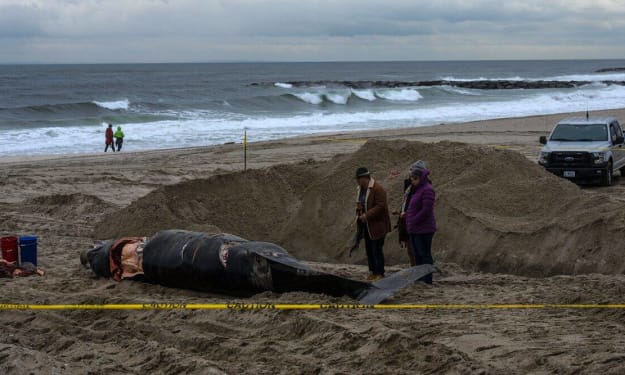
Scientists have been baffled by the death of 23 giant whales and their carcasses dumped on the American coast
The US National Oceanic and Atmospheric Administration reported that her death alarmed scientists. A report by the New York Times said that among what was discovered on a beach in Virginia, a dead whale from the "North Atlantic Right", which is an endangered species.
By News Correct3 years ago in Journal
The goals I did not achieve
Every writing goal I made for the year is a wash. It has been this way for a while, but I think it's important to be open about my failures and the reality of how life can get in the way. This is especially true considering the several times I have posted on Vocal about my writing goals, how I was changing my approach, and where I was hoping to be for the upcoming year. I will probably do that again in a couple months, but for now, it is time to acknowledge where I am today.
By Kay Husnick22 days ago in Journal
Why SEO Became the Quiet Salesperson Every Car Dealership Needs
I still remember the day our showroom was spotless, the cars were polished, and the sales team was ready—but hardly anyone walked in. It didn’t make sense at first. We had competitive pricing, trusted brands, and years of experience. Yet the phone barely rang. That moment forced me to confront a truth many car dealers avoid: buyers no longer start their journey on the lot. They start online.
By Anthony Rodgers3 days ago in Journal


Comments
There are no comments for this story
Be the first to respond and start the conversation.