
North Korea Threatens War with South Korea: Rising Tensions and Global Implications
The Latest Threat: North Korea’s Declaration

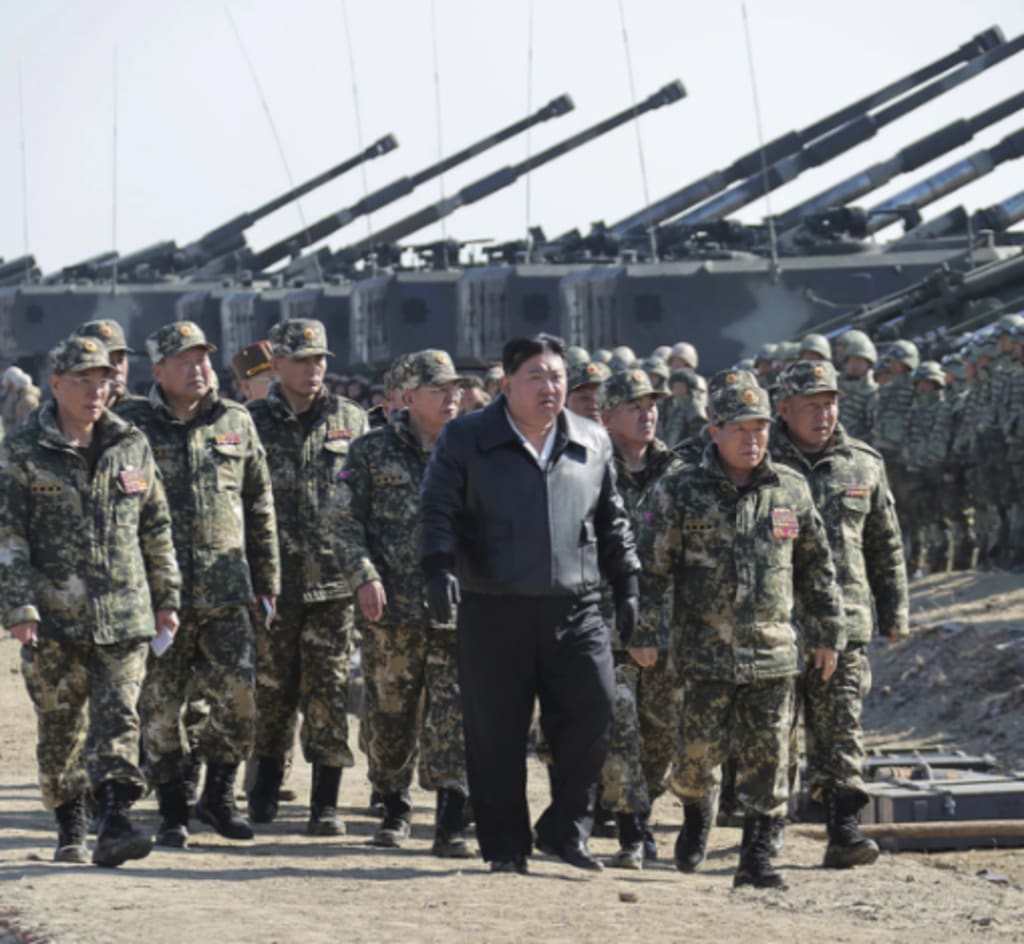
In a stark escalation of rhetoric, North Korea has recently threatened to declare war on South Korea, igniting concerns about the stability of the Korean Peninsula. This dramatic move has prompted international alarm, with world leaders closely monitoring the situation, given the potential for large-scale conflict in the region. In this blog, we will explore the origins of this recent threat, its possible motivations, and the broader implications for global security and diplomatic relations.
The Latest Threat: North Korea’s Declaration
On October 2024, North Korean officials issued a chilling warning, threatening to declare war on South Korea if certain conditions were not met. According to North Korean state media, the South’s continued military drills with the United States and its bolstered defense measures in the region are being viewed as hostile actions that warrant a response. Pyongyang has accused Seoul of engaging in “war rehearsals” and warned that such actions leave it with no choice but to prepare for a “full-scale military confrontation.”
This threat is not an isolated incident but part of a longer pattern of North Korean provocations. The situation is more precarious than ever, with the possibility of miscalculation growing by the day.
Historical Context: A Long History of Tensions
The Korean Peninsula has been one of the world's most volatile regions since the Korean War (1950-1953). Although an armistice agreement ended the fighting, no peace treaty was ever signed, leaving North and South Korea technically at war. Over the decades, the relationship between the two Koreas has been marked by periods of detente followed by sudden spikes in tensions, often sparked by military exercises, missile tests, or political disputes.
Key Reasons Behind North Korea’s Latest Threats
1. South Korea-US Military Drills
One of the primary reasons North Korea has ramped up its war rhetoric is the ongoing joint military exercises between the United States and South Korea. These drills, known as “Freedom Shield” and “Ulchi Freedom Guardian,” are annual events aimed at strengthening the defensive capabilities of South Korean forces. However, North Korea views these exercises as a direct threat and a rehearsal for an invasion.
This year, the scale of the drills has expanded, with advanced weaponry and a larger number of troops participating. The United States has also deployed strategic assets, including bombers and aircraft carriers, to the region. Pyongyang sees these developments as a provocation, leading to heightened tensions.
2. North Korea's Perception of External Threats
From Pyongyang’s perspective, its aggressive posture is a form of self-defense. The Kim regime believes that the continuous buildup of military forces by South Korea, combined with US military presence, poses a direct existential threat. North Korea has repeatedly stated that its nuclear weapons program is necessary for its survival, arguing that it is under constant siege by hostile forces.
In response to perceived threats, North Korea has been accelerating its missile development and nuclear tests. According to North Korean state media, the country has tested dozens of missiles in the past year, including intercontinental ballistic missiles (ICBMs) capable of reaching the US mainland. The potential deployment of tactical nuclear weapons has also been hinted at by Pyongyang, making the situation even more dangerous.
3. Domestic Pressures on Kim Jong-un’s Regime
North Korea’s threats could also be linked to domestic factors. Kim Jong-un’s regime is facing increasing internal challenges, including food shortages, economic hardship, and public dissatisfaction. The COVID-19 pandemic has further strained the North Korean economy, which was already crippled by international sanctions.
By escalating tensions with South Korea, Kim might be attempting to rally domestic support, diverting attention from these internal problems. Creating an external enemy has been a time-tested strategy for authoritarian regimes looking to consolidate power.
The Risk of Escalation
While North Korea has often used warlike rhetoric in the past, this latest round of threats appears more serious. Military experts and analysts have expressed concern that the situation could spiral out of control, especially if one side miscalculates or misinterprets the other’s actions.
Potential Scenarios for Conflict:
Accidental Military Clash: Given the concentration of military forces on both sides of the Demilitarized Zone (DMZ), there is always the risk of an accidental confrontation. A minor skirmish, such as an exchange of artillery fire or a border incursion, could quickly escalate into a full-scale conflict.
Preemptive Strike by North Korea: Some analysts fear that North Korea might carry out a preemptive strike if it feels cornered or perceives that an attack from South Korea or the US is imminent. This could involve missile launches targeting South Korean military installations or even US assets in the region.
South Korea’s Defensive Posture: In response to North Korea’s aggressive posturing, South Korea has been fortifying its defenses. President Yoon Suk-yeol’s administration has vowed to take strong measures against any North Korean provocation. This could lead to a cycle of escalation, with each side responding to the other’s moves with increasingly aggressive actions.
The Role of the United States
The United States plays a pivotal role in this crisis. As South Korea’s closest ally, the US is committed to defending it under the US-ROK Mutual Defense Treaty. However, the Biden administration faces a delicate balancing act: on one hand, it must reassure Seoul of its military support, while on the other, it must avoid actions that could provoke further escalation.
Recently, US officials have called for dialogue and de-escalation, urging North Korea to return to the negotiating table. However, North Korea has shown little interest in diplomacy, particularly after the breakdown of talks between Kim Jong-un and former US President Donald Trump in 2019. For now, the US appears to be focusing on deterrence, deploying more military assets to the region as a show of strength.
International Response
The international community is watching the situation closely, with many countries expressing concern over the potential for conflict on the Korean Peninsula.
1. China’s Position
China, North Korea’s most significant ally, has traditionally acted as a stabilizing force in the region. However, Beijing has also been frustrated with Pyongyang’s continued missile tests and nuclear ambitions. While China has called for calm and dialogue, it remains unclear how far it is willing to go to rein in North Korea’s behavior. Beijing has also criticized the US for increasing its military presence in the region, which it views as an attempt to encircle China.
2. Japan’s Concerns
Japan, located just across the Sea of Japan from the Korean Peninsula, has been alarmed by North Korea’s missile tests, some of which have flown over Japanese territory. Tokyo has bolstered its missile defense systems and increased coordination with the US and South Korea to prepare for potential threats. Japan’s defense posture is becoming increasingly proactive as it seeks to counter North Korean and Chinese military activities.
3. UN Sanctions and Diplomacy
The United Nations has long imposed sanctions on North Korea to curb its nuclear weapons program. However, these sanctions have had limited success in stopping North Korea’s weapons development. Diplomatically, the UN continues to push for a peaceful resolution to the crisis, though prospects for negotiations remain bleak.
Global Security Implications
The possibility of war on the Korean Peninsula carries severe consequences for global security and economics. A conflict involving North Korea, South Korea, and the US would not only devastate the region but could also draw in other major powers, leading to a much broader confrontation.
Economic Fallout
The Korean Peninsula is home to some of the world’s largest economies. A war would disrupt global supply chains, especially in the technology and manufacturing sectors, where South Korea is a major player. Furthermore, the uncertainty caused by such a conflict would likely cause instability in global financial markets.
Nuclear Concerns
One of the most pressing concerns is North Korea’s nuclear arsenal. Any conflict that escalates into the use of nuclear weapons would be catastrophic, with untold human and environmental costs. The mere threat of nuclear war has already heightened tensions in the region, prompting countries like Japan and South Korea to strengthen their own missile defense systems.
Conclusion: The World Watches as Tensions Rise
North Korea’s latest threat to declare war on South Korea marks a dangerous escalation in an already volatile region. As military preparations intensify on both sides of the DMZ, the risk of conflict grows. While diplomatic solutions seem elusive, the international community must remain vigilant in its efforts to de-escalate the situation. The stakes are high, not just for the Korean Peninsula, but for global security as a whole.
Sources:
- [BBC]: Detailed coverage of North Korea’s missile tests and rising tensions on the Korean Peninsula.
- [Reuters]: Reports on US-South Korea military exercises and North Korea’s response.
- [Al Jazeera]: Analysis of China’s role in the North Korea-S
About the Creator
Global News Update
It cover a wide range of topics including politics, economics, technology, environment, and more from around the world. They often provide insights into significant events, trends, and developments impacting various regions globally.
Keep reading
More stories from Global News Update and writers in Journal and other communities.
Trump Ex-Staffer Claims He Once Praised Hitler’s Generals as Obama Raps Eminem Song at Harris Rally: A Fascinating Week in Politics
The world of politics is never short of surprising twists and headline-making moments. Recently, a former Trump staffer made a startling claim about the ex-president’s remarks, while former President Barack Obama showcased a lighter, more energetic side of his personality by rapping an Eminem song during a rally in support of Vice President Kamala Harris. In this blog, we delve into these two events, analyzing their significance and offering a unique perspective on their impact on the current political landscape.
By Global News Updateabout a year ago in Journal


Comments
There are no comments for this story
Be the first to respond and start the conversation.