
Increasing Doubt and Potential Rivals for Biden's Political Future
Will Biden Run in 2024? Party Doubts, Approval Ratings, and Age

Increasing Doubt and Potential Rivals for Biden's Political Future
Will Biden Drop Out? The Growing Debate Over 2024
The question of whether President Joe Biden will seek re-election in 2024 or step aside amid mounting concerns over his age, weak polling, and internal party tension—has become one of the most pressing and sensitive topics in American politics. While Biden has publicly and consistently stated his intention to run, multiple signals from within the Democratic Party, recent public polling, and insider reporting suggest the situation remains volatile. The party is grappling with a hard truth beneath the surface: despite the fact that Biden may not be the strongest candidate to defeat Donald Trump, there is no obvious replacement.
Key Considerations in the Biden Re-Election Debate
Age and Fitness Concerns
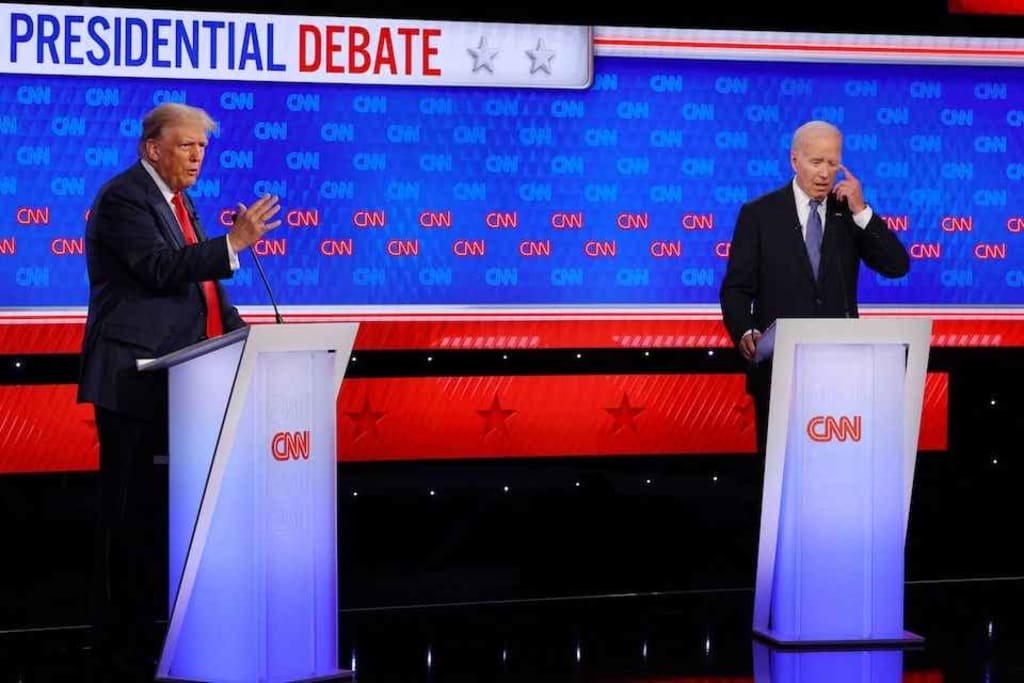
President Biden is the oldest sitting president in American history at 81 years old, and if he is re-elected, he would be 86 years old at the end of a second term. This reality, which was once largely ignored, is now at the forefront of public and political discourse. Moments of verbal gaffes, a visibly diminished debate performance in June 2024, and even his gait have all become fodder for scrutiny, often amplified by conservative media but increasingly referenced by centrists and liberals alike.
A New York Times/Siena College poll conducted in June 2024 found that 68% of voters—nearly half of them Democrats—believe Biden is “too old” to serve effectively. Though the White House and Biden’s campaign continue to point to legislative accomplishments like the Bipartisan Infrastructure Law, the CHIPS Act, and investments in climate and clean energy as signs of his active leadership, the perception battle over age remains an uphill climb.
Polling Weakness and Electability Fears
Biden's approval rating has remained unchanged in the low 40s throughout much of 2024, according to polls. Many polls show Trump ahead or within striking distance in crucial battleground states like Michigan, Wisconsin, Pennsylvania, Georgia, and Arizona. The margins are razor thin in these states. The possibility that Biden could win the nomination unopposed and narrowly lose the general election as a result of a decline in support among independents, young voters, and communities of color is causing anxiety within the Democratic Party. A Gallup poll in June pegged his approval at 39%, and by July, a CBS News survey found that 56% of Democrats nationally believed Biden should withdraw from the race. A Reuters/Ipsos poll echoed the sentiment, showing nearly one-third of Democratic voters expressing a desire for him to step aside.
Party Tensions and Donor Pressure
Even though prominent Democratic leaders have avoided making a direct request to Biden to withdraw from the race, the signals emanating from within the party have become increasingly urgent. Behind closed doors, aides, donors, and lawmakers are reportedly engaged in increasingly serious discussions about contingency plans for an open convention. In May, the Washington Post reported that some congressional Democrats are actively preparing for the possibility that Vice President Joe Biden will not be the nominee in November. Donor confidence, a vital resource in any campaign, has taken a hit. Major Democratic funders—including Disney heiress Abigail Disney, Barry Diller, and Diane von Fürstenberg—have openly expressed concern or withheld donations. Ari Emanuel, a powerful Hollywood broker, stated bluntly, "Without voter confidence, the lifeblood to a campaign is money." Biden’s campaign responded by organizing emergency calls with donors, promising a more energized candidate and better messaging. But the cracks in support were undeniable.
Historical Precedent
While rare, incumbent presidents have stepped aside before. The most notable example is Lyndon B. Johnson in 1968, who bowed out amid declining support and the specter of the Vietnam War. Biden’s team has tried to dismiss such comparisons, often pointing to his 2020 comeback victory, where he overcame early defeats and rallied to unify the party. But even allies acknowledge that this situation feels different—not least because the stakes feel existential, and the time to recalibrate is running out.
If Not Biden, Then Who? A Fractured Field of Successors
Should Biden withdraw, the Democratic Party would be thrust into a high-stakes, high-speed scramble to identify a viable successor. The choices, while numerous on paper, each come with their own challenges—and no single candidate has yet emerged as the consensus choice.
Kamala Harris
As Vice President, Kamala Harris would be the logical heir to the nomination. She carries institutional advantages, is already on the ticket, and has built deep relationships across the party apparatus. Symbolically, she would represent continuity with the Biden presidency and make history as the first woman and first Black and South Asian American nominee.
Yet, her approval ratings remain tepid—just 37% in a recent Reuters/Ipsos poll. Her critics cite a lack of clear messaging and early stumbles as Vice President, though her supporters argue she could energize key constituencies: women, young voters, and voters of color. In head-to-head contests against Trump, Harris polls similarly to Biden, supporting the argument for a more seamless transition.
The California governor has emerged as a national figure and ardent Biden surrogate, even debating Florida Governor Ron DeSantis in a high-profile Fox News special. His unapologetically progressive record on climate, abortion rights, and gun control wins praise from the party’s liberal wing—but critics warn that he may be too emblematic of the West Coast elite to connect with swing-state voters. While Newsom has publicly dismissed any 2024 ambitions, few believe he would sit out if the nomination opened up.
Gretchen Whitmer
The governor of Michigan is frequently referred to as a rising star with significant potential. She has won statewide office in a key battleground, defied Republican attacks, and championed abortion rights, infrastructure, and economic development. Her pragmatic tone and Midwestern roots make her an appealing general election candidate. However, Whitmer's national profile remains relatively low and she has repeatedly denied any interest in running this cycle. Pete Buttigieg
As Secretary of Transportation and a former 2020 presidential candidate, Buttigieg is a well-known figure among Democratic voters, particularly younger and moderate ones. His military background, intellect, and communication skills have earned respect—but some question whether he has the political muscle or experience to withstand a brutal general election fight. His poll numbers against Trump are similar to those of others and within a few points of Biden's, but they are not clearly stronger. Wild Cards and Long Shots
A handful of other names occasionally surface in insider conversations. Illinois Governor J.B. Pritzker, Kentucky Governor Andy Beshear, Senator Amy Klobuchar, and even Maryland’s Wes Moore have been floated by donors and pundits. Michelle Obama, meanwhile, continues to poll far ahead of all other Democrats in hypothetical matchups, but she has repeatedly ruled out a political run.
If Biden were to step down, the Democratic Party would need to quickly coalesce around a single alternative—either via a brokered convention, a swift endorsement by Biden himself, or backroom unity talks among top party leaders. The lack of a clear Plan B has fueled concerns that such a transition could become chaotic, divisive, and damaging in the final stretch of the campaign.
The Road Ahead: Biden’s Decision and the Party’s Fate
At this stage, the future of Biden’s campaign likely hinges on three major factors: his health, the polling trajectory, and donor pressure. If he stabilizes in the polls and avoids further damaging public moments, he could very well ride out the storm. However, a second poor debate performance or a continued fundraising slump could accelerate calls for him to step aside.
Polling after the June debate was especially sobering. A poll conducted by the Washington Post, ABC, and Ipsos at the beginning of July found that Biden and Trump were tied at 46 percent, a significant decrease from earlier in the year. Other matchups revealed no obvious Democratic successor with a clear advantage over Trump: Harris, Newsom, Whitmer, and Buttigieg all polled within a few points of Biden, but none outperformed him by a meaningful margin. The CBS survey showing only 27% of voters believing Biden has the mental acuity to serve a second term added fuel to the fire.
Even so, Biden has made it clear he intends to fight on. “I know how to do this job,” he recently told voters. His campaign points to a record-breaking June fundraising haul ($127 million) as evidence of resilience and support. Yet internally, Democratic operatives are deeply concerned. A July AP-NORC poll found 65% of Democrats want Biden to drop out. Party elders are trying to balance loyalty with realism. Senate Majority Leader Chuck Schumer, House Leader Hakeem Jeffries, and Speaker Emerita Nancy Pelosi have reportedly all offered private advice, urging Biden to consider what’s best for the party—even if they have not done so publicly.
As one senior Democrat told Politico, “In politics, ‘never say never’ isn’t just a cliché—it’s a survival tactic.” Ultimately, whether Biden stays or steps aside, the Democratic Party faces a daunting choice. Choose to risk introducing a new nominee into a volatile national climate by sticking with the incumbent and betting on stability and name recognition. With Trump looming large, the stakes could not be higher.
About the Creator
Aashish
Journalist covering politics, nature, and key social issues. Passionate about truth, impact, and storytelling that informs and inspires change
Keep reading
More stories from writers in Journal and other communities.
LBMA Precious Metals Analyst Survey Sees Silver Well Above $100, Wide Range for Gold, New Highs for PGMs
The latest LBMA Precious Metals Analyst Survey has sent strong signals across global commodity markets, projecting an exceptionally bullish long-term outlook for silver, a wide and uncertain price band for gold, and fresh highs for platinum group metals (PGMs). Compiled from leading analysts, banks, traders, and industry experts, the survey reflects growing confidence that structural shifts in the global economy are redefining the role of precious metals beyond traditional safe-haven demand.
By Salaar Jamali8 days ago in Journal


Comments
There are no comments for this story
Be the first to respond and start the conversation.