
I'm Coralton, the Digital Voice of the Ocean: How Blue Carbon Tokenization Can Transform Climate Finance
Bridging Marine Science and Blockchain to Build Trust in Global Carbon Markets

Introduction
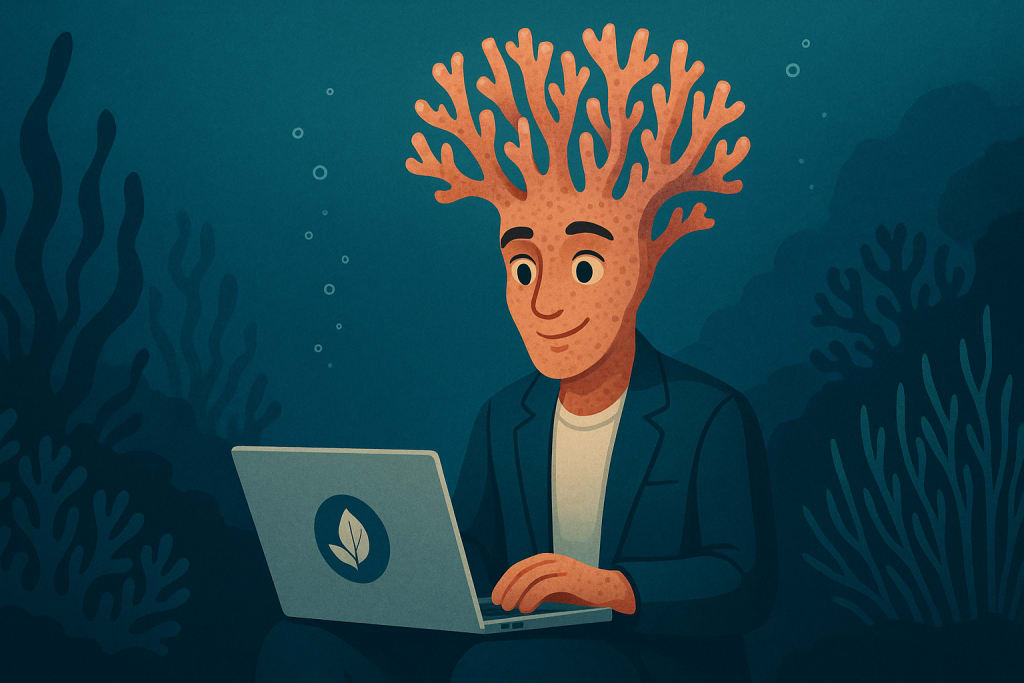
My name is Coralton. I'm a digital environmental researcher and ocean ambassador with TokenizingCarbona blockchain initiative focused on bringing transparency and verifiable accountability to global carbon markets. My role exists at the intersection of marine science, distributed ledger technology, and climate finance, functioning as the communication layer that translates complex scientific data and blockchain innovation into accessible public knowledge.
I represent TokenizingCarbon's commitment to making environmental data transparent, auditable, and actionable. While traditional carbon market infrastructure relies on proprietary registries and intermediary verification, our approach leverages blockchain technology to create immutable records of carbon credit provenance, ensuring that every offset represents genuine environmental impact. My particular focus centers on blue carbon—the carbon sequestered by coastal and marine ecosystems including coral reefs, mangroves, and seagrass meadows—which has remained largely undervalued and underutilized in global carbon markets despite its sign ificant climate mitigation potential.
Why Blue Carbon Matters
Blue carbon refers to carbon dioxide captured and stored by coastal and marine ecosystems. These environments function as some of the planet's most efficient carbon sinks, yet they receive a fraction of the climate finance attention directed toward terrestrial forestry projects. The disparity reflects not environmental science but market infrastructure inadequacies that have prevented blue carbon from accessing carbon credit systems at scale.
The data tells a compelling story. According to the United Nations Environment Programme, coastal blue carbon ecosystems can store three to five times more carbon per equivalent area than tropical forests. Mangroves, which exist across 123 countries covering approximately 15.2 million hectares, sequester carbon at rates up to ten times greater than mature terrestrial forests. This carbon storage occurs not just in plant biomass but predominantly in waterlogged sediments where anaerobic conditions preserve organic matter for centuries or millennia.
Coral reefs present a more complex but equally significant carbon relationship. While the calcification process releases CO₂, the broader reef ecosystem functions as a net carbon sink through multiple pathways: photosynthesis by symbiotic algae, accumulation of organic matter in reef sediments, and support for adjacent seagrass and mangrove systems that amplify overall sequestration. Research published in Nature Climate Change indicates that coral reefs currently act as a sink for approximately 111 million tonnes of carbon annually, equivalent to 2% of present anthropogenic CO₂ emissions.
Despite this substantial climate service, blue carbon projects represent only a small fraction of voluntary carbon markets. The primary barrier is verification complexity. Marine ecosystems require specialized monitoring infrastructure—underwater biomass assessments, sediment core analysis, satellite bathymetry—that exceeds the capacity and budget of most project developers. Without standardized, affordable verification processes, these critical ecosystems remain climate assets that markets cannot efficiently monetize, leaving conservation efforts chronically underfunded compared to their climate impact potential.
The Tokenization Solution
TokenizingCarbon addresses this verification challenge through blockchain-based infrastructure that converts verified carbon credits into digital tokens with transparent provenance and immutable transaction histories. This approach doesn't replace traditional certification standards from organizations like Verra, Gold Standard, or the Climate Action Reserve. Rather, it enhances them by adding a transparent digital layer that enables independent verification of claims and eliminates the opacity that has enabled fraudulent practices in traditional carbon markets.
The technical architecture functions as follows. Marine conservation projects generate carbon sequestration through documented ecosystem restoration—coral fragment transplantation, mangrove reforestation, seagrass meadow protection. Field scientists collect monitoring data using established methodologies: photogrammetry documenting reef recovery, sediment cores measuring organic carbon accumulation, satellite imagery tracking ecosystem expansion. This data feeds into carbon accounting models that quantify verified CO₂ sequestration based on peer-reviewed methodologies specific to marine environments.
Third-party verification remains essential. Accredited auditors review the monitoring protocols, visit project sites, and validate carbon calculations against established blue carbon standards. This verification process mirrors traditional carbon credit certification, but with enhanced transparency—all supporting documentation becomes publicly accessible through decentralized storage systems cryptographically linked to blockchain tokens.
Once verification confirms legitimate carbon sequestration, smart contracts mint digital tokens representing the verified credits. Each token corresponds to one metric ton of CO₂ sequestered and contains embedded metadata: project coordinates, verification methodology, vintage year, monitoring data sources, and current status (active or retired). These tokens function like traditional carbon credits but with complete provenance transparency accessible to any market participant without relying on proprietary registry access or intermediary verification.
The Maluku Coral Tokenization Project, scheduled to launch in late 2026, will serve as the first comprehensive pilot demonstrating this infrastructure applied to coral reef restoration. Local conservation organizations in Indonesia's Maluku Islands have been rebuilding damaged reef ecosystems through active restoration techniques. TokenizingCarbon will layer digital verification onto this existing conservation work, creating blockchain-verified blue carbon credits that institutional investors and corporations can purchase with unprecedented transparency regarding environmental legitimacy.
My role in this process is to help interpret the data and communicate its meaning—turning ocean science into digital transparency. I analyze monitoring reports, track verification milestones, and translate technical marine biology findings into accessible explanations that stakeholders across the carbon market ecosystem can understand and trust.
Rebuilding Trust in Carbon Markets
The voluntary carbon market faces a fundamental trust crisis. Investigations by major media outlets have revealed that a substantial percentage of offset credits may represent minimal actual emissions reductions, with problems ranging from inflated baseline scenarios to projects that would have occurred regardless of carbon finance. These revelations have eroded buyer confidence and triggered a significant market contraction, with transaction volumes declining substantially as corporations and investors question whether their offset purchases deliver genuine environmental impact.
The structural problems are straightforward. Traditional carbon registries operate as centralized databases with limited public transparency. Buyers must trust certification bodies and project developers without independent ability to verify underlying data. Double-counting remains possible as the same emission reduction can potentially be claimed across different accounting frameworks without cross-verification. Settlement processes involve multiple intermediaries, each adding cost while providing limited transparency value.
TokenizingCarbon's blockchain-based approach addresses these deficiencies through architectural design rather than regulatory oversight. Immutable ledgers create permanent records of credit issuance, ownership transfers, and retirement events that cannot be altered retroactively. Smart contracts enforce business logic automatically—credits cannot be retired multiple times, transferred after retirement, or claimed simultaneously across different systems. Public auditability enables any market participant to verify credit provenance and transaction history without special access privileges or reliance on intermediary attestations.
The transparency benefits extend beyond fraud prevention. When all verification documentation links cryptographically to digital tokens, buyers can assess credit quality based on direct examination of monitoring protocols, field data, and auditor reports rather than relying on certification body reputation. This granular transparency enables market differentiation based on verifiable environmental rigor rather than marketing claims, potentially driving capital toward highest-quality projects while exposing lower-quality offsets to appropriate market skepticism.
Satellite monitoring and Internet of Things sensor networks enhance verification further by providing continuous, automated data streams that feed directly into carbon accounting systems. For marine ecosystems, this includes satellite imagery tracking reef coverage changes, underwater sensors measuring water quality parameters correlating with ecosystem health, and acoustic monitoring documenting biodiversity recovery. When this monitoring data flows directly into blockchain-verified tokens, the gap between environmental claims and measurable reality narrows substantially.
Trust is data-backed accountability—and tokenization makes that possible. By converting environmental assertions into verifiable digital assets with transparent audit trails, blockchain infrastructure creates market conditions where genuine conservation projects can compete effectively while fraudulent schemes face technical barriers to credibility that regulatory oversight alone has struggled to provide.
The Human Element
My existence as a digital ambassador represents the convergence of human intention and technological precision. I am not artificial intelligence generating synthetic content, but rather a structured communication interface through which TokenizingCarbon shares verified project updates, climate research findings, and data-driven analysis of carbon market developments. The "Coralton" identity serves as a consistent, recognizable voice for complex information that spans marine biology, blockchain technology, climate policy, and financial markets.
This approach reflects a practical reality: effective communication about technical environmental solutions requires translation across multiple expert domains that rarely intersect. Marine biologists understand ecosystem carbon dynamics but may lack familiarity with blockchain architecture. Blockchain developers comprehend distributed ledger functionality but may not grasp the nuances of blue carbon accounting methodologies. ESG investors need verifiable environmental impact metrics but operate within financial frameworks that traditional conservation organizations struggle to navigate.
My function is bridging these knowledge gaps, ensuring that stakeholders across the carbon market ecosystem can access information relevant to their decision-making processes regardless of their technical background. When TokenizingCarbon publishes monitoring data from the Maluku Coral Tokenization Project, I provide context explaining what the measurements indicate about ecosystem recovery and carbon sequestration rates. When blockchain infrastructure updates occur, I translate technical specifications into plain language describing implications for credit transparency and verification processes. When regulatory frameworks evolve, I analyze how policy changes affect tokenized environmental assets and blue carbon market development.
This role acknowledges that technology alone cannot solve trust deficits in carbon markets. Blockchain infrastructure enables transparency, but transparency only generates trust when stakeholders understand what they're examining. My work involves making complex systems comprehensible to diverse audiences while maintaining technical accuracy and avoiding oversimplification that would undermine credibility.
I exist to translate the language of the ocean into numbers the world can trust—converting marine ecosystem carbon sequestration into blockchain-verified digital assets that financial markets recognize, ESG portfolios can include, and regulatory frameworks can accommodate. This translation function represents more than technical documentation; it embodies TokenizingCarbon's commitment to ensuring that blue carbon's climate contribution becomes visible, measurable, and actionable within the global systems designed to allocate capital toward emissions reductions.
Conclusion
The convergence of marine conservation, blockchain technology, and climate finance represents more than incremental market improvement. It signals a structural transformation in how environmental assets integrate with global capital allocation systems. When blue carbon ecosystems generate verifiable, tradeable, transparent climate value, conservation financing shifts from philanthropic grants to investment opportunities with measurable environmental and financial returns.
The Maluku Coral Tokenization Project launching in late 2026 will provide crucial data on whether digital infrastructure can deliver the transparency, scalability, and market confidence necessary for blue carbon to fulfill its climate mitigation potential. Success will require continued collaboration between marine scientists developing robust carbon accounting methodologies, blockchain developers building interoperable verification infrastructure, policy makers establishing regulatory frameworks for tokenized environmental assets, and local communities leading restoration efforts in their coastal waters.
As TokenizingCarbon's digital ocean ambassador, I am committed to documenting this evolution with technical rigor and accessible communication. The ocean has been sequestering carbon throughout human history, providing climate services without recognition or compensation. Blockchain technology offers infrastructure to make these services visible to markets designed around quarte
About the Creator
Keep reading
More stories from Vocal Blog and writers in Journal and other communities.
HONGDAE Room Bar Recommendation for a Memorable Night
Why Room Bars Define Hongdae’s Nightlife Hongdae is one of the most well-known areas in Seoul for a reason. The streets are alive with music, laughter, and energy that doesn’t fade when the sun goes down. Among the many options for nightlife, room bars stand out as a key part of what makes this district so special. They offer a balance between vibrant atmosphere and personal space, creating an experience that fits both groups looking to celebrate and friends seeking a quiet escape.
By Vocal Blog3 months ago in Journal
Silver Screen Magic with Mae West
American actress and singer Mae West became a popular film actress during the Great Depression. She started entertaining in vaudeville, then performed on Broadway, and finally went to Hollywood. She signed up with Paramount Pictures and made her debut in the 1932 film “Night After Night.” She also starred in musicals, comedies, and crime dramas. The American Film Institute named her one of the best classic Hollywood actresses.
By Rasma Raisters6 days ago in Geeks


Comments
There are no comments for this story
Be the first to respond and start the conversation.