
How The Destiny Swapper Was Dupped
The Man Who Outlived Fate. Somethings are mysterious!


What if your death had a due date?
What if it were written not on paper, not in a hospital file, but carved into the bone-memory of your bloodline—an ancient marker ticking quietly beneath your skin like a clock no one else could hear?
And what if someone tried to steal that death from you…
only to discover too late that destiny, when cornered, bites back?
THE YEAR DEATH MISSED
1. The First Sign Is Always Small
The first sign that Marcus Hale was marked to die did not come as thunder or prophecy.
It came as a missed subway train.
One minute he was standing on the platform at 42nd Street–Times Square, coffee in one hand, phone in the other, thinking about unpaid bills and an email he hadn’t sent. The next minute, the train doors slammed shut just as he stepped forward. The wind of it rushed past his coat like a slap.
Behind him, someone groaned.
Ahead of him, the train vanished into darkness.
Thirty seconds later, another train roared in. And with it, news.
A man had fallen—or jumped—onto the tracks two stations down. Same line Marcus would’ve been on. Same car, according to witnesses. Same standing spot near the doors.
Marcus stood there longer than necessary, staring into the tunnel as if it might explain itself.
He didn’t know why his chest felt tight. He didn’t know why a thought he hadn’t invited slid into his mind like a knife between ribs:
That was supposed to be you.
He shook it off. New York trained people to ignore thoughts like that. Superstition didn’t pay rent. Destiny didn’t ride the subway.
But destiny, as it turned out, was already watching him.
2. The Death Marker
Marcus Hale came from a line of men who died at 42.
Not metaphorically. Not “early.”
Exactly forty-two.
His father collapsed in his law office at forty-two.
His grandfather drowned on a fishing trip at forty-two.
His great-grandfather—stabbed during a dockworkers’ strike—forty-two.
The family didn’t talk about it. They didn’t need to. It lived in silence, in the way birthdays after forty were celebrated quietly, cautiously, like you didn’t want to wake something sleeping.
Marcus knew the stories. He just didn’t believe them.
That’s the funny thing about curses and death markers—they don’t require belief. They only require time.
And time was catching up.
Marcus turned 41 on a rainy October evening, alone in his Brooklyn apartment, eating Chinese takeout from a box that wouldn’t quite close. He lit a candle on a grocery-store cupcake and laughed at himself.
“One more year,” he muttered.
Then louder, mocking his own fear: “Guess I better enjoy it.”
The candle flickered strangely when he said that. Bent sideways, like it was listening.
He didn’t notice.
Someone else did.
3. The Warlock Who Hacked Fate
Ezekiel Crowe did not call himself a warlock in public.
In public, he was a data consultant.
LinkedIn said so. His business card said so. His office—a minimalist glass cube overlooking lower Manhattan—said so. Servers hummed where candles once burned. Screens glowed where sigils used to be scratched into stone.
But Ezekiel Crowe was old. Older than the city that stood on Lenape land. Older than electricity, older than America, older than the lie that magic had ever disappeared.
Magic hadn’t vanished.
It had updated.
Rituals now ran through fiber-optic cables. Blood signatures were mapped like genetic code. Destiny itself—once the realm of gods and oracles—had become something Ezekiel called “editable.”
He was a destiny swapper.
A hacker of fate.
And Marcus Hale’s lineage marker had lit up Ezekiel’s system like a blinking red cursor.
DEATH EVENT: MALE, AGE 42. FIXED. TRANSFERABLE.
Transferable was the key word.
Ezekiel smiled the way surgeons smile before difficult operations.
He didn’t hate Marcus. He didn’t need to. This wasn’t personal.
It was business.
4. Why Steal a Death?
Here’s a question no one ever asks out loud:
Why would someone want to steal another person’s death?
The answer is simple and terrible.
Because death is currency.
In the old days, kings sacrificed virgins to buy longer reigns. Warlords spilled blood to appease gods. Now, men like Ezekiel traded deaths the way brokers traded futures.
A clean, predetermined death—especially one anchored in a bloodline—was incredibly valuable.
It could be:
Redirected
Deferred
Weaponized
Or consumed
Ezekiel needed one.
Not for immortality. He’d already solved that problem in pieces.
No—he needed a placeholder death.
Something to absorb an approaching cosmic backlash. A correction. Destiny hated being edited. And when it pushed back, someone always paid.
Better it be someone already scheduled.
Marcus Hale was perfect.
5. The Victim Who Wasn’t Helpless
Here’s where the story bends.
Marcus Hale was not special in the way movies like to make men special. He wasn’t secretly chosen. He didn’t have glowing eyes or prophetic dreams.
But he had something far more dangerous:
Curiosity.
After the subway incident, after the candle flicker, after the nightmares that started arriving uninvited—dreams of clocks melting, of men with his face falling through water—Marcus did something unusual.
He researched.
Not curses. Not magic.
Patterns.
He noticed how often death brushed past him and missed. A cab ran a red light inches from his knee. A scaffolding collapse happened five minutes after he passed under it. A shooting broke out in a bar he’d just left.
It was like the universe was rehearsing.
And then, one night, someone knocked on his door who should not have known his name.
6. The Warning
She introduced herself as Ruth Calder.
Gray hair. Sharp eyes. No nonsense. The kind of woman who looked like she’d outlive everyone in the room just to prove a point.
“I don’t have much time,” she said, stepping into his apartment without asking. “And neither do you.”
Marcus laughed nervously. “Is this a scam?”
“If it were,” she replied, “you’d already be dead.”
She told him everything.
About death markers. About lineage curses. About destiny swappers operating out of financial districts and abandoned churches disguised as co-working spaces.
“And someone,” she said, locking eyes with him, “is trying to steal your death.”
Marcus felt cold. “Why would anyone—”
“Because you’re predictable,” Ruth interrupted. “And because you’re trying to live.”
She leaned closer.
“And because they don’t know what you know yet.”
“What do I know?”
Ruth smiled thinly.
“That destiny can be tricked from the inside.”
7. Ancient Rituals, Modern Cities
They met in places New Yorkers walked past every day without seeing.
A closed laundromat that still smelled like incense beneath detergent.
A church basement where chalk symbols hid beneath folding chairs.
A server farm in Queens that hummed in perfect resonance with a chant older than language.
Ruth taught Marcus things his blood remembered but his mind had forgotten.
That death markers weren’t punishments.
They were agreements.
At some point, long ago, someone in his lineage had bargained.
And bargains could be renegotiated.
But here was the catch—destiny couldn’t be erased. Only fulfilled.
“If your death doesn’t happen,” Ruth said, “it must happen somewhere else.”
Marcus swallowed. “Someone else dies instead?”
“Yes.”
“And you’re okay with that?”
Ruth’s eyes darkened. “I’m okay with justice.”
8. The Trap Is Set
Ezekiel Crowe initiated the swap ritual on a night when the city glowed like circuitry.
He stood barefoot in his office, blood pricked from his thumb, typing commands into a terminal etched with sigils only visible at certain angles.
Marcus Hale’s death event shimmered, ready to be rerouted.
What Ezekiel didn’t know—what no destiny hacker ever expects—is that the victim might be watching back.
Marcus had learned how to anchor his consciousness to the marker. How to let the ritual complete—but bend its destination.
He didn’t fight the theft.
He welcomed it.
Like a man stepping aside just enough for his attacker to fall through a window.
9. The Swap
At precisely 3:17 a.m., Ezekiel felt it.
The tug.
The pull.
The satisfaction.
The death marker detached cleanly from Marcus Hale and latched onto a new host.
Ezekiel exhaled, triumphant.
“Done,” he whispered.
Across the city, Marcus slept peacefully for the first time in months.
And destiny, confused but obedient, adjusted its aim.
10. When the Hacker Becomes the File
The backlash came faster than Ezekiel expected.
Not dramatic. Not cinematic.
A sudden tightness in his chest.
A flicker in his vision.
A clock on the wall stopping at 42 seconds past the minute.
He tried to stand. His legs didn’t respond.
In his final moments, Ezekiel understood the mistake.
He had stolen a death without checking who was holding the door open.
The destiny he thought he’d rerouted had completed its circuit.
Through him.
11. The Year That Passed
Marcus turned 42 quietly.
No sirens.
No hospital beds.
No funerals.
Just sunlight through a café window and a cup of coffee that tasted unusually sweet.
He waited for the other shoe.
It never dropped.
Years passed.
Forty-three. Forty-five. Fifty.
He fell in love. Lost it. Fell again. Built a life that had once seemed impossible.
Sometimes he felt a chill, like a memory brushing past.
Sometimes he dreamed of a man in glass offices, staring at screens that went dark.
He never felt guilty.
Because destiny, when respected, has a strange sense of humor.
12. Old Age
Marcus Hale died at 87, in his sleep, surrounded by laughter echoing from another room.
Peacefully. Naturally.
The death marker had long since dissolved, its purpose fulfilled elsewhere.
As his breath faded, one last thought passed through him—not fear, not regret, but wonder.
What if fate was never a chain…
…but a door?
And somewhere in the bones of the city, ancient rituals continued, humming softly beneath the noise of traffic, waiting for the next person who dared to ask:
Is my life really mine?
Or has someone already scheduled the end?
After all—if destiny can be hacked…
can it also be outsmarted?
And if so…
What would you do with the years you weren’t supposed to have?
About the Creator
Omasanjuwa Ogharandukun
I'm a passionate writer & blogger crafting inspiring stories from everyday life. Through vivid words and thoughtful insights, I spark conversations and ignite change—one post at a time.
Keep reading
More stories from Omasanjuwa Ogharandukun and writers in Journal and other communities.
How I.C.E. Shoots Renee Good and the Moment Minneapolis Broke
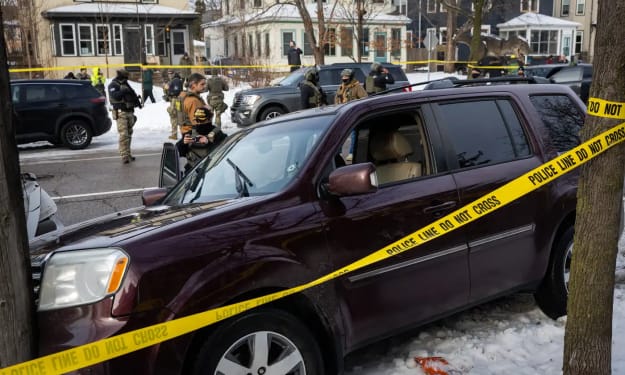
Sometimes a single bullet does more than tear through glass. Sometimes it shatters trust. On a cold Wednesday morning in south Minneapolis, a maroon SUV sat awkwardly on Portland Avenue. Horns echoed. Whistles pierced the air. Federal vehicles clogged the street like stones dropped into a river. Then came the gunshots — sharp, final, irreversible.
By Omasanjuwa Ogharandukun2 months ago in Journal
How China’s Eyewear Supply Chain Fuels Lucrative D2C Brands
Two weeks ago, a European client came to us. They wanted to launch a line of eyewear including optional non-prescription or light reading lenses, sunglasses for cycling, fishing, skiing, and running, along with a few related accessories. They wanted product performance close to well-known brands like Oakley or Smith Optics, but at a much more competitive price.
By Jingsourcing.com about 2 hours ago in Journal
Review of 'Man on the Run'
My wife and I saw Man on the Run, a nearly 2-hour documentary on Amazon Prime, about Wings, Paul McCartney's group that flew around the world from shortly after The Beatles broke up in early 1970 to shortly after John Lennon was murdered at the end of 1980, making a Beatles reunion forever impossible.
By Paul Levinson5 days ago in Beat



Comments
There are no comments for this story
Be the first to respond and start the conversation.