
How China’s Eyewear Supply Chain Fuels Lucrative D2C Brands
While sourcing for our European client, we mapped the world’s largest eyewear supply chain. To our surprise, many emerging D2C eyewear brands are leveraging these advantages to turn garage startups into million-dollar businesses.


Two weeks ago, a European client came to us. They wanted to launch a line of eyewear including optional non-prescription or light reading lenses, sunglasses for cycling, fishing, skiing, and running, along with a few related accessories. They wanted product performance close to well-known brands like Oakley or Smith Optics, but at a much more competitive price.
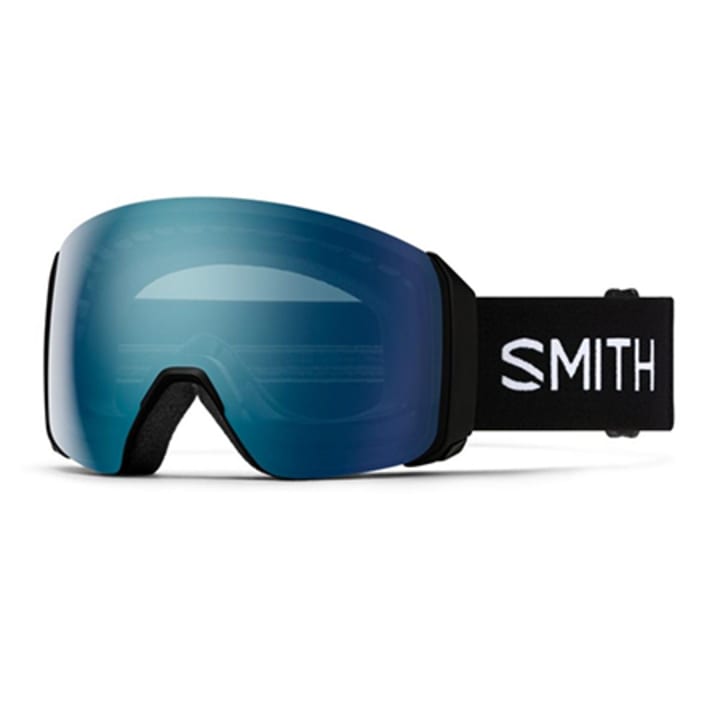
In the eyewear industry, one place always comes up if you trace the core supply chain: Danyang, Jiangsu. So today we’re taking a closer look at this eyewear manufacturing hub.
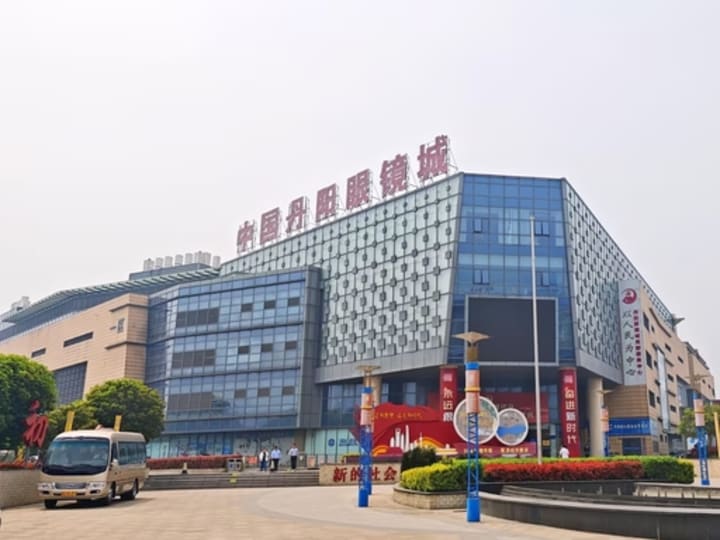
Inside World’s Largest Eyewear Supply Chain
Danyang is often called the “Eyewear Capital of China.” Every year, the city produces over 800 million lenses, accounting for more than 50% of China’s optical lens output and roughly one-third of the global market. Today, it hosts over 1,600 eyewear manufacturers and more than 50,000 workers.

Over the past five decades, Danyang has grown from a few small workshops into a complete eyewear industrial cluster. Improvements in lens materials and manufacturing technology lowered costs like blue-light filtering, micron-level precision grinding, and multi-layer optical coatings.
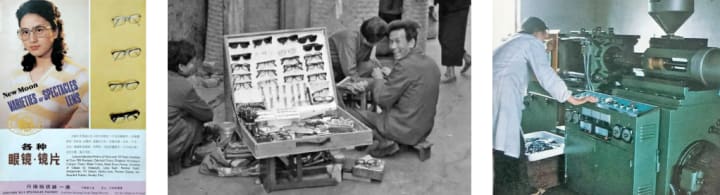
For sunglasses and outdoor eyewear, optical precision is far less demanding than for prescription glasses. The main focus is on frame design, material choice, and durability.
Frame manufacturing depends heavily on materials and processing technology. Acetate material is cut with CNC machines and then polished. Metal frames are stamped, welded, and electroplated. Injection-molded plastic is the cheapest option and is widely used for mass-market sunglasses. Wood-mix frames go through CNC shaping, sanding, and polishing. Carbon fiber frames are extremely light and durable and are mostly used for mid to high end sports eyewear.
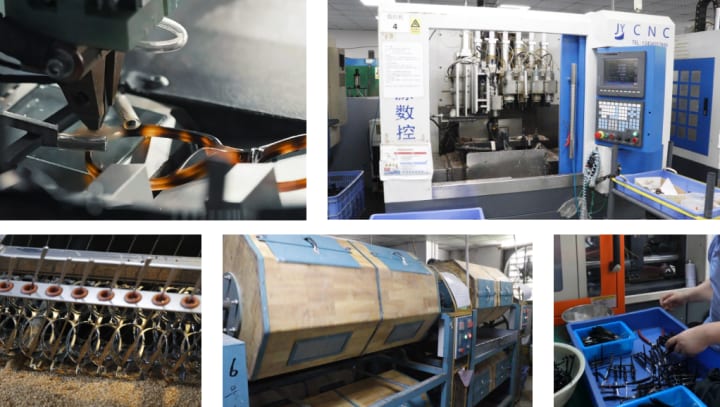
So every step of eyewear production can be done here, from raw materials, lens grinding, frame making, to accessory sourcing.

How Profitable Eyewear Niches Leverage China Supply Chains
One reason is simple: many new eyewear brands start with sunglasses or outdoor eyewear instead of prescription glasses. Or they just focus on areas that big brands haven’t fully explored, targeting very specific use cases or pain points. By combining these niche ideas with the advantages of China’s eyewear supply chain, they can cut costs and scale fast.
Take Zenni Optical, for example. Originally launched as 19dollareyeglasses.com, they leveraged Chinese factories to offer affordable glasses that customers order online just by entering their prescription.
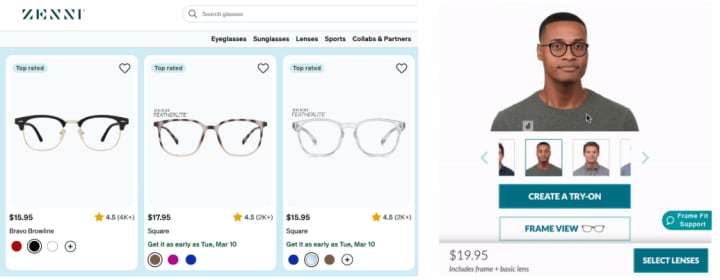
Let’s look at the following three examples. Some startup businesses succeed by solving a very specific pain point. Others build a product around a small structural innovation. And some focus on the aftermarket opportunity for existing eyewear brands.
Lucrative Niche Eyewear Ideas
Solving the function "ugly" problem
Minus Eyewear's founder Charlotte (from Leeds, UK) noticed that around 4% of people in the UK have prescriptions stronger than -6 (very high myopia). With regular frames, the lenses almost inevitably stick out from the sides, making the glasses look bulky and narrowing the field of vision.

Minus was built specifically for this group. The brand uses 1.67 high-index lenses and wider bridge designs so the lenses sit better inside the frame. The aesthetic focuses on bold square frames aimed at men. The price goes for $150-170, and they're pulling in about $109K a month. Most production's comes from Wenzhou and Shenzhen in China.
Magnetic frames change in seconds
Pair introduced a simple structural idea and built a whole new category. One base frame can attach to multiple magnetic top frames. A base frame sells for about $95, and additional top frames sell for around $25 each. Most users end up buying three to five different styles, which easily pushes total spending past $200.

The appeal is flexibility for different situations. For example, a black frame for work, sunglasses for outdoor use, or colorful frames for casual wear can all be switched in seconds. The brand mainly targets younger consumers who enjoy personalization, as well as families with kids who like changing styles frequently. Production is concentrated in Wenzhou, Danyang, Shenzhen, and Hong Kong.
Auto aftermarket for eyewear
Revant founder Jason Bolt got the idea when his cycling glasses broke in an accident and struggling to replace just the lens. Many major brands like Oakley and Ray-Ban usually don’t sell replacement lenses separately, which often forces customers to buy an entirely new pair that can easily cost $200 or more.
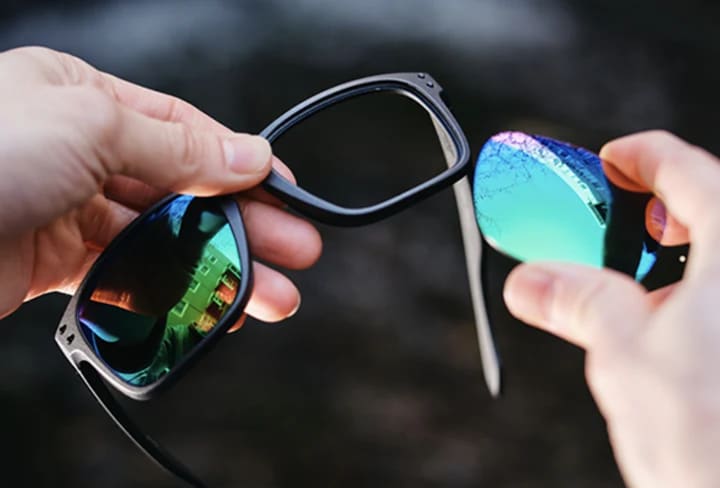
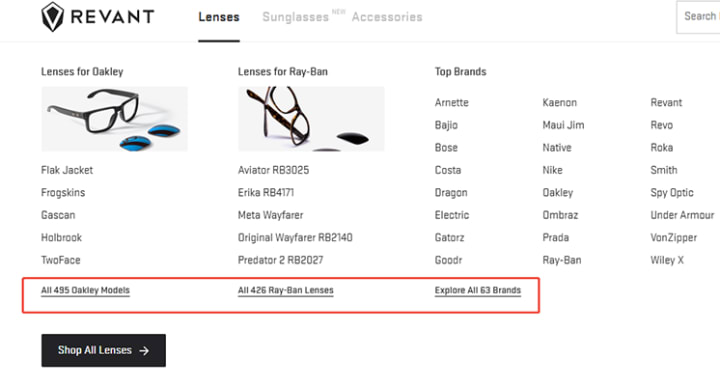
Revant saw the gap and built its business around compatible replacement lenses for more than 500 outdoor eyewear brands. Their lenses typically sell for $50–$80 and focus heavily on polarized options for cycling and fishing. Today the company sells millions of lenses every year, with suppliers mainly located in Fujian and Guangzhou.
About the Creator
Jingsourcing.com
Finding a reliable supplier and ensuring smooth production is challenging. JingSourcing takes care of the entire process, from sourcing suppliers to shipping.
Keep reading
More stories from Jingsourcing.com and writers in Journal and other communities.
How a Garage DIY Scaled to a $2M Product
Today, we’re bringing you the story of Swift Paws. The founder, Meghan, and her dad built the first prototype in their garage just so their dog Pretzel could practice lure coursing for specific dog lovers. But soon, more and more dog owners wanted the same for their dogs and even cats. So Meghan started to figure out how to turn it into a real product.
By Jingsourcing.com 3 days ago in Journal
How to Plan Your Trip Around the Maldives’ Top 2026 Events
Are you planning a trip to the Maldives in 2026? You won’t have just the islands and beaches to look forward to. There are fun and exciting events lined up throughout the year, including cultural exhibitions, sports tournaments, and local festivities that can add to the holiday fun in paradise. Whether you’re a tourist or a business traveller, you can include these activities in your travel schedule and enrich your holiday experience with the best that the Maldives has to offer.
By Jeewanthi Armstrong7 days ago in Journal




Comments
There are no comments for this story
Be the first to respond and start the conversation.