
"How a Ride-Hailing Prank War Between Nigeria and South Africa Exposed Gig Economy Vulnerabilities"
"Inside the Unexpected Conflict That Left Bolt and Uber Drivers Frustrated, Financially Strained, and Highlighted the Fragility of Cross-Border Relations"

The entrenched rivalry between Nigeria and South Africa has taken an unexpected and peculiar turn, morphing into a prank war that involves the misuse of ride-hailing platforms such as Bolt and Uber. This unusual skirmish has not only spotlighted the underlying animosities between the two countries but also revealed the vulnerabilities faced by gig economy workers, who have found themselves unwittingly caught in this cross-border dispute.

A Historical Rivalry Rekindled
The contentious relationship between Nigeria and South Africa is long-standing, underpinned by a tapestry of historical grievances, economic competition, and cultural friction. Incidents of xenophobia in South Africa, particularly targeting Nigerian immigrants, have amplified these tensions over the years. Prominent episodes of xenophobic violence erupted in 2008, 2015, and 2019, sparking outrage among Nigerians and prompting diplomatic crises and retaliatory measures.

The latest flare-up in this simmering rivalry was triggered by a controversy surrounding Chidimma Adetshina, a participant in the Miss South Africa pageant who faced backlash due to her Nigerian roots. This incident reignited debates on national identity and xenophobia, setting the stage for the current series of pranks.
The Emergence of the Prank War
The prank war ignited when users from both South Africa and Nigeria began placing fraudulent ride bookings through Bolt and Uber in each other’s countries, only to cancel them upon the drivers' arrival. This surge in bogus bookings has strained the ride-hailing services, leading to substantial financial losses for the drivers. In major urban centers like Lagos, Cape Town, and Johannesburg, drivers have been left exasperated and economically burdened as they expended time, fuel, and effort on passengers who never intended to show up.
Drivers Bear the Brunt
For the drivers, the repercussions of this prank war have been particularly severe. Many have reported receiving a barrage of fake ride requests, resulting in wasted fuel and lost time. Mathew Ineh, a Bolt driver from Lagos, voiced his frustration, stating, "I stopped using the app after getting at least 10 fake bookings." Similar experiences were recounted by South African drivers, like Munyaradzi Chinyama in Cape Town, who mentioned receiving multiple fake ride requests in quick succession.
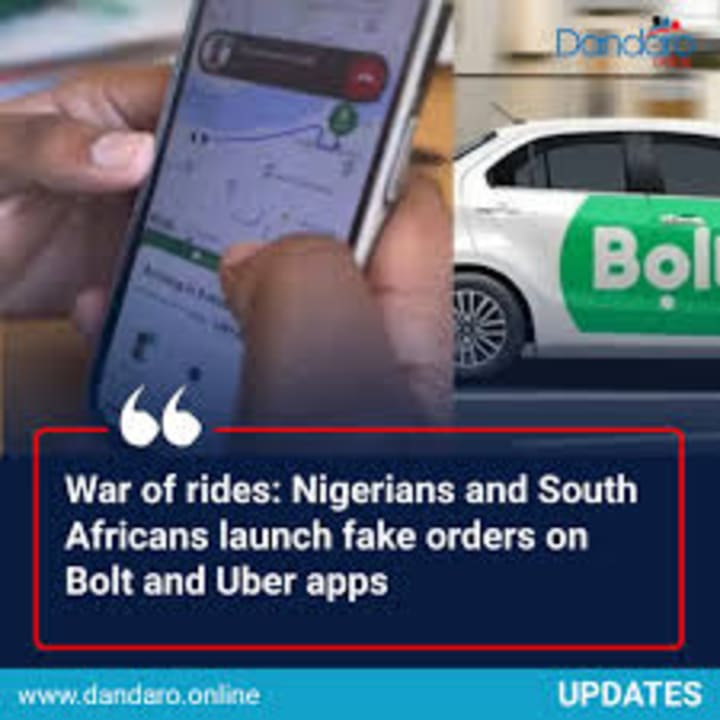
The financial impact of this prank war is immense, especially in Nigeria, where the recent surge in fuel prices has made these fake trips even more costly for drivers. Ayoade Ibrahim, secretary-general of the Amalgamated Union of App-based Transporters of Nigeria, highlighted these challenges: “Imagine driving kilometers, burning petrol—which is already scarce and expensive in Nigeria—only to find that the customer does not exist.”
Financial Blow to Ride-Hailing Companies
This prank war has also dealt a significant blow to the ride-hailing giants Bolt and Uber, who have reported substantial financial losses due to the wave of fraudulent bookings. Yahaya Mohammed, Bolt’s Country Manager for Nigeria, acknowledged the impact, noting, “The prank led to huge financial losses and service disruptions in both countries.” In response, Bolt has introduced measures to restrict inter-country ride requests and has taken action against users involved in the prank to protect their drivers and the integrity of their platform.
The Ripple Effect on Customers and Surge Pricing
The prank-driven bookings have also led to extreme surge pricing in cities like Cape Town and Johannesburg, leaving many legitimate customers stranded or unable to afford a ride. This spike in fares, which is usually implemented to balance supply and demand, has only served to worsen the situation, underscoring the delicate equilibrium ride-hailing services must maintain, especially when managing operations across borders.
Public Sentiment and Social Media Outcry
The prank war has sparked a flurry of activity on social media, with users from both countries sharing their experiences through screenshots and videos. While some see humor in the antics, many have criticized the prank as a wasteful misuse of resources, especially against the backdrop of escalating fuel prices and economic hardships in both nations. A wave of support for the drivers has emerged online, with many emphasizing that these individuals are simply trying to earn a living. One user poignantly remarked, “The Bolt challenge is painful because innocent, hardworking people on both sides are suffering due to the thoughtlessness of others.” This sentiment captures a growing recognition of the precarious position of gig economy workers, who often bear the brunt of external conflicts.
Deepening Economic Strain and Broader Implications
Beyond the immediate fallout, the prank war has shed light on the fragility of the gig economy and its workers, who lack the safety nets typically provided in more traditional employment. The drivers, who are independent contractors, do not have the benefit of guaranteed wages or compensation for the fuel and time wasted on bogus rides. This prank war, thus, serves as a microcosm of the broader economic vulnerabilities experienced by gig workers globally.
The prank has also intensified discussions about the ethical responsibilities of ride-hailing companies to protect their workers. As much as companies like Bolt and Uber have responded with punitive measures against pranksters, there is growing advocacy for more robust protections and fairer compensation structures to safeguard drivers from similar situations in the future. With the rise of digital platforms, questions about corporate responsibility and worker rights are becoming more pronounced, and the prank war has inadvertently spotlighted these critical issues.
Reevaluating National Identities and Diplomatic Relations
The prank war also raises questions about national identities and the role of digital platforms in shaping international relations. In an increasingly interconnected world, actions taken online can have real-world consequences that extend beyond the digital sphere. The prank war is not just about ride cancellations; it's a reflection of how deeply rooted tensions and perceptions can manifest in unexpected ways. Both Nigerian and South African governments have a role to play in addressing the underlying issues that fuel such rivalries. It is essential for diplomatic channels to be used to mitigate conflicts and promote understanding between nations.
Calls for Solidarity and Constructive Engagement
In the wake of the prank war, there has been a call for greater solidarity and understanding between the citizens of Nigeria and South Africa. Activists and community leaders have suggested fostering dialogue and collaboration on common challenges, such as economic development and social justice, to bridge divides. Constructive engagement and grassroots initiatives could pave the way for a more harmonious relationship between the two nations, shifting the focus from rivalry to shared growth and prosperity.
Conclusion: A Call for Constructive Engagement
The prank war involving Bolt and Uber between Nigeria and South Africa is a stark reminder of how national rivalries can spiral into unforeseen and damaging consequences for individuals. What may have begun as a lighthearted challenge has devolved into a situation with serious implications for both the drivers and the broader ride-hailing industry. As both countries navigate their respective economic struggles and social tensions, it is crucial to acknowledge the real-life impact of such conflicts on everyday citizens, particularly those within the gig economy who strive to make ends meet amid adversity.
As the tensions slowly subside, there remains a hopeful aspiration that Nigeria and South Africa will seek more constructive and peaceful avenues to address their differences, rather than resorting to actions that ultimately harm those who are least involved in the rivalry. Both nations have an opportunity to learn from this experience and work towards fostering a climate of mutual respect, understanding, and cooperation, ensuring that the future is defined not by conflict but by collaboration.
About the Creator
David Snam
Greetings, I'm David Snam, a passionate storyteller weaving narratives that resonate with the heart and mind. My tales blend the surreal with the everyday, inviting you to explore worlds where the ordinary transforms into the extraordinary.
Keep reading
More stories from David Snam and writers in Journal and other communities.
"Unmasking the Fake: How Counterfeit Goods Are Stealing Billions and Endangering Lives"
In the expansive realm of global commerce, the surge in counterfeit goods has increasingly drawn the focus of consumers, governments, and enterprises. These imitation products, crafted to mimic authentic brands, present considerable challenges encompassing economic disruption, risks to consumer health and safety, and complications in law enforcement. This article explores the multifaceted world of counterfeit goods, delving into their definition, scope, repercussions, and the strategies essential to combat this widespread issue.
By David Snamabout a year ago in Journal


Comments
There are no comments for this story
Be the first to respond and start the conversation.