
History of Africa
The Rich and Diverse History of Africa

Africa, often referred to as the "Cradle of Humankind," boasts a history as vast and varied as its landscapes. From ancient civilizations to modern struggles for independence, Africa’s history is a testament to resilience, innovation, and cultural richness. In this article, we delve into the significant periods and milestones that define the historical narrative of this remarkable continent.
The Dawn of Civilization: Prehistoric Africa
Africa holds the unique distinction of being the birthplace of humanity. Archaeological evidence, such as the fossils of Australopithecus afarensis (famously known as “Lucy”), discovered in Ethiopia, indicates that early hominids roamed this continent over three million years ago.
The development of Homo sapiens occurred approximately 300,000 years ago in what is now modern-day East Africa. These early humans crafted tools, established hunting-gathering societies, and eventually developed agricultural systems, laying the groundwork for the continent’s first civilizations.
The Rise of Ancient African Kingdoms
Africa’s ancient history is dominated by powerful kingdoms and empires that influenced trade, culture, and technology. History of Mangol
Ancient Egypt: The Pinnacle of Innovation
Arguably the most famous of Africa’s ancient civilizations, Ancient Egypt flourished along the Nile River around 3100 BCE. Known for monumental architecture such as the pyramids of Giza, advancements in mathematics, medicine, and governance, Ancient Egypt’s legacy continues to inspire awe worldwide.
Nubia and the Kushite Kingdom
South of Egypt lay Nubia, home to the Kushite Kingdom, which thrived as a center of trade and culture. Kushite pharaohs even ruled Egypt during the 25th Dynasty, leaving an indelible mark on the region’s history.
The West African Empires: Ghana, Mali, and Songhai
In West Africa, kingdoms such as Ghana, Mali, and Songhai emerged as powerful trading hubs. The Mali Empire, under the rule of Mansa Musa (1312–1337), gained global fame for its immense wealth and the vibrant cultural center of Timbuktu, which housed some of the world’s first universities.
Medieval Africa: Trade, Culture, and Conquest
During the medieval period, Africa was a bustling network of trade routes and flourishing city-states. History of turks
The Trans-Saharan Trade
Africa became a focal point for trade between Europe, the Middle East, and Asia, with goods such as gold, salt, and ivory in high demand. The Trans-Saharan trade routes facilitated the exchange of not only commodities but also ideas, leading to cultural and technological advancements.
The Swahili Coast and Maritime Trade
On the eastern shores of Africa, the Swahili Coast grew as a major player in the Indian Ocean trade network. City-states such as Kilwa and Zanzibar exported gold, spices, and textiles while absorbing influences from Arab, Persian, and Indian traders. History of india
The Arrival of Europeans and the Transatlantic Slave Trade
The late 15th century marked a turning point in African history with the arrival of European explorers. The subsequent establishment of the Transatlantic Slave Trade devastated African societies, with millions of people forcibly taken to the Americas to work as slaves.
The trade, facilitated by European powers such as Portugal, Britain, and Spain, disrupted social and economic structures across Africa. Entire communities were uprooted, and the ripple effects of this exploitation still resonate today.
Colonialism and the Scramble for Africa
By the late 19th century, European nations competed fiercely to colonize Africa in an event known as the Scramble for Africa. This culminated in the Berlin Conference (1884–1885), where European powers divided African territories without regard for indigenous cultures or political systems.
Impact of Colonial Rule
Colonialism had profound effects on Africa:
Economic Exploitation: Colonizers extracted natural resources, leaving many regions impoverished.
Cultural Disruption: Traditional systems were replaced with European governance, often creating lasting divisions.
Resistance Movements: Despite oppression, many African leaders and communities resisted colonial rule, planting the seeds for future independence movements.
The Struggle for Independence
The 20th century saw a wave of independence movements across Africa. Pioneers such as Kwame Nkrumah in Ghana and Jomo Kenyatta in Kenya led their nations to freedom, inspiring others to follow suit.
Post-Colonial Challenges
After independence, African nations faced numerous challenges, including political instability, economic dependency, and ethnic conflicts, many of which were legacies of colonialism. However, despite these hurdles, African nations continue to strive for development and unity.
Modern Africa: Resilience and Renaissance
Today, Africa is a continent of immense potential. With a young and dynamic population, Africa is emerging as a hub for innovation, particularly in fields such as technology and renewable energy. Nations such as Nigeria, Kenya, and South Africa are at the forefront of this transformation, proving that Africa’s future is as bright as its storied past.
Conclusion
Africa’s history is a complex tapestry woven with threads of innovation, resilience, and cultural richness. From the dawn of humanity to its modern resurgence, the continent continues to play a pivotal role in shaping global history. As we celebrate Africa’s past, we must also look to its future, recognizing its potential as a powerhouse of growth and innovation.
About the Creator
Keep reading
More stories from saif ullah and writers in Journal and other communities.
History of mangol
Mangol, often misunderstood and underrepresented in popular history, carries a rich tapestry of cultural, political, and social significance. In this article, we delve into the fascinating history of Mangol, unearthing its roots, exploring its rise, and analyzing its impact on the world. History of turks.
By saif ullahabout a year ago in Journal
How to visit sacred sites in Bangkok
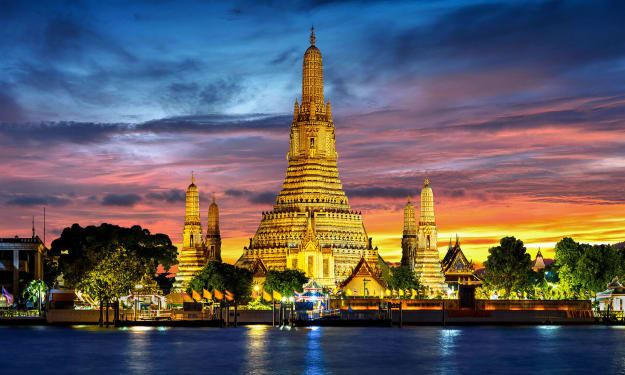
When you think of Bangkok, what comes to mind is a vibrant destination with plenty of modern experiences. The top things to do there include shopping and dining experiences. However, the City of Angels has more in store for its visitors. Picture towering buildings adorning ancient designs enveloped in a natural setting within an urban environment. This is how you would witness the impressive temples in Bangkok. Here is a guide to explore them.
By Jeewanthi Armstronga day ago in Journal



Comments
There are no comments for this story
Be the first to respond and start the conversation.