
Has the Rise of Podcasts Changed How We Communicate?
From sharpening our listening skills to creating the illusion of dialogue, podcasts are changing human communication in surprising ways.

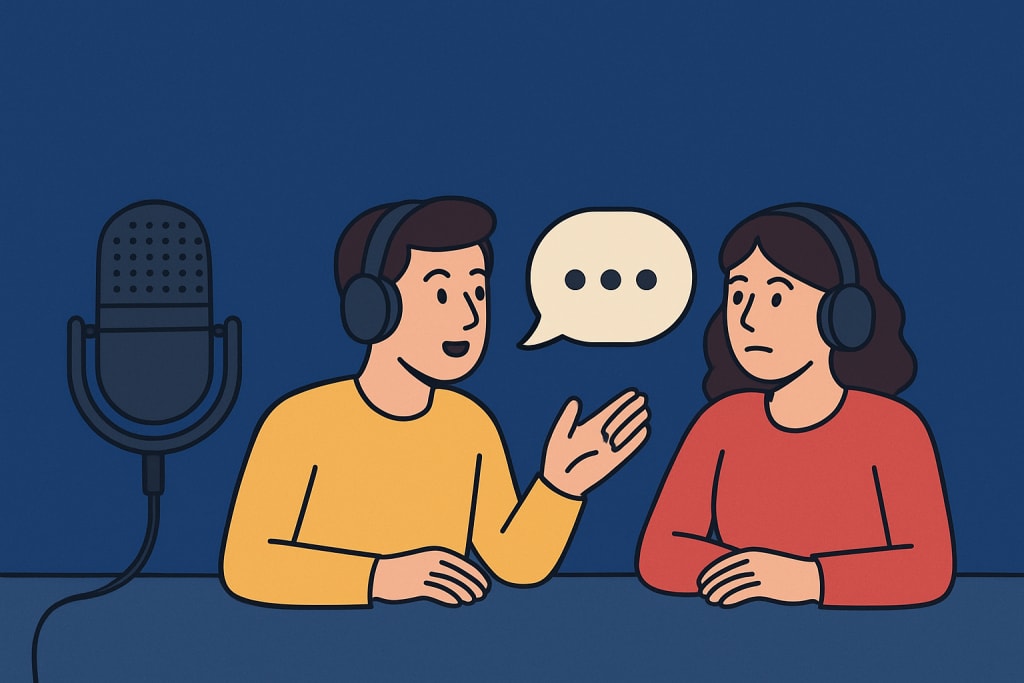
In the span of just two decades, podcasts have transformed from a niche medium for tech-savvy hobbyists into one of the most popular ways people consume information. Today, over 40% of Americans listen to podcasts monthly, and the global audience is projected to surpass 500 million by 2026. But with hours spent daily absorbing other people’s conversations, interviews, and narratives, a question emerges: Has the rise of podcast consumption improved or diminished our own ability to communicate effectively?
The answer is not straightforward. On one hand, podcasts have democratized storytelling, introduced audiences to diverse perspectives, and sharpened listening skills. On the other, the passive nature of podcast consumption raises concerns about conversational depth, attention span, and even our ability to distinguish between performance and authentic dialogue.
Podcasts as a Revival of Oral Culture
Long before books and digital media, human communication revolved around oral storytelling. In many ways, podcasts are a return to that tradition. They simulate conversation, often giving listeners a sense of sitting in on a chat between experts, comedians, or ordinary people with extraordinary stories.
• Connection through narrative: Cognitive science suggests that humans process stories more deeply than abstract facts. A 2017 Princeton study found that when someone listens to a story, their brain activity begins to mirror the storyteller’s, creating a kind of “neural coupling.” Podcasts, built on narrative and voice, harness this effect powerfully.
• Language enrichment: For many listeners, podcasts expand vocabulary, expose them to rhetorical techniques, and model different styles of communication—from the sharp, concise delivery of news podcasts to the long-form, meandering explorations of shows like The Joe Rogan Experience or Hardcore History.
By this measure, podcasts don’t just entertain—they can strengthen communication by modeling effective storytelling and teaching listeners how to sustain attention in a fragmented media environment.
The Listening Paradox: Active vs. Passive Consumption
But here’s the catch: listening to podcasts is often passive. Most people stream them while commuting, cooking, or exercising. That multitasking can dilute attention and limit retention. Unlike a conversation with a friend, you don’t need to respond, question, or clarify—you simply absorb.
• Active listening decline: Communication experts note that effective conversations require active listening: nodding, clarifying, paraphrasing, and responding. When most of our “listening” time is spent on podcasts without feedback, we may become skilled at absorbing but not necessarily at engaging.
• The illusion of dialogue: Podcasts simulate intimacy. Listeners may feel they “know” the hosts, a phenomenon researchers call parasocial relationships. While comforting, this one-sided bond doesn’t require listeners to practice conversational reciprocity, potentially dulling interpersonal skills.
The paradox is clear: while podcasts hone our listening patience, they risk making us spectators rather than participants in real dialogue.
Influence on Conversational Style
Interestingly, the podcast boom may be reshaping how people talk to each other.
• Long-form influence: In an age of tweets and short-form videos, podcasts stand out for their length. A single episode often runs one to two hours. For some, this normalizes deeper, more nuanced conversations in everyday life. Fans of long-form podcasts often report preferring slower, more thoughtful exchanges offline.
• Performance seepage: On the flip side, podcasts often exaggerate for entertainment. Hosts use humor, dramatic pauses, or carefully crafted segues. When listeners mimic these styles, conversations can veer into performance rather than authentic exchange—less about connection, more about “sounding interesting.”
Case in point: interview-based podcasts like Armchair Expert showcase hosts who ask probing, empathetic questions. Listeners may adopt these techniques, enhancing their own social skills. But others might mirror the confrontational style of certain podcasts, which can make offline communication feel combative rather than collaborative.
Generational Divide: Digital Natives vs. Older Listeners
The impact of podcasts also depends on who is listening.
• Younger generations: For Gen Z and Millennials, podcasts are often background noise while multitasking. They may absorb cultural references and trends but risk shallow engagement. Ironically, the same cohort that consumes the most digital audio also reports higher levels of social anxiety and difficulty in face-to-face communication.
• Older audiences: Baby Boomers and Gen X listeners tend to treat podcasts more like talk radio—something to listen to attentively. For them, podcasts may serve as conversational springboards, offering stories and ideas to share in personal interactions.
This generational split highlights a broader cultural question: are podcasts enhancing dialogue, or replacing it?
Case Studies: When Podcasts Shape Communication
To move beyond theory, consider a few real-world examples:
1. Medical Education: In healthcare, podcasts have become a popular teaching tool. Medical students often listen to case-study podcasts to reinforce classroom lessons. This improves their ability to explain complex conditions in clear language to patients—a direct boost to communication skills.
2. Political Discourse: Political podcasts like Pod Save America or Ben Shapiro Show often create echo chambers. Listeners gain fluency in partisan rhetoric but may struggle to engage constructively with opposing viewpoints. Instead of fostering dialogue, these podcasts can entrench divisive communication patterns.
3. Cross-Cultural Understanding: Language-learning podcasts expose listeners to accents, idioms, and cultural nuances they might not encounter otherwise. Here, the communicative benefits are tangible and practical.
These cases show that podcasts can either enrich or impoverish communication, depending on content and context.
Practical Takeaways: How to Make Podcasts Work for Communication
For readers wondering what this means for their own communication skills, here are a few practical steps:
• Listen actively, not passively. Treat a podcast like a conversation—pause occasionally, reflect, and even jot down thoughts or questions.
• Diversify your listening. Don’t stick to one genre or ideological camp. Exposure to multiple styles and perspectives broadens your communicative range.
• Translate to real life. Use what you hear as conversation starters with friends, family, or colleagues. Discussing episodes helps reinforce information and sharpens your ability to articulate ideas.
• Beware the echo chamber. If your podcast diet is too one-sided, your communication may become lopsided too. Balance is key.
Why This Matters
Communication is the currency of human connection. In an era where screens dominate and face-to-face interaction can feel increasingly rare, the way we consume media shapes how we talk, listen, and understand one another. Podcasts, with their intimacy and accessibility, have enormous potential to enrich our communicative lives—but only if we engage with them thoughtfully.
If treated as mere background noise, podcasts risk making us passive listeners and poor conversationalists. But if approached as tools for learning, empathy, and curiosity, they can sharpen our ability to tell stories, ask questions, and truly listen.
Conclusion: A Tool, Not a Threat
So, has the rise of podcasts affected our ability to communicate effectively? Yes—but not in one uniform direction. Podcasts are a double-edged sword: they can either nurture deeper listening and richer dialogue or encourage passivity and superficiality.
The difference lies in how we use them. Like any form of media, podcasts are tools. In the hands of mindful listeners, they can enhance communication by modeling storytelling, offering diverse perspectives, and encouraging patience in conversation. In the hands of passive consumers, they risk becoming yet another distraction that weakens our social bonds.
The next time you hit play, consider this: are you just hearing words, or are you preparing yourself to carry those words into real, meaningful conversations?
About the Creator
Gage
I write about stuff.
Broken Poles, Stronger Steps: Finding Myself on the EBC Trek
Today I am about to share you about the day when everything went wrong on my trek to Everest Base Camp. It was March. I was high up in the mountains crossing Dignboche and moving forward towards the Base Camp. And onthe way my trekking ploes, which I spent weeks choosing on Thame broke. Just snapped in half.One second I was walking fine. The next second, I was sitting on a rock holding two broken pieces of metal.
By Samikshya Girii5 days ago in Journal




Comments
There are no comments for this story
Be the first to respond and start the conversation.