
The NFL’s Turf War
Why Artificial Fields Put Players at Greater Risk Than Grass


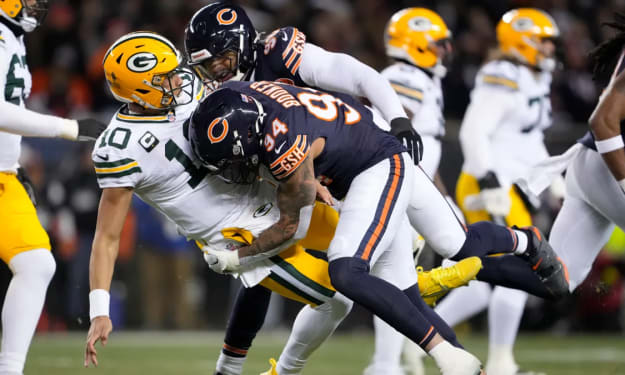
On a crisp Sunday afternoon, millions tune in to watch the NFL’s spectacle of speed and power. But beneath the cleats, a quieter battle plays out—between natural grass and the slick green surfaces of artificial turf. To the untrained eye, turf looks pristine: uniform, resilient, immune to weather. Yet players know better. For many, it’s not just a cosmetic substitute but a hazard—one that can shorten careers, and in some cases, end them in a single play.
A Surface-Level Solution With Deeper Costs
Artificial turf first appeared in the late 1960s, when the Houston Astrodome installed “AstroTurf” to compensate for its lack of sunlight. It seemed like progress—no muddy patches, no divots, no groundskeepers scrambling after a downpour. Stadium owners loved it for its durability and lower maintenance costs.
But while executives celebrated, players began to notice something else: their bodies took the brunt. Turf fields, with their synthetic blades and unforgiving base layers, don’t “give” the way natural grass does. Every twist, every fall, carries an extra jolt. Over time, data confirmed what players had long suspected—injury rates were higher on turf.
The Injury Divide
The NFL Players Association has repeatedly pressed for a universal switch to grass, citing league data that shows players are more likely to suffer lower-body injuries on artificial surfaces. According to the NFL’s own injury reports, non-contact knee and ankle injuries occur more frequently on turf than on grass.
The difference may sound subtle—fractions of a percentage point—but in a sport where careers are measured in years, those margins matter. A ligament tear doesn’t just bench a player; it reshapes their trajectory, sometimes erasing millions in earnings and a lifetime of work.
Consider the chorus of high-profile complaints: Odell Beckham Jr., whose ACL tear during the 2022 Super Bowl on turf became a flashpoint. Aaron Rodgers, who ruptured his Achilles on the MetLife Stadium surface in 2023, fueling renewed outrage. These moments underscore a truth fans and owners alike can’t ignore: turf injuries aren’t abstract—they are costly, visible, and devastating.
Why Turf Plays Rougher
Biomechanics helps explain the disparity. Grass naturally shears and tears away under extreme force, dissipating energy when a cleat sticks. Turf, by contrast, grips too tightly. That extra resistance can cause joints to absorb forces they’re not built to withstand.
Then there’s the “hardness factor.” Even with modern padding beneath, artificial turf tends to be less forgiving. Concussions from heads hitting the ground, or the cumulative toll of repetitive impact on knees and hips, are more common than on grass. For athletes already pushing human limits, those added stresses can spell disaster.
The Money Equation
If the dangers are so clear, why hasn’t the NFL mandated grass fields? The answer is part economics, part logistics. Artificial turf saves owners money—less watering, less upkeep, no worries about weather tearing up the field before a high-profile concert. In multi-use stadiums, turf makes scheduling easier.
The result is a familiar calculation: owners prioritize cost and convenience, while players shoulder the risks. The NFL, despite its multibillion-dollar revenues, has yet to require all stadiums to use grass, leaving players to negotiate for safety in a system that often views them as replaceable assets.
A Global Comparison
Ironically, soccer—another sport with billion-dollar leagues and global fan bases—has largely rejected artificial turf at the highest levels. FIFA requires natural grass for World Cup matches, citing player welfare. Elite European clubs, too, insist on grass despite the expense. The NFL stands out not as a pioneer but as an outlier, clinging to a technology its athletes openly distrust.
Players’ Pushback and Public Pressure
The debate is no longer confined to locker rooms. The NFLPA has gone public, urging the league to adopt grass universally. Fans, too, have begun to recognize the pattern—each time a star goes down on turf, social media erupts with calls for change. The NFL has promised to “review” surfaces annually, but to players, those assurances ring hollow. The problem isn’t lack of evidence; it’s lack of will.
More Than Just a Playing Field
The fight over turf is, in many ways, a microcosm of the NFL itself: a league where spectacle often trumps safety, and where the physical risks players bear aren’t always matched by structural reforms. Switching to grass won’t eliminate injuries, but it can reduce them—enough, perhaps, to extend careers, protect livelihoods, and preserve the integrity of the game.
A Call to Rethink Priorities
At the heart of the debate lies a simple question: in a sport that markets itself on toughness, do we accept that playing surfaces must be part of the danger? Or do we, finally, listen to the athletes who put their bodies on the line and make the investment in something safer, older, and ironically more natural?
Natural grass may not look as flawless on television. It might cost more to maintain. But football is already brutal enough without the ground itself turning into an opponent.
About the Creator
Gage
I write about stuff.
Wild Card Weekend 2026: When the NFL Stops Pretending
Wild Card Weekend is the moment the NFL sheds its politeness. The regular season, with all its caveats and context, is over. No more talk about “building,” “progress,” or “next year.” By January 2026, the league has entered its most unforgiving phase. Win, and you move on. Lose, and everything you spent four months constructing is suddenly up for debate.
By Lawrence Lease3 days ago in Cleats
World Cup 2026: All 1,248 Players to Be Digitally Scanned by FIFA for AI Offside Technology
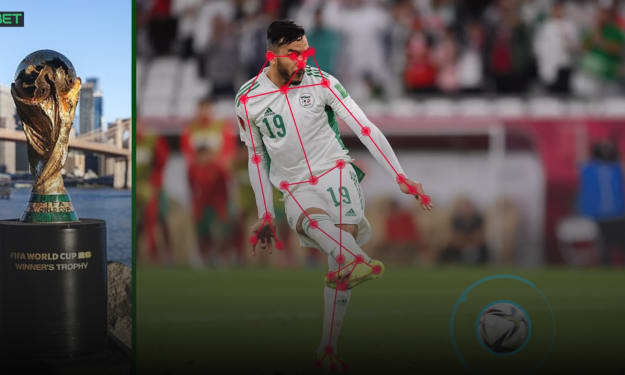
FIFA is taking semi-automated offside technology to a new level at the World Cup 2026 by creating AI-enabled 3D avatars of all participating players. With the tournament set to feature 48 teams and 26-man squads, a total of 1,248 footballers will undergo digital scanning ahead of the competition across the United States, Canada, and Mexico. This initiative aims to improve the accuracy and realism of VAR offside decisions while enhancing the viewing experience for fans worldwide.
By Sneaha Zynii6 days ago in Cleats


Comments
There are no comments for this story
Be the first to respond and start the conversation.