
From Page to Screen: How Japanese Manga and Anime Fare in Live-Action Films
Why Adaptations Struggle, and When They Truly Shine

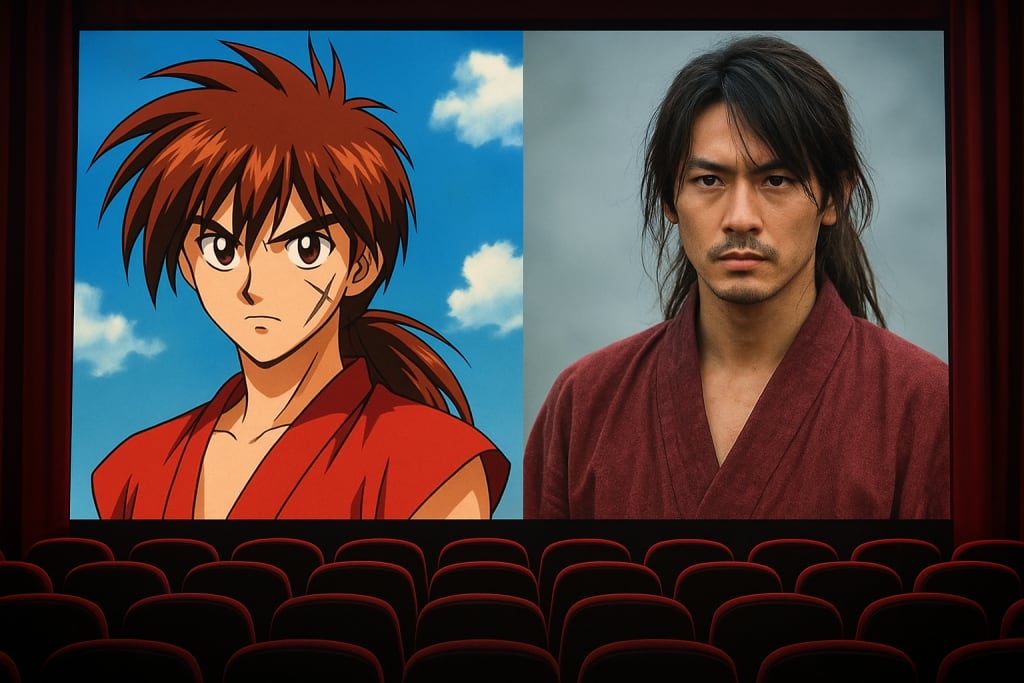
For decades, manga and anime have captured global audiences with their rich worlds, unforgettable characters, and emotional storytelling. It’s no surprise that studios often attempt to bring these beloved works into live-action cinema. But while anticipation runs high, the results are often mixed. Why is it so difficult to translate the magic of ink and animation into live-action? And what happens when it actually works?
⸻
The Long History of Adaptation
Live-action adaptations of manga and anime are not a recent phenomenon. As far back as the 1960s, Japanese studios experimented with bringing superheroes like Kamen Rider and Ultraman into the real world, relying on practical effects and costumes. In the 1970s and 1980s, classic manga like Lone Wolf and Cub (Kozure Ōkami) and Ashita no Joe were adapted for the screen, often leaning toward gritty realism rather than cartoonish spectacle.
These early films demonstrated that adaptation was possible, but they also revealed the limits of the medium. Without the stylization of panels or animation, certain elements looked awkward or failed to convey the same emotional punch. The struggle between fidelity to the source and cinematic realism has been there since the beginning.
⸻
The Challenge of Adaptation
Manga and anime thrive on exaggeration: larger-than-life expressions, impossible physics, and visuals that bend reality. When transferred into live-action, these elements can feel awkward, even unintentionally comical. A fight scene that feels natural in anime may look stiff or overly stylized on screen.
Another issue is pacing. Anime often stretches across dozens, even hundreds of episodes, while manga can span years of publication. Condensing such long narratives into a two-hour film inevitably means sacrificing depth, cutting beloved subplots, or reducing characters to shallow archetypes. Fans notice—and they care deeply.
⸻
Notorious Missteps
Titles like Dragonball Evolution (though technically a Hollywood production) are often cited as cautionary tales. By straying too far from the source material, they alienated fans while failing to attract newcomers.
Similarly, Japanese-produced adaptations have faced criticism for low-budget visuals or overly theatrical acting styles. Films like Attack on Titan (2015) polarized audiences: while some praised its darker tone, others felt the CGI giants lacked the terrifying weight of their animated counterparts, and key character arcs were drastically altered.
Even when budgets are higher, the uncanny mix of anime aesthetics and human actors can be difficult to balance. A colorful hairstyle that looks perfect in 2D may seem distracting or artificial in live-action.
⸻
When It Works
Yet, not all adaptations fail. Films like Rurouni Kenshin proved that with careful direction, high-quality choreography, and respect for the original material, live-action adaptations can resonate with both fans and newcomers. The sword fights captured the intensity of the manga while grounding them in believable martial arts choreography.
Netflix’s Alice in Borderland is another strong example. Rather than attempting to replicate anime aesthetics, it embraced the tension and grit of the story in a way that worked naturally in live-action. The series managed to stand on its own while honoring the spirit of the manga.
Another noteworthy case is Death Note (2006, Japanese version). While later international adaptations stumbled, the original live-action films struck a balance between supernatural elements and psychological tension. By focusing on character drama, they retained the essence of what made the manga compelling.
⸻
A Cultural Lens
Part of the challenge also lies in cultural expectations. Japanese audiences may accept certain theatrical gestures, while Western viewers find them exaggerated. Likewise, international audiences often expect blockbuster-scale CGI, while Japanese productions tend to focus on character drama. This gap in expectations can dramatically shape how adaptations are received abroad.
In addition, cultural context embedded in manga can be difficult to translate. School uniforms, festival settings, or honorifics may seem natural in Japan but feel alien to global audiences unfamiliar with those traditions. Filmmakers face a difficult choice: keep these elements for authenticity or alter them for accessibility.
⸻
The Role of Fandom
Perhaps the toughest critics are the fans themselves. Manga and anime often inspire deep emotional connections, and any change—whether in costume design, casting, or story—can trigger backlash. At the same time, these passionate communities also have the power to elevate an adaptation when it is done well, creating word-of-mouth momentum that reaches far beyond Japan.
In some cases, fan culture even influences production. Studios are becoming more aware of global fandom’s expectations, leading to closer consultation with original creators and more faithful marketing campaigns.
⸻
The Future of Live-Action Adaptations
With global streaming platforms investing heavily in Japanese properties, live-action adaptations are not going away. Success likely depends on a shift in perspective: rather than trying to “copy” anime shot-for-shot, the best adaptations reinterpret the story through a cinematic lens, respecting the soul of the original while making it work within live-action’s limitations.
There are promising signs. Netflix’s upcoming adaptations of One Piece and other titles suggest a more collaborative approach, with Japanese creators more involved in the production process. If this trend continues, we may see a new generation of adaptations that finally bridge the gap between page, animation, and screen.
When handled with care, these films have the power to introduce new audiences to beloved manga and anime—keeping the spirit alive while creating something new. And for fans, the possibility of seeing their favorite worlds reimagined, even imperfectly, will always hold a certain irresistible allure.
About the Creator
Takashi Nagaya
I want everyone to know about Japanese culture, history, food, anime, manga, etc.
Keep reading
More stories from Takashi Nagaya and writers in Journal and other communities.
🎰 Japan’s Unique Gambling World: Pachinko, Anime Collaborations, and the Hidden Dangers
🎯 Introduction If you’ve ever visited Japan, chances are you’ve seen neon-lit parlors filled with noise, flashing lights, and intense concentration. These aren’t casinos or arcades—they’re pachinko parlors, one of Japan’s most unique and controversial forms of entertainment.
By Takashi Nagaya6 months ago in Journal
The goals I did not achieve
Every writing goal I made for the year is a wash. It has been this way for a while, but I think it's important to be open about my failures and the reality of how life can get in the way. This is especially true considering the several times I have posted on Vocal about my writing goals, how I was changing my approach, and where I was hoping to be for the upcoming year. I will probably do that again in a couple months, but for now, it is time to acknowledge where I am today.
By Kay Husnick24 days ago in Journal
The Silent Reason You Quit Goals You Care About: Unveiling the Shadow of "Unrealistic Expectations
We all have them – those goals shimmering in the distance, beckoning us with the promise of a better, more fulfilling life. Losing weight, writing a novel, starting a business, mastering a new skill – the possibilities are endless. We start with enthusiasm, fueled by inspiration and a burning desire to achieve our dreams. Yet, all too often, that initial spark flickers and fades. We find ourselves derailed, abandoning our aspirations, and whispering excuses about lack of time, motivation, or talent.
By Wilson Igbasiabout 4 hours ago in Journal


Comments
There are no comments for this story
Be the first to respond and start the conversation.