
Farming Meets the Future: Smart Agriculture Market Surges with Next-Gen Technologies
Smart Agriculture Takes Root: Global Market Grows Through AI and IoT Innovation

The agricultural sector experiences a fundamental transformation due to escalating climate change alongside the rapid growth of global populations. Smart Agriculture combines traditional farming methods with modern technologies such as the Internet of Things (IoT), Artificial Intelligence (AI), and Big Data analytics to lead the industry forward. Technological advancements enable farmers to access real-time information which facilitates informed decision-making as well as resource optimization while enhancing global food security.
- Market Outlook: Smart Growth on the Horizon
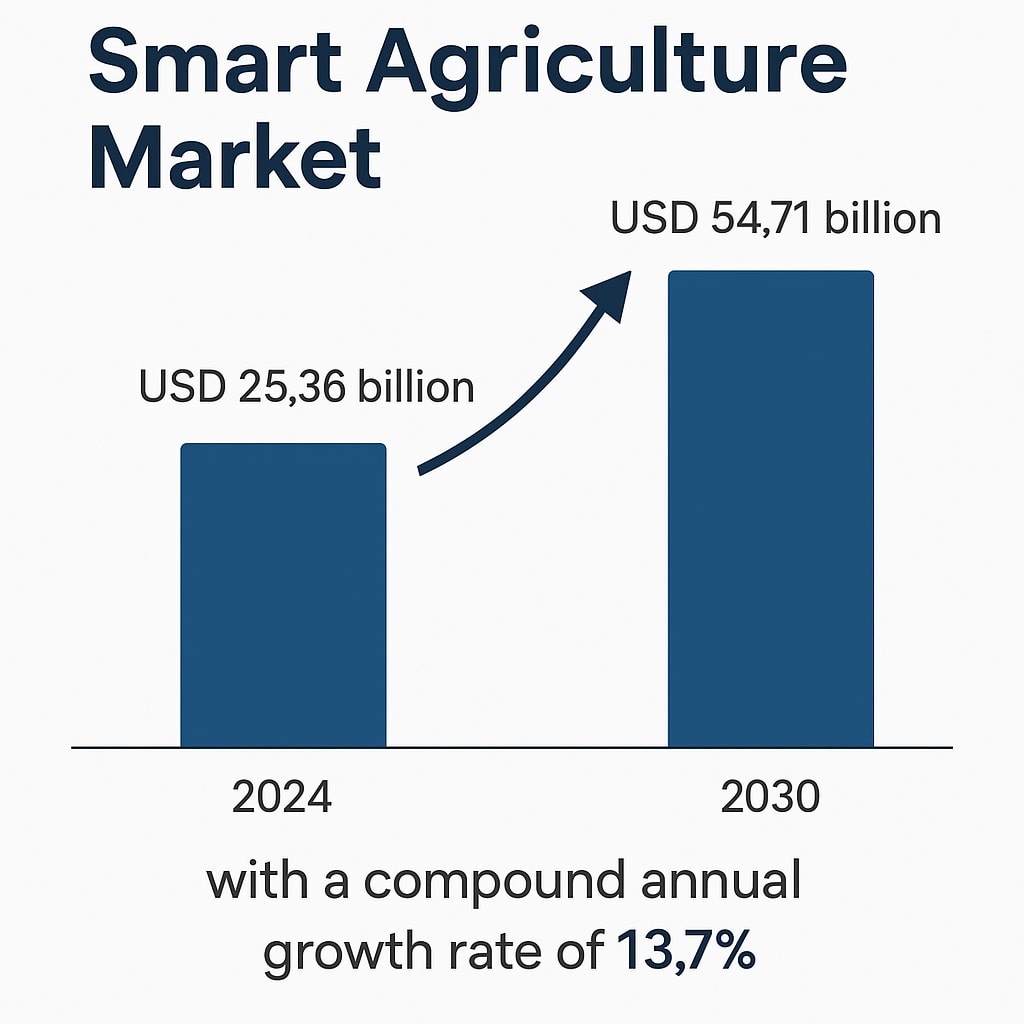
The Smart Agriculture Market continues to expand at a remarkable rate. The Smart Agriculture Market will be valued at USD 25.36 billion in 2024 and is forecasted to expand to USD 54.71 billion by 2030 with a CAGR of 13.7%. North America maintains its leadership position because of its extensive farming operations and advanced technological setup while the Asia-Pacific region leads in growth speed thanks to increasing food needs alongside governmental backing and swift adoption of agricultural technology.
Major industry leaders encompass Deere & Company along with Trimble Inc., AG Leader Technology, AGCO Corporation, Topcon Positioning Systems and Raven Industries.
- From Gut Feel to Data-Driven Decisions
The agricultural industry is transitioning from experience-based decisions to predictive strategies that rely on data analysis. Smart agriculture systems provide farmers with instantaneous data about crop health and soil status and pest threats which allows them to make precise and timely interventions. This development marks a shift from traditional reactive farming methods towards proactive management of agricultural ecosystems.
Download FREE PDF Brochure: https://www.theresearchinsights.com/request_sample?id=3864
- Building Blocks of Smart Agriculture
Smart farming systems establish a unified agricultural ecosystem through the integration of connected hardware devices and intelligent software applications. Core technologies include:
Precision Farming Tools: GPS tractors and variable-rate technology increase planting precision while boosting input efficiency.
IoT Sensors: Real-time monitoring of soil moisture, pH levels and nutrient content is possible.
Drones & Aerial Imaging: Panoramic farmland views enable exact crop assessments and irrigation schedule development.
Smart Irrigation Systems: Use environmental and crop sensor data to automate farm water delivery systems.
Livestock Monitoring: Smart collars combined with wearable devices enable tracking of both animal health status and their current locations.
Farm Management Software (FMS): The Farm Management Software brings together different data streams to improve planning processes and ensure regulatory compliance while enhancing forecast precision.
- Intelligence at the Core
The intelligent foundation of smart farming derives from artificial intelligence working together with cloud computing power. AI systems evaluate both historical and current data to predict agricultural yields while detecting diseases early and enhancing operational effectiveness. Through cloud-based platforms farmers can manage their operations remotely using phones and tablets which makes management easier and improves productivity and sustainability.
- Sustainability in Focus
Smart agriculture aligns seamlessly with environmental stewardship. Micro-dosing fertilizers alongside precision irrigation and targeted pest control help minimize resource utilization while diminishing environmental damage. Smart farming practices that conserve water and reduce carbon emissions while minimizing waste help maintain food security and develop climate resilience.
- Challenges on the Road to Adoption
Although smart agriculture represents a promising innovation, multiple obstacles stand in the way of its widespread implementation.
High Upfront Costs: Advanced tools require capital which smaller farms commonly find difficult to procure.
Limited Connectivity: Digital infrastructure limitations in rural regions prevent the effective use of real-time data.
Skill Gaps: Farmers require training programs to effectively use new agricultural technologies.
Data Integration & Privacy: Platform compatibility and data ownership continue to be major concerns for users.
To overcome these obstacles we need to establish strong public and private collaborations along with financial motivators and inclusive policy structures that promote equal access to advanced farming technologies.
- Future Trends to Watch
Agricultural opportunities expand as new technologies keep transforming industry boundaries.
Blockchain: Blockchain technology delivers increased visibility and tracking capabilities throughout the supply chain.
AI-Based Crop Simulation: This technology predicts agricultural method results across multiple climate conditions.
Edge Computing: This capability allows immediate data processing at the site while minimizing the required bandwidth.
Smart Greenhouses: Maximize yields through AI and sensor-controlled environments.
SaaS Farm Management Platforms: Subscription-based farm management platforms provide tools that scale to meet the needs of any farm size.
- A Connected Future for Agriculture
Smart agriculture represents a fundamental rethinking and redesign of farming practices to meet digital and sustainable future needs. Through AI integration and precision technologies along with advanced analytics agriculture develops into a scalable and resilient system prepared to face future demands. The process of transformation has begun while it establishes the foundation of an advanced and eco-friendly worldwide food system.
Order this report: https://www.theresearchinsights.com/license?id=3864
About the Creator
Paxton Templeton
I’m a storyteller at heart with a passion for turning data into compelling narratives. With a focus on industry trends, market insights, and growth statistics, I bring clarity to complexity
Keep reading
More stories from Paxton Templeton and writers in Journal and other communities.
Tracking Health: The Rise of Vital Signs Monitoring Devices Market
Innovative technologies are propelling vital signs monitoring devices market forward through the integration of wearable sensors with AI-based data analysis and remote patient monitoring capabilities. Modern medical technologies enhance measurement precision with real-time patient data tracking and patient-centered solutions that enable preventive health care together with individualized treatment plans. The advancement of digital health requires hospitals and home care operations to adopt monitoring devices as essential components for developing efficient connected medical monitoring systems that prioritize patient care.
By Paxton Templeton8 months ago in Journal
How AI Is Reshaping the Future of Software Development
Artificial intelligence is no longer an experiment running in parallel to engineering. It has moved directly into the production pipeline. For modern software development companies, AI is changing how code is written, tested, secured, and evolved. This shift is not cosmetic. It is structural. Businesses that treat AI as a feature will fall behind those that redesign their development model around it.
By Gabriella Browne2 days ago in Journal


Comments (1)
Smart Agriculture is really changing things. It's great that it combines old and new tech. I'm curious how small-scale farmers are adapting. Also, with all this data, how do we ensure its security? The growth in this market is promising, but we need to address these aspects for it to be truly beneficial.