
How AI Is Reshaping the Future of Software Development
A deep dive into AI-driven tools, automation, and innovations changing how software is built and delivered.

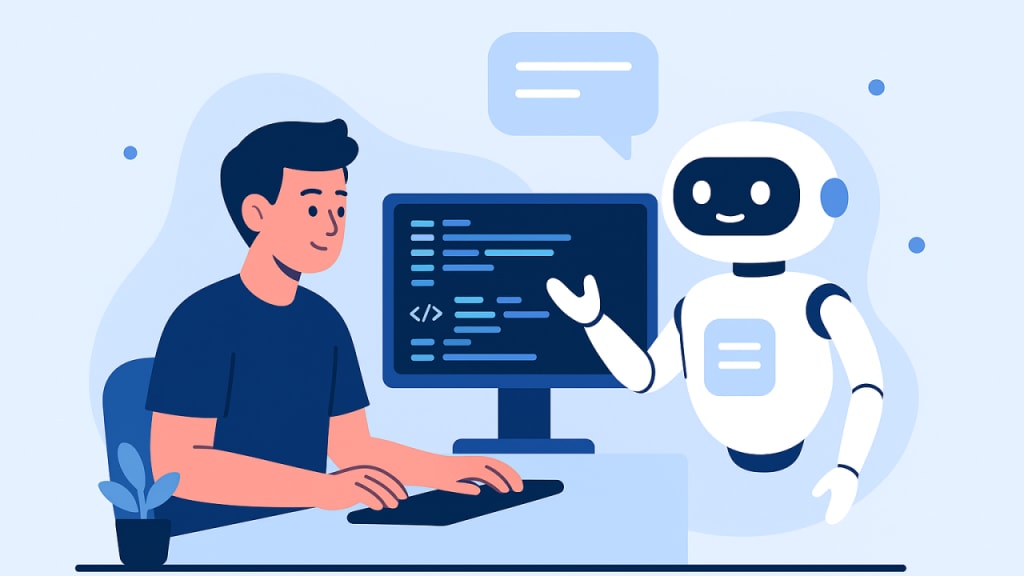
Artificial intelligence is no longer an experiment running in parallel to engineering. It has moved directly into the production pipeline. For modern software development companies, AI is changing how code is written, tested, secured, and evolved. This shift is not cosmetic. It is structural. Businesses that treat AI as a feature will fall behind those that redesign their development model around it.
Early adopters already understand the stakes. Teams that integrate AI deeply are shipping faster, catching defects earlier, and reallocating human talent toward higher-order problems. Those that hesitate are accumulating friction they will struggle to unwind.
AI Is Rewiring the Development Lifecycle
The traditional software lifecycle assumed humans at every critical junction. AI breaks that assumption. Code generation, static analysis, and test creation are increasingly automated. This does not eliminate engineers. It changes where they add value.
Leading teams now use AI to generate boilerplate, refactor legacy modules, and surface architectural risks before deployment. The result is not just speed. It is consistent. AI enforces patterns relentlessly, reducing variance that typically creeps in as teams scale.
Within the first stages of transformation, forward-looking firms partner with software development companies capable of operationalizing AI responsibly, not just showcasing demos. The difference becomes visible almost immediately in delivery metrics.
From Code Writing to System Design
As AI absorbs routine coding tasks, human engineers shift upward. System design, data modeling, and integration strategy become the primary battlegrounds. This transition favors organizations with strong architectural discipline.
AI can suggest implementations, but it cannot own trade-offs. Latency versus cost. Consistency versus availability. These decisions remain human responsibilities. The future engineer acts less like a typist and more like a systems economist, allocating resources and risk intelligently.
Companies that fail to prepare their teams for this shift will experience a talent mismatch. Productivity tools without strategic oversight create brittle systems faster.
Testing and Quality Assurance Are Being Inverted
Quality assurance has historically been reactive. Bugs were discovered after features shipped. AI flips this model. Predictive testing frameworks now identify likely failure points before code reaches production.
Machine learning models analyze commit history, dependency changes, and runtime behavior to prioritize test coverage dynamically. This reduces false confidence while focusing attention where it matters most. Defect rates drop. Release confidence rises.
The impact is cultural as much as technical. Teams stop bracing for releases and start trusting pipelines. That trust compounds velocity.
Security Moves Left and Becomes Continuous
Security breaches rarely stem from exotic exploits. They exploit predictable human error. AI excels at pattern recognition, making it ideal for continuous security enforcement.
Modern pipelines now include AI-driven vulnerability scanning, anomaly detection, and policy enforcement. These systems learn from past incidents and adapt as architectures evolve. Security stops being a phase. It becomes a background process.
For regulated industries, this shift is transformative. Compliance evidence can be generated automatically, reducing audit fatigue while improving actual security posture.
AI Changes the Economics of Custom Software
Custom software has always been expensive because it was labor-intensive. AI compresses that cost curve. Reusable models, automated documentation, and intelligent tooling reduce the marginal cost of new features.
This does not mean custom software becomes cheap. It becomes more predictable. Budget overruns driven by manual rework and late-stage fixes decline. Enterprises gain clearer forecasts and better ROI attribution.
The firms that thrive in this environment are those that redesign pricing and delivery models around AI-enabled efficiency instead of hiding it behind traditional billing structures.
Data Becomes the Primary Asset
AI is only as effective as the data it consumes. This reality forces organizations to confront long-ignored data quality issues. Fragmented schemas, inconsistent labeling, and undocumented pipelines suddenly become blockers.
As a result, data engineering moves to the center of software strategy. Clean ingestion, lineage tracking, and governance are no longer optional. They are prerequisites for intelligent systems.
Software teams that invest here unlock compounding benefits. Every improvement in data quality increases the return on AI across the stack.
The Rise of Autonomous Operations
Beyond development, AI is reshaping how software is operated. Self-healing infrastructure, predictive scaling, and automated incident response are moving from theory to practice.
These capabilities reduce downtime and operational stress. They also change organizational structure. Smaller teams can manage larger systems without sacrificing reliability. This shift rewards companies that integrate AI across DevOps, not just development.
Operational maturity becomes a competitive advantage rather than a cost center.
Ethics, Governance, and Control Matter More Than Ever
AI introduces new risks alongside new power. Model bias, opaque decision-making, and data misuse carry real consequences. Organizations that ignore governance will face backlash from regulators and customers alike.
Responsible development requires clear ownership, auditability, and human override mechanisms. AI systems must be explainable, especially when embedded in customer-facing or decision-critical workflows.
This is where experience matters. Teams that have navigated complex systems before are better equipped to balance innovation with control.
The Future Favors the Deliberate
AI will not replace software engineers. It will replace undisciplined engineering. The future belongs to organizations that integrate AI thoughtfully, redesign workflows intentionally, and invest in foundational quality.
For enterprises choosing partners, the signal is clear. Look beyond surface-level AI features. Evaluate how deeply AI is embedded into delivery, security, and operations. The gap between leaders and laggards will widen quickly.
As this transformation accelerates, software development companies that treat AI as core infrastructure, not a marketing layer, will define the next era of digital systems. The rest will spend years catching up to a future that has already moved on.
About the Creator
Gabriella Browne
Gabriella Browne is a sharp, detail-oriented news writer with a passion for investigative journalism. She delivers timely, well-researched stories, covering politics, business, and global affairs with accuracy.
Keep reading
More stories from Gabriella Browne and writers in Journal and other communities.
How AI Is Reshaping the Future of Software Development
Artificial intelligence is no longer an experiment running in parallel to engineering. It has moved directly into the production pipeline. For modern software development companies, AI is changing how code is written, tested, secured, and evolved. This shift is not cosmetic. It is structural. Businesses that treat AI as a feature will fall behind those that redesign their development model around it.
By Gabriella Browne2 months ago in Journal
How to Master the Art of Island Hopping Without Missing a Single Sunset
Island hopping often looks effortless in photographs, yet the reality can feel rushed when travel days start to dominate the schedule. Sunsets, which quietly shape the rhythm of island life, are usually the first thing lost when routes and timing are poorly judged. With a more deliberate approach, island hopping can feel slower and more balanced, allowing each day to end in place rather than in transit.
By Jeewanthi Armstrongabout 12 hours ago in Journal
Review of 'Man on the Run'
My wife and I saw Man on the Run, a nearly 2-hour documentary on Amazon Prime, about Wings, Paul McCartney's group that flew around the world from shortly after The Beatles broke up in early 1970 to shortly after John Lennon was murdered at the end of 1980, making a Beatles reunion forever impossible.
By Paul Levinson6 days ago in Beat


Comments
There are no comments for this story
Be the first to respond and start the conversation.