
Evan Vitale on Embracing Generative AI: How CPAs Can Lead the Next Wave of Automation
As artificial intelligence reshapes industries across America, CPA Evan Vitale explains why accountants stand at the crossroads of innovation — and how embracing generative AI can transform the profession from record-keeping to strategic leadership.
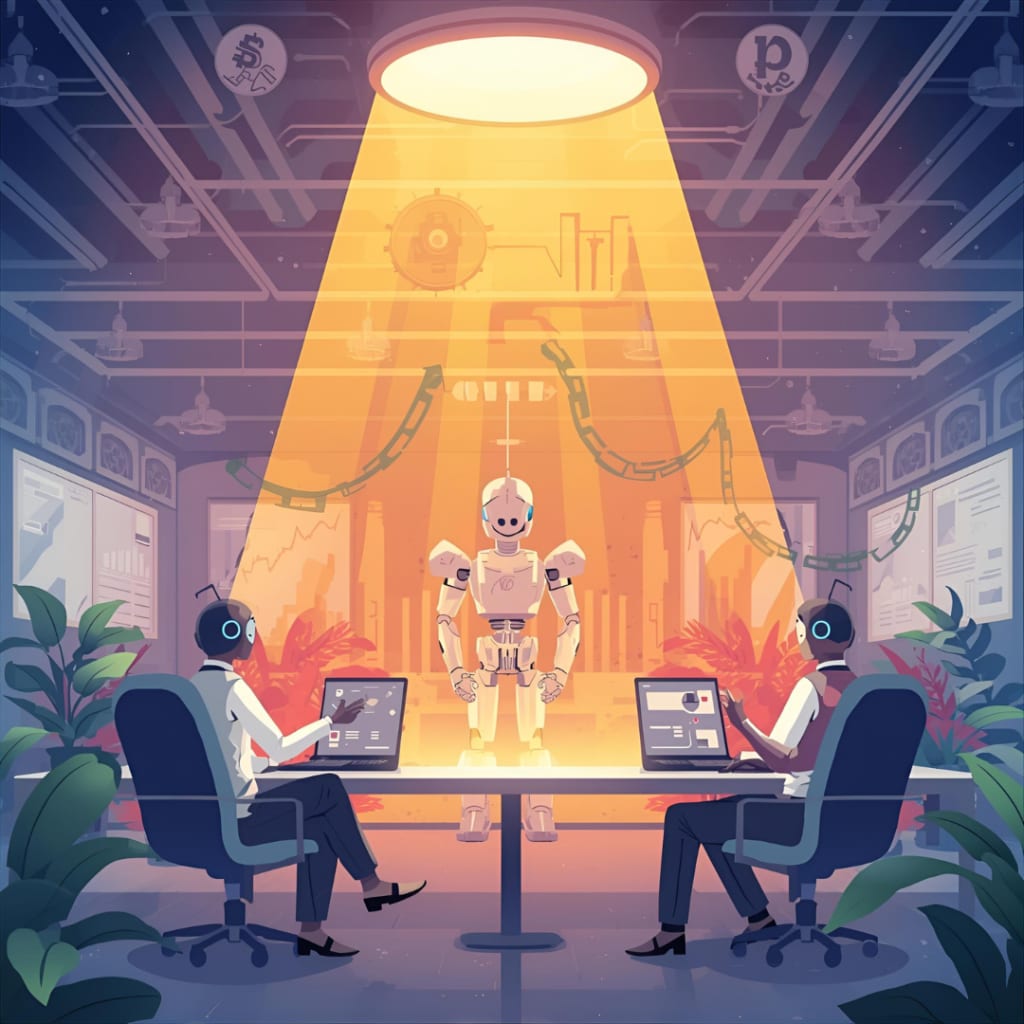
In a world where algorithms can write, analyze, and predict faster than ever before, one might assume that the age of the accountant is fading. Yet, according to U.S. Certified Public Accountant Evan Vitale, this new technological era doesn’t mark the end of traditional accounting — it signals its rebirth. The tools may change, but the mission remains the same: to help businesses make smarter, more ethical, and more strategic decisions.
“Generative AI isn’t here to replace CPAs,” Vitale often explains. “It’s here to empower them to focus on what really matters — insight, interpretation, and integrity.”
The profession that once revolved around spreadsheets and manual audits is now moving into a world of machine learning and predictive analytics. CPAs who understand this shift — and learn to collaborate with technology — will become the architects of a new financial landscape.
________________________________________
The Evolution from Calculation to Creation
For decades, accounting has been defined by precision and consistency. The role of the CPA was to ensure accuracy, compliance, and accountability. But as Vitale points out, automation has already taken over most of the repetitive tasks — data entry, reconciliations, and even basic tax preparation.
What’s emerging instead is a new kind of accountant — a strategic creator who uses technology to model future outcomes and guide businesses through uncertainty.
Generative AI tools can simulate financial scenarios, draft reports, and even generate visual analytics in real time. For example, an AI system can now project how a shift in interest rates or labor costs might affect a company’s cash flow six months from now. CPAs can use these projections to shape proactive strategies rather than reacting to problems after they arise.
Vitale believes this evolution marks a turning point. “The CPA of tomorrow is not just crunching numbers,” he says. “They’re crafting the story those numbers tell.”
________________________________________
A Partner in Decision-Making
In the traditional sense, accountants worked behind the scenes — the final checkpoint before a business moved forward. But AI is pulling them to the forefront of corporate decision-making.
Through generative AI, CPAs can now interpret massive data sets that once required weeks of analysis. The result is faster, smarter, and more strategic decisions.
Imagine a mid-sized business facing declining profits. Instead of waiting for end-of-quarter reports, a CPA equipped with AI can instantly identify inefficiencies in the supply chain, suggest budget reallocations, and even predict customer behavior.
“Generative AI gives accountants a new language,” Vitale notes. “It turns raw data into strategy — and strategy into leadership.”
________________________________________
The Human Element That Machines Can’t Replace
Despite the power of automation, Vitale stresses that technology alone isn’t enough. Numbers may reveal patterns, but they don’t understand context, emotion, or ethics — the qualities that make human judgment indispensable.
Accounting is as much about trust as it is about accuracy. In a time when financial misinformation and cyber risks are rising, the CPA’s role as a guardian of truth has never been more important.
“AI can analyze, but it can’t empathize,” Vitale explains. “It can make predictions, but it doesn’t bear responsibility. That’s where the human CPA must always lead.”
This balance — between technological precision and human insight — defines the next generation of accounting. The CPA who combines both will not just survive the automation wave but ride it to new heights.
________________________________________
Building Ethical Frameworks for AI-Driven Finance
One of the key challenges in adopting AI is ensuring that automation remains ethical and transparent. For Vitale, this isn’t just a technical issue — it’s a moral one.
As CPAs integrate AI into their work, they must ensure that data integrity, privacy, and accountability remain at the core of every process. The CPA profession’s code of ethics provides a framework for this transformation.
“The moment we delegate judgment to algorithms without oversight,” Vitale warns, “we risk losing the very trust that defines our profession.”
By taking the lead in setting standards for ethical AI use, accountants can position themselves as the stewards of responsible innovation.
________________________________________
Preparing for the Next Decade
Evan Vitale encourages every CPA to invest time in understanding generative AI — not to become data scientists, but to become data-literate leaders.
Future firms will value accountants who can manage AI systems, interpret algorithmic outcomes, and translate complex insights into business strategy. Continuous education, adaptability, and curiosity will become as essential as technical skill.
“The accountants who thrive in 2030 will be the ones who embrace technology, not fear it,” Vitale predicts. “Because the real power of AI is not what it replaces — it’s what it amplifies.”
________________________________________
A Future Shaped by Collaboration
The next wave of automation isn’t about man versus machine — it’s about collaboration. As generative AI grows more sophisticated, CPAs who merge analytical discipline with human creativity will define the financial future.
Vitale’s message is clear: the role of the CPA is not disappearing; it’s evolving into something more visionary, more strategic, and more human than ever before.
“AI may generate the data,” he concludes, “but it’s up to us to generate the wisdom.”
About the Creator
Shane Edwards
Shane Edwards is a writer, author, and publisher specializing in tech and finance. He simplifies complex topics, making them accessible and insightful for readers navigating today's digital and financial world.
Keep reading
More stories from Shane Edwards and writers in Journal and other communities.
How CPA Evan Vitale Combines Financial Expertise with a Founder’s Mindset to Help Businesses Thrive in an Unpredictable Economy
The world of finance is often seen as rigid—ruled by spreadsheets, tax codes, and risk aversion. But in today's unpredictable economy, rigid thinking can be a liability. That’s where Evan Vitale comes in. A seasoned CPA with deep financial expertise, Vitale is turning heads by applying a bold, founder-style mindset to the way businesses think about their future.
By Shane Edwards4 months ago in Journal
Einstein’s Early Struggle: The 1895 Swiss Federal Polytechnic Entrance Exam and Lessons in Talent and Perseverance
In 1895, a 16-year-old Albert Einstein faced a setback that many might have seen as a sign of failure: he failed the entrance exam for the Swiss Federal Polytechnic in Zurich. While this moment is often remembered as a youthful stumble in the life of one of history’s greatest scientific minds, it offers profound insights into the nature of talent, learning, and perseverance. Einstein’s experience reminds us that early academic challenges do not define one’s potential, and that success often comes from persistence and leveraging one’s strengths.
By Salaar Jamali2 days ago in Journal




Comments