
Elon Musk Has Fired One Of His Top Tesla Lieutenants
Omead Afshar’s sudden exit signals deeper cracks within Tesla’s leadership as the EV giant struggles to maintain momentum in a rapidly shifting global market

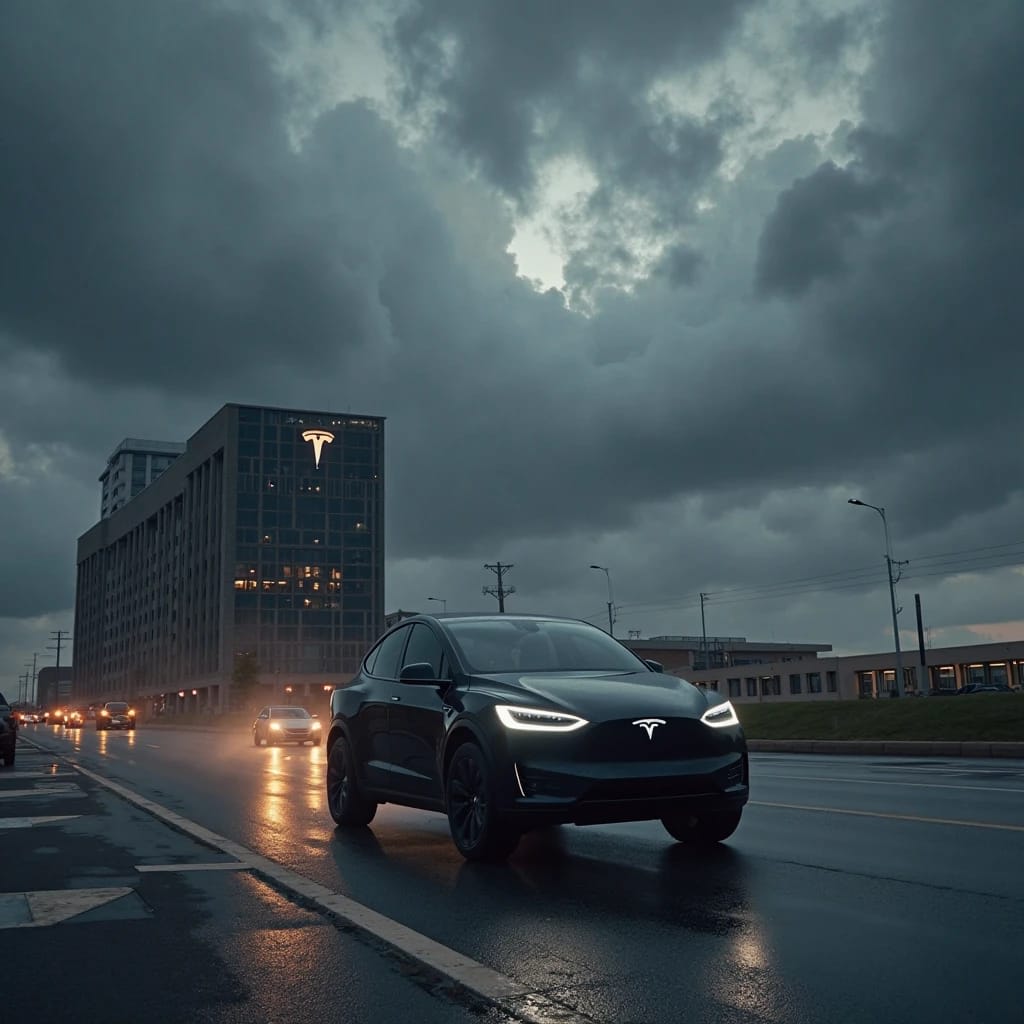
In a move that’s sent ripples through the automotive and tech sectors alike, Elon Musk has fired Omead Afshar—one of Tesla’s most trusted lieutenants and its head of operations for North America and Europe. Afshar’s termination comes at a precarious time for Tesla, as the electric vehicle pioneer faces slumping sales across its major markets, fierce competition from Chinese automakers, and increasing brand fatigue amid Musk’s polarizing public persona.
A Sudden Shake-Up at the Top
Afshar, who began his Tesla career in 2017 as an engineer, quickly rose through the ranks to become one of the most influential voices inside the company. By October 2023, he was promoted to Vice President, overseeing operations in two of Tesla’s most critical regions—North America and Europe. His close working relationship with Musk earned him the moniker of "Musk’s fixer," as profiled by The Wall Street Journal late last year.
Despite his high standing within the company, Afshar’s firing appears abrupt and without official explanation. He has yet to issue a public comment, and neither Musk nor Tesla has provided any clarification regarding the decision. Sources familiar with the matter suggest that the dismissal occurred just days before the end of Q2—a telling sign of urgent discontent within Tesla's executive hierarchy.
The Sales Slide: A Global Concern
Tesla’s decision to part ways with Afshar arrives amid a troubling downturn in the company’s global sales. Europe, once a promising growth engine for the brand, has seen electric vehicle deliveries fall for five consecutive months. The United States isn’t faring much better, with demand stagnating and competition heating up.
Perhaps most concerning is the dip in China—Tesla’s largest market—where EV sales dropped by 15% in May alone. Analysts are now predicting a global year-over-year decline of at least 10% in Tesla’s EV deliveries for Q2, with an estimated 392,800 units expected, compared to 443,956 during the same period in 2023.
Brand Backlash and Political Baggage
Tesla’s sales woes can’t be viewed in isolation. Many experts believe that Elon Musk’s increasingly overt political affiliations, particularly his vocal support and financial backing of former President Donald Trump, have alienated portions of the consumer base.
Musk’s controversial leadership of the now-defunct federal DOGE initiative—a cost-slashing program that faced widespread criticism—only added fuel to the fire. For a brand once synonymous with innovation and environmental progressivism, Musk’s political pivot may be eroding its carefully curated image, especially among younger, progressive buyers who once formed Tesla’s core support.
The Cybertruck Conundrum
Beyond public relations troubles, Tesla is also battling product issues. The Cybertruck—once touted as the game-changing flagship for the company’s next chapter—has failed to live up to expectations. Production delays, limited availability, and underwhelming sales figures have left many investors skeptical of its long-term potential.
Instead of doubling down on expanding its EV lineup, Musk has steered investor attention toward futuristic endeavors like robotaxis, humanoid robots, and artificial intelligence. While those projects may have long-term value, they currently do little to address the immediate challenges Tesla faces in a market saturated with fast-growing competitors.
Robotaxi Launch: Bold Move or Risky Gamble?
On June 22, Tesla launched a pilot version of its highly anticipated robotaxi service in Austin, Texas. Though Musk celebrated the rollout as a milestone, the launch exposed more limitations than triumphs.
The pilot, limited to a 30-square-mile area, offered rides in Tesla Model Ys with safety technicians still present in the front seats. Despite operating under tightly controlled conditions and serving only a pre-selected group of users, several reports surfaced of erratic driving behavior. The National Highway Traffic Safety Administration (NHTSA) confirmed it is actively reviewing the incidents with Tesla.
Although no injuries or major accidents have been reported, the rollout suggests Tesla is far from ready to compete with established autonomous ride-hailing services like Alphabet’s Waymo. And for a company currently dependent on car, battery, and charging sales for nearly all of its revenue, pivoting to an unproven robotaxi model is, at best, a high-stakes gamble.
A Leadership Exodus
Afshar’s firing follows the recent departure of Milan Kovac, the executive who led Tesla’s Optimus humanoid robot division. The timing of these high-profile exits raises questions about internal friction and strategic misalignment within the company.
Afshar’s final public statement, a celebratory post on X (formerly Twitter), praised the robotaxi rollout just days before his exit. “Absolutely historic day for Tesla. This has been years of hard work and focus by so many people within the company,” he wrote. “Thank you, Elon, for pushing us all!”
That sentiment now feels bittersweet.
Investors Watching Closely
Tesla’s stock has not escaped the turbulence. Shares closed slightly down on Thursday at $325.78. Year-to-date, the stock has slid 19%, reflecting mounting investor concerns over the company’s near-term prospects and strategic direction.
While Musk has always been a lightning rod for attention—good and bad—Tesla’s current troubles appear more systemic than superficial. Declining EV sales, leadership turnover, delayed product rollouts, and growing skepticism about speculative ventures like robotaxis and humanoid robotics are clouding what was once a clear and compelling growth story.
What’s Next for Tesla?
As Q2 draws to a close, Tesla faces mounting pressure to reassure investors and consumers alike. Whether through refining its existing product lineup, distancing the brand from Musk’s political affiliations, or delivering tangible progress in autonomous vehicle technology, the company must demonstrate it still has the capacity to lead—not just disrupt—the global EV market.
Afshar’s exit may be just one piece of a larger puzzle, but it’s a powerful symbol of the uncertainty currently engulfing Tesla. And for Elon Musk, who once seemed to defy the rules of business gravity, that uncertainty may prove to be his most formidable adversary yet.
About the Creator
Muhammad Sabeel
I write not for silence, but for the echo—where mystery lingers, hearts awaken, and every story dares to leave a mark
Keep reading
More stories from Muhammad Sabeel and writers in Journal and other communities.
Essential Aircraft Parts You Need for Seamless Aviation Operations
In the world of aviation, every aircraft is made up of a complex array of parts, each with a unique purpose. These components work together to ensure that the aircraft operates safely, efficiently, and reliably, whether it's during routine flights or unexpected emergency situations. In this blog, we'll take a deeper look at the essential aircraft parts that are critical to the seamless operation of aviation.
By Beckett Dowhan7 days ago in Journal


Comments
There are no comments for this story
Be the first to respond and start the conversation.