
Donald Trump wants to retake control of Panama Canal
USA International

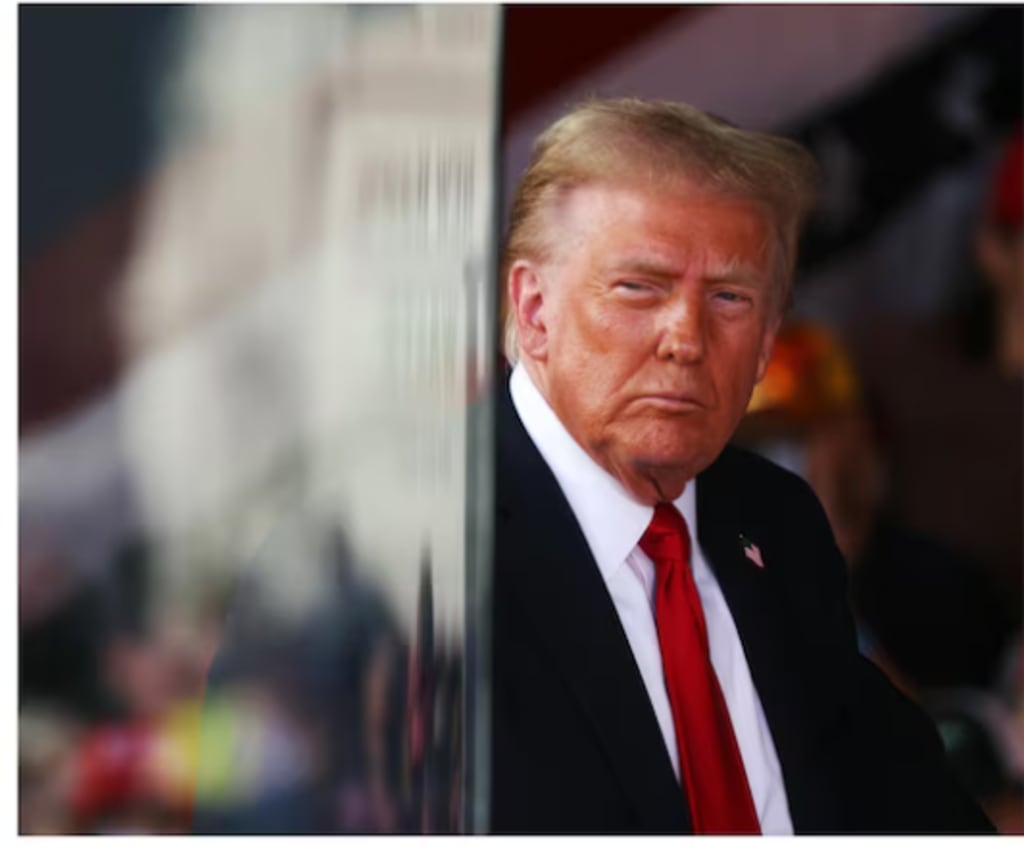
US President-elect Donald Trump stoked a row after he suggested that his new administration could try to regain control of the Panama Canal, which was relinquished in 1999. This drew a sharp response from Panama's President Jose Raul Mulino, who said such an idea would never be entertained.
Reacting to Trump's statement, Mulino shared a video on his social media handles on Sunday. "Every square meter of the Panama Canal and its adjacent areas belongs to Panama and will continue belonging to Panama," Mulino said in the video.
What did Donald Trump say?
At a rally in recent weeks, Trump argued that the US "foolishly" gave up the canal to Panama. He lamented the "ridiculous" charge levied on US vessels to navigate the channel that joins the two great Oceans.
"Our Navy and Commerce have been treated in a very unfair and injudious way. The fees being charged by Panama are ridiculous," Trump said, per the Associated Press.
If the principles-both moral and legal-of this magnanimous gesture of giving are not followed, then we will demand that the Panama Canal be returned to the United States of America, in full, quickly and without question," he said.
Trump also pointed out China's growing influence around the canal, which he called a "disturbing trend for American interests". "It was fully for Panama to control, not China, nor anybody else," Trump said. "We would and will never let it fall into the wrong hands.
On this, Mulino said the Panama Canal has no “direct or indirect control from China, nor the European Union nor the United States or any other power.”
Trump later responded to Mulino’s video through a post on Truth Social. “We’ll see about that,” he said.
Why Trump wants Panama Canal?
It was in 1914 that the US built the Panama Canal to facilitate the movement of commercial and military vessels across its coasts. However, the US had also lost the control of the canal, in accordance with the Torrijos-Carter Treaties signed in 1977. Such a treaty was an aftermath of high pressure from Latin American states, including Panama itself, to end US control as a symbol of its imperialism.
On 31 December, 1999, the canal fell completely into the hands of Panama. Under a neutrality agreement, the US was allowed to continue its operations with the Panama Canal Authority.
At the same time, this is the very important canal for both the US and Panama. On the US side, this decreases its travelling time since it would not be on a very long journey around Cape Horn. For one, CSIS data shows that in 2019, 66 percent of cargo traffic transiting the canal began or ended its journey at a US port.
Moreover, the canal is critical to the US's energy trade because it facilitates the shipment of oil and LNG.
China's growing presence in Panama
For Panama, the canal is a linchpin of its economy, generating about one-fifth of that government's annual revenue. More recently, China has considerably enhanced its presence around the Panama Canal through a number of investments and infrastructure projects, although it does not control the operations of the canal.
A CSIS report points out the various major infrastructure developments related to the canal for which Chinese firms have participation: CCCC and CHEC, for instance, obtained a $1.4 billion contract for the fourth bridge over the canal, and Shanghai Gorgeous invested in the order of $900 million in a natural gas-fired electricity generation facility near the canal.
Does the Panama Canal Charge U.S. Ships More?
The operation of locks in the Panama Canal is dependent on reservoirs; operations were nevertheless seriously impeded by the 2023 Central American droughts, which made a forceful reduction in the quantity of daily slots available for crossing ships.
Administrators, with fewer transit of ships, also increased fees charged to all shippers for the reservation of slots.
However, with weather returning to normal, the transit in the canal has normalised. But according to Associated Press, price increases are still expected for next year. According to Mulino, the fees for ships crossing the canal are set by experts who take into consideration operational costs and supply and demand factors.
About the Creator
Keep reading
More stories from Global Update and writers in Journal and other communities.
US warplane shot down in Red Sea 'friendly fire' incident
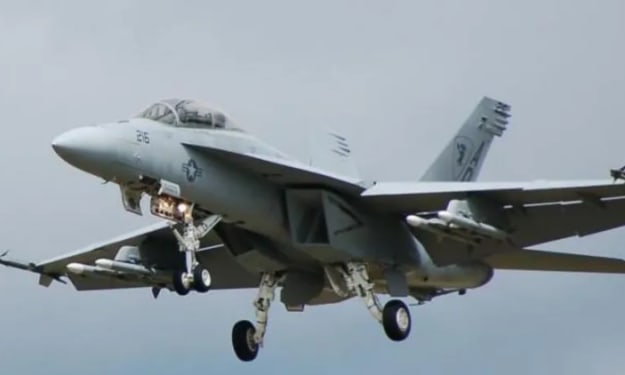
Washington: Two US Navy pilots were shot down on Sunday over the Red Sea in an apparent "friendly fire" incident, the US military said, marking the most serious incident to threaten troops in over a year of America targeting Yemen's Houthi rebels. Both aviators were recovered alive after ejecting from their stricken two-seat F/A-18 aircraft, with one suffering minor injuries. But the shootdown underlines just how dangerous the Red Sea corridor has become, with ongoing attacks on shipping by the Iranian-backed Houthis despite US and European military coalitions patrolling the area.
By Global Updateabout a year ago in Journal
Silver Screen Magic with Mae West
American actress and singer Mae West became a popular film actress during the Great Depression. She started entertaining in vaudeville, then performed on Broadway, and finally went to Hollywood. She signed up with Paramount Pictures and made her debut in the 1932 film “Night After Night.” She also starred in musicals, comedies, and crime dramas. The American Film Institute named her one of the best classic Hollywood actresses.
By Rasma Raisters5 days ago in Geeks


Comments
There are no comments for this story
Be the first to respond and start the conversation.