
Direct vs Indirect Marketing: What's the Difference and Why Does it Matter?
Explaining Direct and Indirect Marketing to Kids

Introduction:
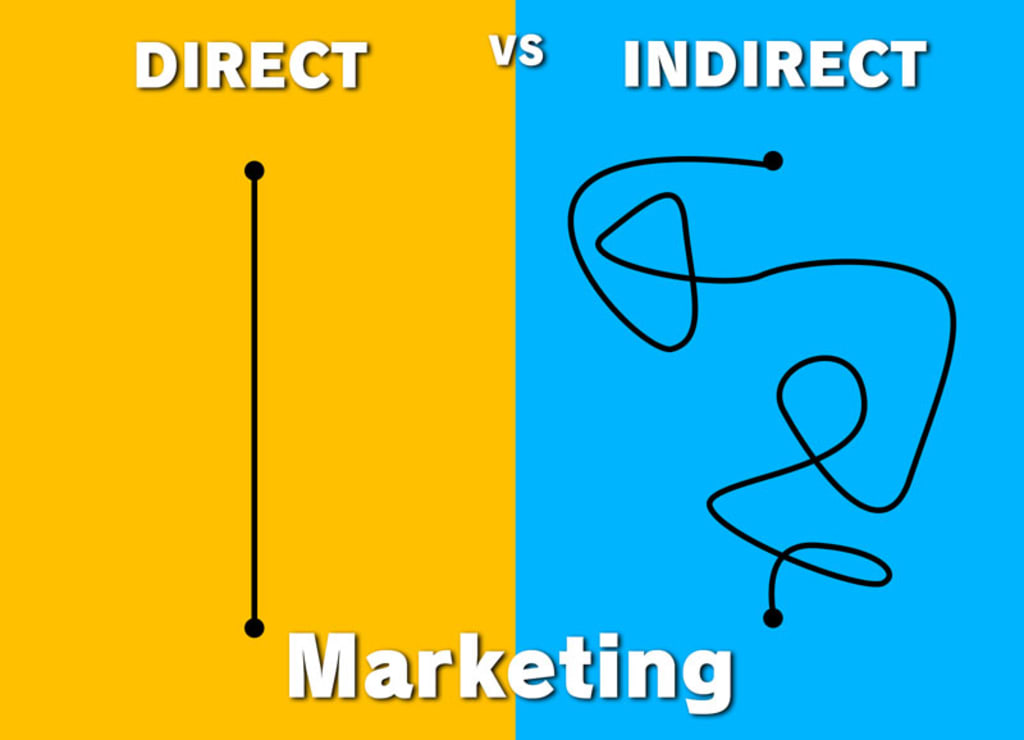
Marketing is a critical aspect of any business, and there are two main approaches to it: direct marketing and indirect marketing. Direct marketing involves direct communication with customers or potential customers, while indirect marketing involves using tactics that don't involve direct communication. In this article, we'll explore what direct and indirect marketing are, the differences between the two, and some examples of each.
Direct Marketing:
Direct marketing is a form of advertising where companies communicate with potential customers directly. This could be through mail, email, text message, phone calls, or face-to-face interactions. The goal of direct marketing is to get customers to take action, such as making a purchase or signing up for a service.
Direct marketing is often used by small businesses, as it allows for targeted and personalized communication with potential customers. Direct marketing can also be more cost-effective than traditional advertising methods, as it's focused on a specific audience.
Examples of direct marketing include:
Sending out newsletters or promotional flyers in the mail
Cold calling potential customers
Sending targeted email campaigns to a specific audience
Using social media to directly communicate with customers
Indirect Marketing:
Indirect marketing, also known as passive marketing, involves tactics that don't involve direct communication with customers. Instead, it focuses on creating a positive image of the brand, building relationships, and creating brand awareness. Indirect marketing can take many forms, including content marketing, social media, public relations, and influencer marketing.
Indirect marketing is often used by larger businesses, as it can be more expensive than direct marketing. However, it can also be more effective in the long run, as it helps build brand loyalty and awareness.
Examples of indirect marketing include:
Creating engaging content, such as blog posts or videos, that promote the brand indirectly
Using social media to engage with customers and build relationships
Partnering with influencers to promote the brand to their followers
Hosting events that promote the brand indirectly
Differences Between Direct and Indirect Marketing:
The main difference between direct and indirect marketing is the approach used to reach customers. Direct marketing involves direct communication, while indirect marketing focuses on building relationships and brand awareness. Direct marketing is often used by smaller businesses, while larger businesses tend to use indirect marketing to build brand loyalty.
Summarise
Direct Marketing:
Direct marketing is when a company tries to sell its products or services directly to customers. This can be done through different methods such as email, phone calls, or sending letters or brochures in the mail. The goal of direct marketing is to get customers to buy the company's products or services right away.
For example, have you ever received a flyer in the mail for a restaurant or store offering a discount? That's an example of direct marketing. The company is trying to get you to come to their store and buy their products or services.
Indirect Marketing:
Indirect marketing is when a company promotes its brand or products through methods that are not directly trying to sell something. Instead, the goal of indirect marketing is to create a positive image of the brand or product in the minds of customers.
For example, have you ever seen a commercial on TV that doesn't talk about a specific product, but shows happy people enjoying life? This is an example of indirect marketing. The company is trying to create a positive image of their brand in your mind so that you'll think of them when you do need to buy a product or service they offer.
Conclusion:
Marketing is important for businesses and there are two main approaches: direct marketing and indirect marketing. Direct marketing is when a company communicates with potential customers directly, while indirect marketing is when a company creates a positive image of their brand and builds relationships without direct communication. Direct marketing is often used by smaller businesses, while larger businesses use indirect marketing to build brand loyalty. Examples of direct marketing include sending out flyers, cold calling, and using social media to communicate, while indirect marketing includes creating content, social media engagement, and partnering with influencers. Both approaches have benefits and businesses may use a combination of both to reach their target audience and achieve their goals.
About the Creator
Tag Business
I Will Providing Various Company Information
Keep reading
More stories from Tag Business and writers in Journal and other communities.
BLACK ROCK
History BlackRock was founded in 1988 as a division of The Blackstone Group, a private equity firm, by Larry Fink, Robert S. Kapito, Susan Wagner, and others. The founders had a vision of creating a company that would combine the discipline of risk management with the benefits of technology to offer superior investment management services.
By Tag Business3 years ago in Journal
So You Decided To Become a Nurse Practitioner:
So you decided to become an "Advanced Practice" nurse. Congratulations!... is what I would say if this was a good idea. Grad school? In this economy? What were you thinking? Likely it was something along the lines of either 1) “I've seen these other chucklefucks do it— Why can't I?” or even 2) “I've got a nice career, I should shake it up. I miss feeling like I have no clue what I'm doing.”
By Sandor Szabo6 days ago in Fiction




Comments
There are no comments for this story
Be the first to respond and start the conversation.