
Digital Receipts & Retail Growth: The Philippines Thermal Paper Market Outlook
How shifting retail automation, banking transactions and logistics are fueling demand for thermal paper in the Philippines.

Introduction:
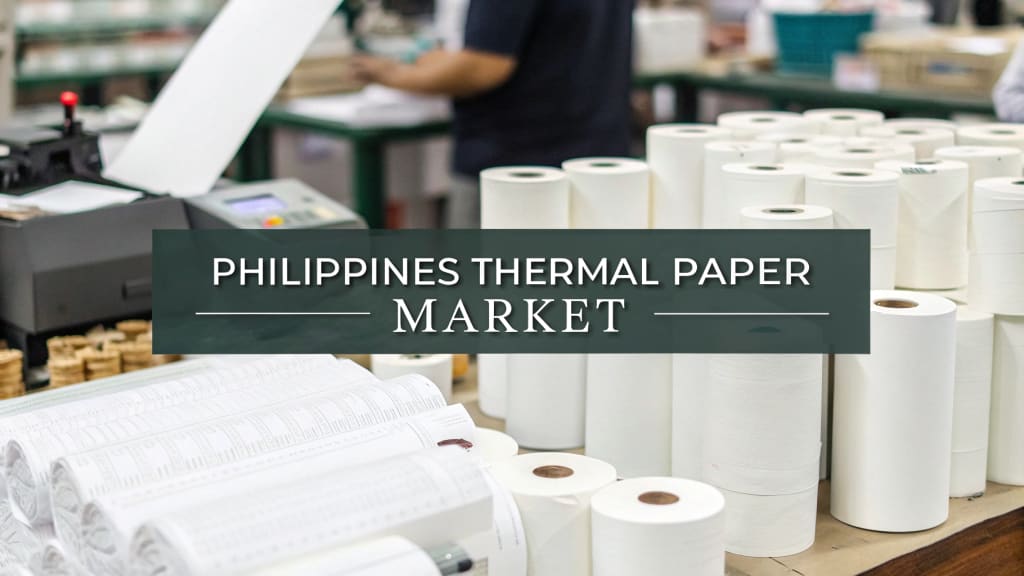
The thermal paper market in the Philippines is showing steady growth, driven by expanding retail, financial services, healthcare and logistics sectors. According to the latest market insights, the market size reached USD 20.30 million in 2024, and is forecast to grow to USD 25.40 million by 2033, representing a compound annual growth rate (CAGR) of approximately 2.27% during 2025-2033.
This growth may appear modest, but in a niche segment such as thermal paper—where product usage is tied to transaction volumes, retail automation and system upgrades—it signals important underlying shifts in how businesses handle receipts, labels and printing across the Philippines.
Market Snapshot:
• Market size in 2024: USD 20.30 million
• Forecast market size by 2033: USD 25.40 million
• Forecast CAGR (2025-2033): ~2.27%
Key Growth Drivers & Trends:
Retail & POS Expansion
One of the most significant demand drivers for thermal paper in the Philippines is the growth of organised retail formats—supermarkets, convenience stores, shopping malls—and their associated point-of-sale systems. As retailers modernise, the adoption of electronic cash registers and thermal-receipt printers increases, thereby boosting thermal paper roll usage. The shift away from older printed receipt technologies contributes to a more consistent demand base in the retail segment.
Banking, Self-Service Kiosks & Financial Automation
The banking and financial services sector is another major contributor to thermal paper demand. ATMs, cash deposit machines, self-service kiosks and other transaction devices all rely on thermal paper for printing customer receipts and transaction slips. As financial inclusion improves and digital payment & transaction volumes rise, the need for thermal printing remains strong due to its speed, reliability and low maintenance (no ink cartridges, for example).
Healthcare, Logistics & Labeling Needs
Beyond retail and banking, the healthcare and logistics sectors are emerging as important niches. In healthcare, thermal paper finds application in diagnostic equipment, ultrasound machines, ECG monitors and other devices that require quick, readable printouts. On the logistics side, thermal paper is used for shipping labels, barcodes, tracking documents and other supply-chain printouts. The growth of e-commerce, parcel delivery and just-in-time logistics in the Philippines underpins this usage.
Technology & Format Optimisation
Thermal paper usage is influenced by format width (57 mm, 80 mm etc.) and technology (direct thermal vs thermal transfer). Direct thermal is widely used in POS receipts due to its simplicity and cost-effectiveness; thermal transfer may be used where durability of printouts is required. For manufacturers and suppliers, optimising for width, print quality, durability and cost is a strategic focus.
Sustainability and Alternatives
Though not a primary growth frontier in this specific market, thermal paper is increasingly shaped by sustainability concerns: chemical coatings (such as bisphenol A/BPA) used in some thermal papers have raised regulatory and environmental questions globally. While the Philippines market is niche, suppliers may increasingly look to BPA-free and phenol-free thermal paper, and more recyclable formats, which may influence future product offerings and competitive differentiation.
Implications for Industry Players:
• Thermal paper manufacturers & suppliers should ensure they offer formats that match local POS printer widths (e.g., 57 mm and 80 mm) and also provide durable direct thermal rolls suitable for retail, banking and logistics.
• Retailers and kiosks should monitor receipt usage trends, evaluate the cost-saving potential of switching to more efficient thermal paper formats or upgrading to printers that support thinner rolls / higher print speeds.
• Financial institutions and service providers need to continue supporting self-service transaction devices that rely on thermal printing, and ensure supply chains for thermal paper remain robust—especially if transaction volumes grow.
• Logistics and healthcare providers can benefit from thermal paper formats optimised for labels and medical printouts; aligning with suppliers who understand their application-specific requirements is important.
• Sustainability-minded players should begin exploring thermal paper with reduced environmental impact (e.g., BPA-free coatings, recyclable cores, waste-reduction strategies) to anticipate regulatory shifts and customer expectations.
Challenges & Considerations:
While the market is growing, challenges remain. The relatively modest CAGR of ~2.27% indicates that thermal paper demand is mature and tied closely to transactional systems rather than explosive growth. The ongoing shift towards digital or paperless receipts in some segments may dampen future growth. Price pressure, competition from lower-cost imports, fluctuations in raw material costs (paper, chemical coatings) and logistics challenges in a geographically dispersed archipelago like the Philippines can affect supply reliability and margins. In addition, any regulatory change relating to chemical coatings or recycling of thermal paper could disrupt cost structures.
Conclusion:
The Philippines thermal paper market may be niche in terms of overall size, but it serves as a critical enabler of transaction-printing across retail, banking, healthcare and logistics. With value expected to rise from about USD 20.30 million in 2024 to USD 25.40 million by 2033, the opportunity is clear for suppliers, manufacturers and service providers who understand format, technology, and application-specific needs.
Businesses that align their offerings with POS system upgrades, self-service device rollout, label and logistics demand, and sustainability expectations will be well positioned. As digital payments, organised retail and logistics operations continue to expand in the Philippines, thermal paper remains quietly indispensable—and its market, while modest in growth, steady and essential.
About the Creator
Amyra Singh
Market research analyst who loves spotting patterns, digging into data, and turning insights into strategies that help brands grow and stay ahead of the curve.
Keep reading
More stories from Amyra Singh and writers in Journal and other communities.
Craft, Connectivity & Cocoa: The Rising Force of the Philippines Chocolate Market
Introduction: The Philippines chocolate market is entering an exciting phase of growth and transformation. According to industry data, the market size reached USD 751.50 million in 2024, and is projected to climb to USD 1,198.71 million by 2033, corresponding to a compound annual growth rate (CAGR) of around 4.78% between 2025-2033.
By Amyra Singh2 months ago in Journal
Silver Screen Magic with Mae West
American actress and singer Mae West became a popular film actress during the Great Depression. She started entertaining in vaudeville, then performed on Broadway, and finally went to Hollywood. She signed up with Paramount Pictures and made her debut in the 1932 film “Night After Night.” She also starred in musicals, comedies, and crime dramas. The American Film Institute named her one of the best classic Hollywood actresses.
By Rasma Raisters6 days ago in Geeks


Comments
There are no comments for this story
Be the first to respond and start the conversation.