
Diamonds Aren't Forever: The Truth About the Gemstone You've Been Believing In
The Truth About Diamonds: They Aren't Forever

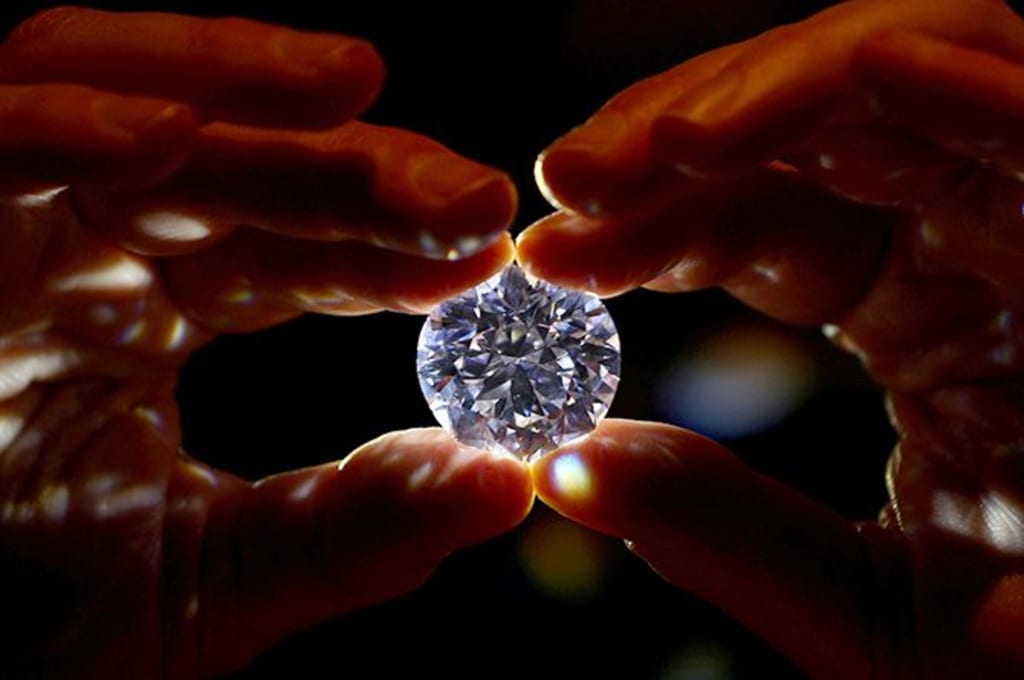
Diamonds hold a special place in our hearts and minds, particularly for women. Despite its questionable logic, daily conditioning and societal norms have led to our love for this carbon form. Diamonds are often associated with wealth and luxury and are used in beautiful and expensive jewelry as well as status symbols. In many cultures, diamonds are given as symbols of love and commitment, such as in engagement rings, and they are often a key part of traditional weddings.
However, it's understandable that not everyone can afford to purchase diamond jewelry. But did you know that there are alternative options available that can provide the same beauty and joy that diamonds bring into our lives? These alternatives can be less costly but still offer the same aesthetic appeal. So, whether you are looking to purchase diamond jewelry or an alternative, it's worth exploring your options to find the perfect choice that fits your budget and personal style.
Uncovering the Clues: The History of Diamond Affection
The diamond jewelry industry is a scam engineered by diamond manufacturers to drum up business and make fools out of the public. This can be traced back to the corporation that had a total monopoly over the diamond industry until the early 20th century, De Beers Group, with their tagline "Diamonds are forever." Journalist Edward Jay Epstein wrote in his February 1982 article for "The Atlantic" about "The Diamond Invention." Epstein's research on the diamond market reaches back to South Africa in the 19th century. In 1870, a British businessman stumbled upon a massive diamond mine near South Africa's Orange River. They quickly wasted no time breaking in gems, and now they were literally swimming in diamonds from their mining operation. Because of this, the British financiers found themselves faced with a new dilemma: had they made the most of their discovery without flooding the market? Until now, diamonds had only been mined in relatively small batches in India and Brazil, accounting for only a few pounds per year in worldwide production. The only reason diamonds were so highly valued was their scarcity. The discovery of the South African mines threatened to completely topple the assumed value of diamonds by shifting the balance of supply and demand. At best, diamonds will be reclassified as only semi-precious gems.
The Diamond Industry's Marketing Strategy: Creating Perceived Value through Advertising and Branding
In the late 19th century, a group of wealthy investors in South Africa banded together to form a powerful cartel known as De Beers Consolidated Mines Limited. Their goal was simple: to monopolize and control the production of diamonds, and to trick consumers into believing that the diamonds they sold were still rare and valuable.
For decades, De Beers used a variety of pseudonyms around the world, including the Diamond Trading Company in England and the Diamond Development Corporation in Africa, all the while perpetuating the illusion of diamonds as something rare and worth the inflated price tag.
But in the 1930s, with the world mired in the Great Depression, De Beers realized that they needed a new strategy to keep demand for diamonds high. They partnered with a major American advertising agency to reinvent the public perception of diamonds, and to make them into a symbol of romance.
Through a massive marketing campaign that included radio and newspaper advertisements, celebrity endorsements, and product placement in the emerging motion picture industry, De Beers successfully convinced the public that diamonds were not just a symbol of wealth, but also of love and commitment.

By 1948, a copywriter for the advertising agency had coined the famous phrase "a diamond is forever," and the rest, as they say, is history. Today, De Beers may no longer be the dominant force in the diamond industry, but their legacy lives on in the countless diamond engagement rings that grace the fingers of couples around the world.
Despite the fact that the diamond market may not be as monopolized as it used to be, it's clear that the perception of diamonds as the ultimate symbol of love and commitment will likely continue for a long time to come.
People should embrace and adapt to change
There are many alternative options to diamonds that can be just as beautiful and meaningful. Some people may choose to invest in other precious gems like sapphires, rubies, or emeralds, which can have their own unique qualities and characteristics.
Others may prefer alternative materials like Moissanite, which is a lab-grown diamond simulant that has similar properties as diamonds but is more affordable and eco-friendly.
Additionally, people may choose to invest in other types of jewelry, such as pearls, gold, or silver.
These options can also be a good choice for those who prefer unique and original designs. Many independent designers and jewelers create one-of-a-kind pieces that are not only beautiful but also ethically sourced and produced.
Another option is considering a more personal and sentimental alternative such as a family heirloom, a piece of jewelry made from a special memory or a personal item, or even a unique piece of art. These can be meaningful gifts that are cherished for a lifetime.
Try investing in yourself rather than spending money on frivolous luxuries like diamonds.

Investing in oneself is a wise decision that can bring long-term benefits. Education, training, personal development and self-care all contribute to personal growth and better opportunities. On the other hand, spending money on frivolous luxuries like diamonds is a waste of resources that could have been better used to invest in oneself. Diamonds may seem luxurious and desirable but they hold little practical value compared to the benefits of investing in yourself. Prioritize investing in yourself over buying diamond luxuries, it will pay off in the long run.
About the Creator
Keep reading
More stories from Sahaj singh Parmar and writers in Journal and other communities.
Scientists Whose Absence Would Greatly Alter Our Way of Life
Welcome to our blog on the top 10 most influential scientists of all time. These individuals have not only made significant contributions to the field of science, but have also had a lasting impact on our daily lives. From the theory of evolution to the invention of the printing press, these scientists have shaped the way we understand and interact with the world around us.
By Sahaj singh Parmar3 years ago in Education
TanStack Form vs React Hook Form in 2026
Choosing a form library in 2026 is a major decision. It is no longer just about reducing re-renders in the browser. We are now deeper into the era of Server Components. We must handle localized state hydration and strict type safety. Your choice defines how your application architecture will scale. TanStack Form and React Hook Form (RHF) have both evolved. They have changed significantly over the last two years. However, they still serve different philosophies of state management. One focuses on uncontrolled speed within the React ecosystem. The other prioritizes type-safe logic that works across different frameworks.
By Del Rosario8 days ago in Journal



Comments
There are no comments for this story
Be the first to respond and start the conversation.